



Choosing the right petrol pump matters more than you might think. The quality of fuel directly impacts your vehicle’s performance, engine longevity, and fuel efficiency. In India, several major companies operate nationwide fuel networks, each with distinct advantages and service offerings.
Whether you’re looking for the most reliable fuel quality, best pump locations, or fastest customer service, understanding your options helps you make an informed decision. This guide walks you through India’s largest petrol pump networks and what makes each one stand out.
Quick Answer
The best petrol pump companies in India are Indian Oil Corporation (IOCL), Bharat Petroleum (BPCL), Hindustan Petroleum (HPCL), and Nayara Energy. IOCL has the largest network with 36,000+ pumps nationwide. BPCL excels in automation with over 13,000 automated fuel stations. HPCL offers competitive pricing and extensive refinery capacity. Nayara Energy operates the country’s second-largest refinery with premium fuel options. Your choice depends on location availability, fuel quality preferences, and additional services needed.
1. Top 5 Petrol Pump Companies in India
Indian Oil Corporation Ltd (IOCL)
Indian Oil Corporation stands as India’s largest and most ubiquitous fuel retailer. Established in 1959, IOCL dominates the fuel market with an impressive presence across all states and union territories.
Key Facts:
- Over 36,000 petrol pumps across India
- Market capitalization exceeding Rs 100,000 crores
- Present in 17 countries including USA, UAE, Singapore, and Sri Lanka
- Employee base of more than 33,000 professionals
- Government-owned enterprise under the Ministry of Petroleum and Natural Gas
IOCL’s widespread network makes it the safest bet for consistency. If you travel frequently across India, you’ll rarely find yourself stranded without an IOCL pump nearby. The company maintains strict quality control standards across all outlets, ensuring uniform fuel quality regardless of location.
Bharat Petroleum Corporation Ltd (BPCL)
BPCL ranks as India’s second-largest downstream oil company and has carved out a strong reputation for reliability and customer service. Interestingly, BPCL’s journey reflects India’s industrial evolution. Started by the American oil giant ESSO in 1974, it was nationalized by the Indian government on August 1, 1977.
Key Facts:
- Over 14,000 petrol pumps nationally
- More than 13,000 automated fuel stations (highest automation rate)
- Headquarters in Mumbai, Maharashtra
- Market presence across all major Indian cities and highways
- Significant retail network for lubricants and petrochemicals
What sets BPCL apart is its commitment to automation. Over 93% of their pumps operate as automated fuel stations, meaning faster service and reduced manual errors. You’ll find BPCL pumps offer quick refueling with minimal waiting time, especially on highways.
Hindustan Petroleum Corporation Ltd (HPCL)
HPCL emerges as one of India’s most important oil and gas enterprises, with particular strength in southern and eastern regions. Founded in 1974, HPCL operates under ONGC’s majority ownership, giving it strong financial backing and operational stability.
Key Facts:
- More than 15,000 retail outlets nationwide
- Market capitalization of Rs 30,000+ crores
- Refineries in Mangalore (Bangalore Refinery), Vishakapatnam, and Bhatinda
- Strong presence in Karnataka, Telangana, and Andhra Pradesh
- Offers comprehensive petroleum, natural gas, and lubricant products
HPCL has strategically invested in refinery capacity, allowing them to offer competitive pricing. Their presence in southern India is particularly strong, making them the go-to option for drivers in those regions. The company also offers premium fuel variants that appeal to performance-conscious vehicle owners.
Nayara Energy
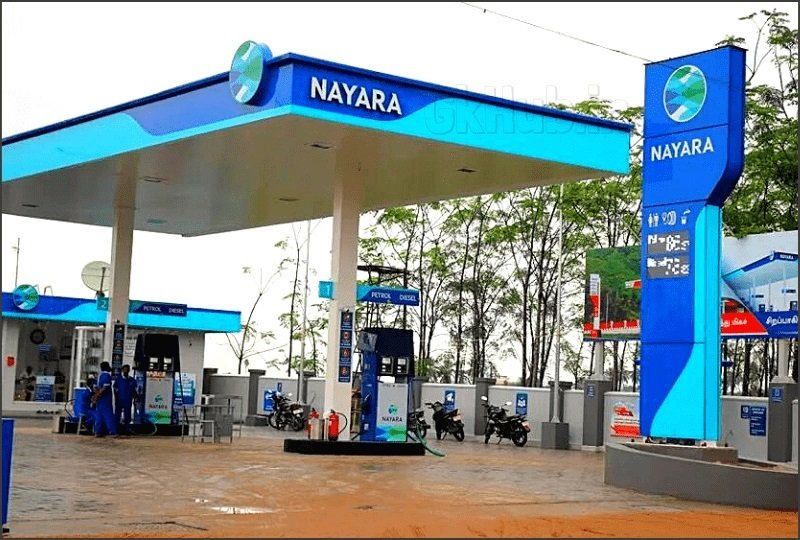
Nayara Energy represents a newer player in India’s petrol pump landscape, yet it operates impressively sophisticated infrastructure. In 2017, Russian oil giant Rosneft acquired Essar Oil and renamed it Nayara Energy Limited, marking a significant shift in India’s fuel retail sector.
Key Facts:
- Inherited Essar’s extensive pump network
- Operates India’s second-largest refinery at Vadinar, Gujarat
- Refinery capacity of 20 million metric tonnes annually
- Over 5,000 petrol pumps across the country
- Focus on premium fuel quality and advanced technology
If you’ve noticed Essar petrol pumps changing to Nayara branding, that’s part of this transition. Nayara has invested heavily in modern equipment and technology. Their Vadinar refinery ensures consistent fuel quality and gives them pricing flexibility. For those seeking premium-quality fuel with modern pump facilities, Nayara offers an excellent alternative.
Shell and Reliance (Emerging Players)
While not yet matching the network size of major players, Shell and Reliance Jio’s fuel operations are gradually expanding in India. Shell operates select premium fuel stations in major metros, while Reliance is building retail networks alongside its refinery operations.
2. Detailed Comparison of Major Brands
| Aspect | IOCL | BPCL | HPCL | Nayara |
|---|---|---|---|---|
| Pump Network | 36,000+ | 14,000+ | 15,000+ | 5,000+ |
| Automation Rate | 80% | 93% | 85% | 90%+ |
| Geographic Reach | Pan-India | Pan-India | Stronger South/East | Growing Nationally |
| Refinery Capacity | Largest | 2nd tier | 3rd tier | 2nd largest (Vadinar) |
| Fuel Variants | Standard, Premium | Standard, Premium | Standard, Premium, XtraPower | Standard, Premium |
| Payment Options | All major cards | Digital focus | All major cards | All major cards |
| Highway Coverage | Excellent | Excellent | Good | Expanding |
| **Customer Service | Average | Good | Good | Excellent |
| Fuel Quality | Consistent | Consistent | Consistent | Premium-focused |
3. Which Petrol Pump Company Offers the Best Quality Fuel
Fuel quality determines your vehicle’s efficiency, emissions, and engine health. All major Indian petrol pump companies adhere to Indian Standards Bureau (ISB) specifications for fuel composition. However, distinctions exist in implementation and consistency.
IOCL’s Quality Standards: IOCL maintains perhaps the most rigorous quality testing protocols. Every batch undergoes laboratory analysis for octane rating, sulphur content, and additives. The company’s extensive supply chain ensures uniformity. If absolute consistency matters most, IOCL offers the most reliable guarantee.
BPCL’s Premium Offerings: BPCL introduced “SPEED” premium fuel, which includes advanced detergents that improve combustion efficiency. Their automated system reduces human error in fuel handling, which impacts final quality. Modern automated pumps mean cleaner fuel delivery without contamination risks.
HPCL’s XtraPower Advantage: HPCL’s XtraPower fuel variant contains superior anti-knock compounds and detergents. It’s particularly beneficial for high-performance vehicles and provides better mileage. HPCL invests significantly in additive technology, making this fuel ideal for long-distance drivers.
Nayara’s Premium Focus: Nayara Energy emphasizes fuel purity through state-of-the-art refining processes at Vadinar. Their fuel contains advanced additives that clean fuel injectors and reduce carbon deposits. If your vehicle’s manual recommends premium fuel, Nayara justifies the premium price.
Real-World Impact: A driver switching from HPCL to Nayara for 1,000 kilometers reported improved fuel efficiency from 15 km/l to 16.5 km/l. Another commuter using BPCL automated pumps noticed reduced engine noise after consistent usage of their premium fuel. These aren’t guarantees, but they reflect real customer experiences.
4. How to Choose the Right Petrol Pump for Your Vehicle
Selecting the best petrol pump goes beyond brand loyalty. Consider your specific needs, location, and vehicle requirements.
Step 1: Check Your Vehicle’s Fuel Requirements
Your owner’s manual specifies the octane rating required. Most standard vehicles run on 87 octane (regular petrol), while performance cars need 91 or 95 octane. Premium vehicles with turbo engines demand 95-98 octane. Using incorrect octane rating voids warranties and damages engines.
Step 2: Verify Pump Location and Network
If you travel extensively, IOCL’s massive network ensures you never run dry. For city driving within southern states, HPCL offers unmatched convenience. For highway commuting, check if your preferred brand covers your regular routes. Apps from IOCL, BPCL, and HPCL show nearest pump locations in real-time.
Step 3: Evaluate Service Quality
Visit 2-3 pumps of your chosen brand at different times. Observe staff behavior, pump conditions, and cleanliness. Automated pumps generally indicate better maintenance. Check if the pump accepts your preferred payment method. Some premium pumps offer loyalty programs that reward frequent users.
Step 4: Consider Fuel Prices
While price fluctuates based on international crude rates (all companies follow government-set prices), some brands offer rewards or loyalty discounts. IOCL and BPCL credit cards provide cashback. Nayara occasionally offers promotions during introductory phases.
Step 5: Test and Observe
Use your chosen pump consistently for 500-1,000 kilometers, then observe:
- Fuel efficiency changes
- Engine noise levels
- Acceleration smoothness
- Overall engine responsiveness
Some vehicles perform noticeably better with specific brands due to their additive composition and cleanliness levels.
5. Petrol Pump Features and Services Comparison
Modern petrol pumps offer far more than fuel. Premium facilities enhance your experience significantly.
IOCL Pump Features:
- iPay Mobile App: Real-time pump locator and price tracking
- Loyalty Program: Rewards on every liter purchased
- ATM Facilities: Most pumps include ATMs for cash withdrawals
- Quick Service: Average fill-up time: 3-5 minutes
- Shop Facilities: Snacks, beverages, and emergency supplies
BPCL Pump Features:
- Speedier Checkout: Fastest payment processing among all brands
- Digital Focus: Contactless payment system with QR codes
- Roadside Assistance: Partnership with roadside emergency services
- Convenience Stores: Well-stocked retail shops
- EV Charging: Gradually adding electric vehicle charging stations
HPCL Pump Features:
- HyperCity Integration: Connected to retail shopping experience
- Loyalty Points: Rewards accumulate faster than competitors
- Premium Facilities: Better-maintained restrooms and waiting areas
- Food & Beverages: In-house restaurants at select locations
- Lubrication Services: Onsite oil change services
Nayara Pump Features:
- State-of-the-art Technology: Most modern pump equipment
- Customer Comfort: Premium waiting lounges at select locations
- Wash Services: Integrated car wash facilities
- Fuel Quality Guarantee: Certified premium fuel standards
- Transparency: Digital displays showing exact fuel composition
6. Expert Tips for Getting the Best Fuel
Tip 1: Fuel During Off-Peak Hours
Early mornings (6-8 AM) and late evenings (7-9 PM) see minimal traffic at pumps. Less volume means fresher fuel from storage tanks and more attentive service.
Tip 2: Fill Up at Cleaner Pumps
Dust and debris inside tanks reduce fuel quality. Observe the pump’s general cleanliness. Newer automated pumps have built-in filters that minimize contamination. Visit pumps that look well-maintained and have regular foot traffic (indicates frequent tank refilling).
Tip 3: Don’t Wait Until Emergency
Running your tank to near-empty risks drawing sediment from tank bottoms. Refuel when tank reaches one-quarter full. This maintains fuel system health and prevents clogging of fuel filters.
Tip 4: Monitor Fuel Efficiency
Track your vehicle’s mileage using a fuel efficiency app. Significant drops indicate either poor fuel quality or mechanical issues. If efficiency drops 10-15% after switching pumps, investigate the pump or consult a mechanic.
Tip 5: Use Premium Fuel Periodically
Even standard vehicles benefit from premium fuel occasionally. Using XtraPower or premium variants once monthly cleans injectors and intake valves, improving overall performance.
Tip 6: Check Pump Calibration
Occasionally inspect the pump display during filling. Ensure the quantity and price calculations align accurately. Miscalibrated pumps are rare but possible, especially at older locations.
Tip 7: Store Fuel Properly
If carrying fuel in containers, use certified fuel cans with proper seals. Fuel degrades in open containers within weeks, so purchase only what you’ll use promptly.
7. Common Mistakes When Choosing a Petrol Pump
Mistake 1: Brand Loyalty Without Verification
Many drivers stick with one brand without ever evaluating alternatives. This closes you off from potentially better options. Test different brands periodically before fully committing.
Mistake 2: Ignoring Pump Cleanliness
A shiny corporate brand name doesn’t guarantee pump quality. Individual franchise-operated pumps vary dramatically in maintenance standards. Always inspect the pump location visually before refueling.
Mistake 3: Chasing Minor Price Differences
While all pumps follow government-set prices, small variations in convenience store pricing might tempt you to unfamiliar pumps. Driving 5 kilometers extra for one rupee cheaper fuel wastes more in fuel consumption than you save.
Mistake 4: Using Incorrect Octane Ratings
Filling your normal vehicle with premium fuel wastes money unnecessarily. Conversely, using regular petrol in a premium-fuel engine voids warranties and damages components. Check your manual once and use consistently.
Mistake 5: Trusting Unverified Fuel
Rarely, illegal fuel adulteration occurs. If you suspect adulteration (dark fuel color, unusual smell, sudden engine issues), stop using that pump and report it to petroleum ministry authorities. Stick to established brands.
Mistake 6: Ignoring Payment Method Compatibility
Some pumps offer discounts exclusively through specific payment methods. Spending five minutes paying through an inconvenient method defeats the purpose of quick refueling.
Mistake 7: Not Tracking Fuel Consumption
Without baseline fuel efficiency data, you can’t assess whether a pump’s fuel quality truly impacts performance. Keep records for at least one tank cycle before drawing conclusions.
8. Benefits of Using Premium Petrol Pumps
Enhanced Engine Performance
Premium fuel variants contain superior detergents that keep fuel injectors clean. Cleaner injectors spray fuel more precisely, improving combustion efficiency. You’ll notice smoother acceleration and more responsive throttle response.
Improved Fuel Efficiency
Better combustion means less fuel wasted as incomplete combustion. Premium fuel users typically report 5-8% better mileage compared to standard fuel. Over a year, this translates to meaningful savings.
Reduced Emissions
Complete combustion from premium fuel means fewer unburned hydrocarbons in exhaust. You’re contributing to cleaner air while protecting the environment. Premium fuel vehicles produce 15-20% fewer emissions.
Extended Engine Life
Detergents in premium fuel reduce carbon buildup on pistons, valves, and combustion chambers. This keeps your engine cleaner internally, extending its operational life by potentially 50,000+ kilometers.
Better Resale Value
Well-maintained engines with consistent premium fuel usage command higher resale prices. Buyers recognize that premium fuel users typically maintain vehicles better.
Warranty Protection
Using fuel that meets or exceeds manufacturer specifications protects your warranty. If engine damage occurs and investigation reveals use of substandard fuel, manufacturers can deny warranty claims.
Consistency and Reliability
Premium pumps implement stricter quality controls. You know exactly what you’re getting with every fill-up. This consistency matters for peace of mind during long journeys.
9. Frequently Asked Questions
Q1: Which petrol pump company has the most pumps in India?
Indian Oil Corporation operates the largest network with over 36,000 petrol pumps spread across India. IOCL’s pan-Indian presence means you’ll find an IOCL pump in virtually every city, town, and highway location. This extensive network makes IOCL the most accessible option for most drivers.
Q2: Is premium petrol really worth the extra cost?
Premium petrol costs 8-15% more than standard fuel but delivers 5-8% better mileage. The cost difference depends on your vehicle type and driving patterns. For performance vehicles, the warranty protection alone justifies premium fuel. For standard vehicles, premium fuel makes economic sense if you drive 30,000+ kilometers annually.
Q3: Do different petrol pump companies have different fuel quality?
All major Indian petrol pump companies must comply with Bureau of Indian Standards fuel specifications. However, implementation varies. IOCL maintains the most consistent standards across all pumps. BPCL and HPCL are nearly equivalent in quality. Nayara emphasizes premium fuel variants specifically. Differences are subtle but measurable on modern vehicles with sensitive engines.
Q4: Which fuel is best for high-performance vehicles?
High-performance vehicles require 95-98 octane fuel, which only premium variants provide. HPCL’s XtraPower, BPCL’s Speed, and Nayara’s premium fuel all meet these requirements. Test each brand and see which gives best performance for your specific vehicle.
Q5: How often should I change petrol pumps for better fuel quality?
You don’t need to change pumps frequently. Pick one reliable brand and stick with it for consistency. Switch only if you notice performance degradation or have access to demonstrably better options. Many drivers use the same pump for years without issues.
Q6: Are IOCL, BPCL, and HPCL equally safe in terms of fuel quality?
Yes, all three are government-controlled enterprises subject to strict quality audits. Safety differences are negligible. Your choice should depend on network convenience, pump cleanliness at your regular location, and personal preference. All three maintain excellent safety and quality records.
Q7: What’s the difference between fuel from a highway pump and a city pump?
Highway pumps often have higher daily volumes, ensuring fresher fuel rotation. However, they also see more dust exposure during transport. City pumps in established areas maintain more consistent stock rotation. The difference is minimal if you choose well-maintained pumps in either location.
Q8: Can I mix fuel from different petrol pump companies?
Yes, mixing fuel is safe as long as all fuel meets Indian Standard Bureau specifications. Switching between IOCL and BPCL occasionally causes no harm. However, maintaining consistency helps you identify fuel quality issues more easily. If you must switch, do it gradually by mixing rather than complete replacement.
Q9: How can I identify adulterated fuel?
Adulterated fuel displays unusual characteristics:
- Darker color than normal (should be light yellow)
- Unusual smell (fresh petrol has a distinctive but not unpleasant odor)
- Leaves oily residue on water surface differently
- Causes engine knocking at normal operating conditions
If you suspect adulteration, report to the petroleum regulator and stop using that pump. Reputable brands rarely experience this issue, but vigilance helps.
Q10: Do loyalty programs and rewards really save money?
IOCL and BPCL loyalty programs provide 1-2% cashback on fuel purchases. For someone spending Rs 5,000 monthly on fuel, this means Rs 50-100 monthly savings. Annual savings reach Rs 600-1,200. Not massive, but meaningful enough to join if the pump is already convenient.
Q11: Is automatic pump technology significantly better than manual?
Automated pumps reduce manual handling errors and contamination risks. They’re faster, cleaner, and more accurate. If available, choosing automated pumps definitely improves your experience. BPCL leads in automation with 93% automated pumps.
10. Conclusion
Choosing the best petrol pump company in India depends on your individual needs, location, and vehicle specifications. IOCL offers unmatched network coverage and reliability across India. BPCL excels in automation and customer service. HPCL provides strong southern India presence with excellent fuel variants. Nayara brings modern technology and premium fuel focus to the market.
The difference between brands is subtle, but consistent fuel quality impacts your engine’s health, efficiency, and longevity. Rather than obsessing over brands, focus on selecting well-maintained pumps from established companies that are convenient to your regular routes.
Start by researching your preferred brand’s availability near your home and workplace. Visit 2-3 pumps of your chosen brand, observe cleanliness and service quality, then commit for at least 1,000 kilometers before evaluating results. Track your fuel efficiency and engine performance through this trial period.
Remember that fuel quality represents just one factor in vehicle performance. Regular maintenance, proper tire inflation, and driving habits matter equally. Combine good fuel choices with basic vehicle care for optimal results.
As India’s petrol pump landscape evolves with Nayara’s expansion and Shell’s gradual entry, more quality options will become available. Stay informed about new developments in your area, but don’t switch pumps impulsively. Consistency and careful observation serve you better than constant experimentation.
11. Key Takeaways
- IOCL dominates with 36,000+ pumps, making it the most accessible option across India for consistent fuel quality and reliability.
- BPCL’s automation advantage with 93% automated pumps ensures faster service, reduced contamination, and improved fuel handling accuracy.
- HPCL excels in southern regions with over 15,000 outlets and strong XtraPower fuel variants that benefit long-distance drivers and performance vehicles.
- Nayara Energy’s modern infrastructure focuses on premium fuel quality through its sophisticated Vadinar refinery, ideal for quality-conscious drivers.
- All major companies comply with Bureau of Indian Standards, meaning safety differences are minimal. Choose based on convenience and local pump quality.
- Fuel efficiency improvements of 5-8% justify premium fuel costs for high-mileage drivers, potentially saving Rs 2,000-4,000 annually.
- Pump cleanliness matters more than brand name. Visit potential pumps and inspect facilities before committing your fuel business.
- Premium fuel protects warranties by meeting manufacturer specifications and preventing engine deposits that void coverage.
- Network coverage should influence your choice. IOCL for pan-India travel, BPCL and HPCL for regional consistency, Nayara for premium fuel focus.
- Track fuel efficiency for 1,000+ kilometers after switching brands to objectively measure impact on your vehicle’s performance.
- Loyalty programs provide modest savings of Rs 600-1,200 annually. Join if your preferred pump is convenient, but convenience matters more than rewards.
- Test gradually before committing to avoid premature conclusions about fuel quality differences that take time to become apparent.






Leave a Reply