




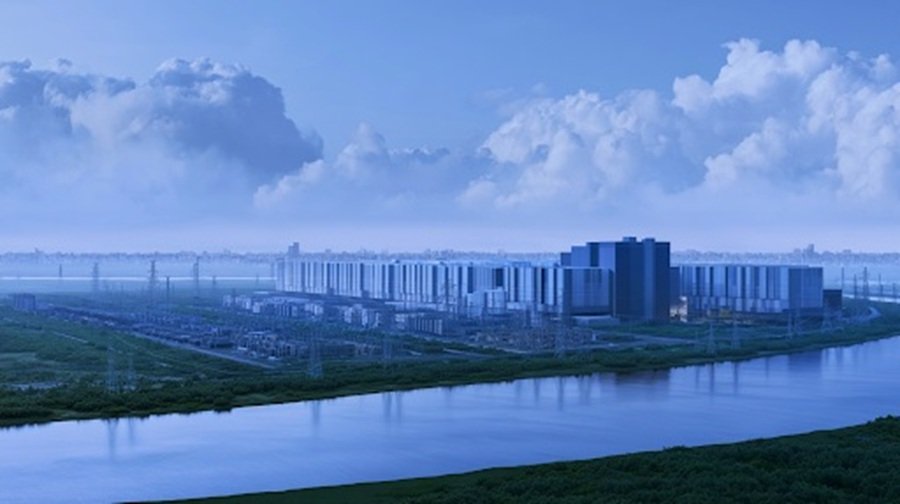
“We would like to be a pioneer in this global AI race.” That is how Summit Group chairman Muhammed Aziz Khan described his company’s data centre ambitions to Platts, part of S&P Global Energy, in comments The Business Standard reported on Jan. 21. The phrase is bigger than the plan behind it so far, but the plan itself is specific enough to test.
A Number That Crosses the Hyperscaler Threshold
Khan told Platts that Summit currently has about 350 megawatts of power generation capacity that could be redirected to data centres, a figure he said puts the company in hyperscaler territory, the category reserved for operators that can support the largest cloud and AI computing contracts. “Bangladesh and Summit are uniquely positioned with excess electricity capacity for the next few years,” he said.
That capacity exists because of how Summit’s power contracts with the Bangladeshi government are written. The agreements pay for available generation rather than electricity actually used, so Summit routinely operates plants running below full output. Turning that slack into a data centre pitch is less about building new power infrastructure and more about redirecting power the company already has permission to generate.
Set against Summit Power International’s total fleet, 350 megawatts is a modest slice: the company describes itself on its own website as running 11 plants with a combined 2,012 megawatts of capacity, close to 7% of everything Bangladesh has installed. Khan is not proposing to convert the whole fleet, only the portion sitting idle under current contract terms, which by itself he considers large enough to matter to a global cloud customer. That is a narrower and more testable claim than the “pioneer” language suggests.
The Land, the Power and the Missing Piece
Khan named the obstacle most competitors face directly. “Data centres are challenged primarily by the lack of electricity,” he told Platts. “We can, with the requisite government permissions, give electricity quickly.” The plan is to build the company’s first large-scale facility in Dhaka, using either land at Summit Technopolis Hi Tech Park, a subsidiary site, or vacant land the company already owns alongside its power plants and a nearby river.
That river reference is not incidental. Data centres run hot, and cooling systems tied to river water sidestep some of the environmental objections that have followed data centre growth elsewhere, where campuses draw heavily on municipal groundwater. Khan did not detail the cooling design Summit is planning, but the site selection puts a cooling source next to the facility from the start rather than as a retrofit.
Fiber is the third input, and it is the one Khan described as still catching up. Summit is laying an optical fiber route from Bangladesh to Singapore, a project he said has run into “slight delays” from regulatory hurdles. That international link matters more than a purely domestic data centre would need, since it is the kind of low-latency connection global cloud tenants expect before they will route workloads through a new market at all. Domestically, Summit Communications already operates a fiber network reaching all 64 of the country’s districts, a footprint the company has cited as an advantage over rivals that would need to build backbone connectivity from scratch.
Subject to the government permissions Khan referenced, he told Platts that Summit could build its first data centre in about 18 months once the green light arrives. That is a conditional timeline rather than a start date, and it depends on approvals the company does not yet have. Khan has repeated a version of that 18-month figure in more than one interview this year, which suggests it is his genuine estimate rather than a number produced for a single audience, though none of those interviews has yet come with a signed customer attached to it.
A Regulation Doing Some of the Marketing
Regulation is doing some of Khan’s selling for him. When he spoke with Platts, the relevant law was a Personal Data Protection Ordinance limiting how certain personal data could be moved abroad. That ordinance’s status has changed since: Parliament passed it into permanent law in April as the Personal Data Protection Act, 2026, Act No. 63 of 2026, which still restricts the export of specific categories such as national ID numbers and biometric records rather than personal data broadly, according to a Securiti summary of the law. A bank or hospital barred from sending that data overseas has to store it somewhere, and Khan is betting Summit’s facility becomes the default answer.
Set against the market Khan is chasing, Summit’s 350 megawatts looks large. Mordor Intelligence puts Bangladesh’s entire installed data centre IT load at 23.55 megawatts as of 2025, meaning Summit’s spare generation alone is close to 15 times the country’s current total footprint, even after accounting for the gap between raw power capacity and the specialized cooling and infrastructure a working data centre needs. The research firm expects that national footprint to expand more than sixfold by 2030, with cloud and technology firms already the dominant tenant class, holding a 62% share of commissioned capacity in 2024.
Two smaller Bangladeshi operators, Felicity IDC and Red.Digital, are already selling into that market, and a state-run facility in Dhaka has earned the industry’s top reliability certification, according to Data Center Dynamics. What none of them can offer, and what Khan is pitching as Summit’s differentiator, is generation capacity sitting on the same balance sheet as the data centre itself, with no separate utility bill or grid dependency standing between the plant and the server rack.
Selling Bangladesh as a Neutral Middle Ground
Khan has framed the pitch geographically as much as technically. He has described Summit’s position as “neutral,” sitting between South Asia and Southeast Asia, with cost structures he says undercut both Singapore and Mumbai, according to a May report from TechUpdatePRO. Singapore has spent years restricting new data centre construction over land and power constraints, and Mumbai’s market has grown fast enough to strain its own grid; a company arguing it can undercut both is making a claim about capacity headroom that neither of those cities currently has to offer.
Khan told Platts that Summit is also exploring imports of green electricity from Indonesia and Malaysia, a move that would let the company market cleaner power to data centre tenants without retiring the gas-fired plants generating most of its current capacity. He said he remains open to an outside partner that brings marketing expertise Summit does not have in-house, rather than one that would supply the power, fiber or land the company already controls.
The green-import idea is notable mainly because it is a departure from how Khan has otherwise described the data centre plan, which leans almost entirely on infrastructure Summit already owns. Sourcing electricity from a neighboring country would mean relying on a supplier and a cross-border transmission link Summit does not control, at the same time Khan is telling data centre prospects that speed and self-sufficiency are the company’s core advantage. It is a smaller, more exploratory piece of the pitch than the fleet capacity or the fiber network, and Khan has not attached a timeline to it the way he has to the data centre build itself.
Institutions as the Real Constraint
Underneath the technical pitch, Khan’s argument for Bangladesh keeps returning to governance rather than infrastructure. “The rule of law will prevail, reposing trust in investments and in Bangladesh’s institutions,” he said, according to TechUpdatePRO’s reporting. That comment came months after Khan told Platts he expected Bangladesh’s incoming elected government to push “more structural reforms” than an interim administration could deliver.
The government Khan was anticipating has since taken office. Voters gave the Bangladesh Nationalist Party control of Parliament in a February election, ending a period of interim rule that had already reshaped the LNG and energy-contracting rules Summit operates under. That same interim period is the backdrop for the “rule of law” comment: Khan made it after roughly 18 months in which one administration handed off to another, a stretch during which Petrobangla canceled several LNG contracts, including one involving a Summit subsidiary, and repealed the law that had underpinned the country’s approach to energy-sector contracts more broadly.
None of that settles whether Summit lands a hyperscale customer this year, the goal Khan has set for himself. Interest from technology companies, which Khan has described in other interviews without naming any of them, has not yet become a signed agreement. What has changed since January is narrower but real: the regulatory rationale for onshore data storage is now written into a permanent law rather than a temporary ordinance, and the government whose permissions Khan said the timeline depends on is no longer an interim one making promises it might not have to keep. The 350 megawatts, the fiber link to Singapore and the land at Technopolis Hi Tech Park were never the constraint. The permissions always were, and that is the one variable this story has not yet resolved.





One response to “Aziz Khan Wants Summit Group to Become Bangladesh’s First Data Centre Hyperscaler”