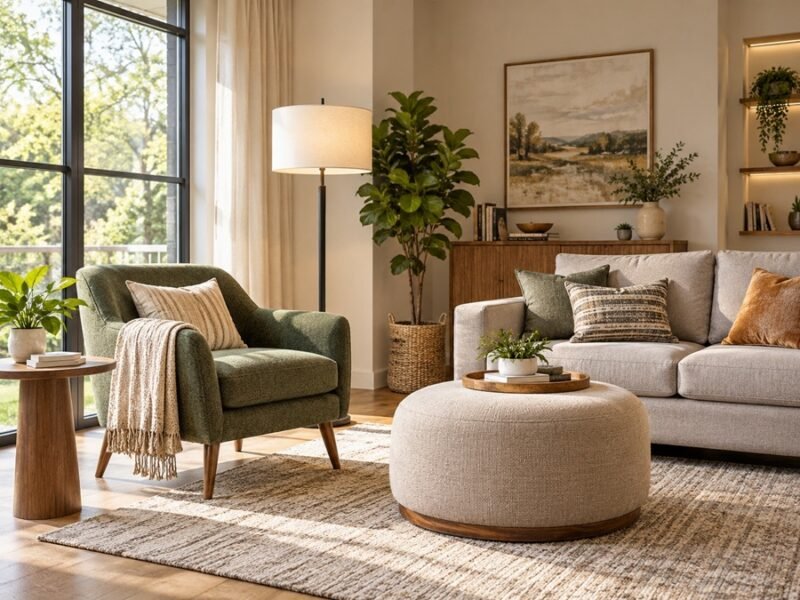



When people think about redesigning a room, they tend to focus on the obvious things first: the sofa, the rug, the wall colour, maybe the television unit. Those larger decisions matter, of course, but smaller furniture pieces often have just as much influence over how a room actually feels once you’re living in it. A carefully chosen side table, stool or set of coffee tables can completely shift the rhythm of a space without demanding a major redesign. Smaller pieces tend to be easier to move, easier to update and much more flexible, which makes them one of the simplest ways to change a room without starting again from scratch.
Small Pieces Can Fix Awkward Spaces
Most homes have at least one spot that feels slightly unresolved. It might be the empty space beside a sofa, the gap between two chairs or a corner that looks too bare but isn’t large enough for a substantial piece of furniture. That’s where smaller furniture earns its keep. A compact table can make a reading chair feel more complete, a low stool can provide an extra surface when guests arrive, and a small console can give an otherwise forgotten wall a reason to exist. These pieces work best when they solve a practical problem rather than simply occupying space.
Proportion Matters More Than Price
A beautiful piece of furniture can still look wrong if it’s the wrong size, and this is particularly true with smaller tables. A coffee table that’s too large can swallow a compact lounge area, while one that’s too small may look disconnected from the sofa around it. Height matters too, because a table that sits noticeably higher or lower than the surrounding seating can feel awkward to use even if it looks good from across the room. Before buying, it’s worth checking measurements properly rather than relying on product photos. A few centimetres can make a surprisingly big difference once the piece is actually in the room.
Curves Can Soften a Boxy Layout
Many living rooms naturally contain a lot of straight lines. Sofas are usually rectangular, television units are rectangular, rugs are often rectangular too, and then there are square windows, doorways and cabinetry on top of that. Introducing a rounded table or sculptural side piece can soften that effect immediately and give the room a more relaxed feel. Curved furniture can also improve movement in tighter spaces because there are fewer sharp corners to navigate around, which is a small but useful practical bonus.
Mixed Materials Add Depth
One reason some rooms feel flat is that too many pieces are made from the same material. A timber floor, timber entertainment unit, timber shelving and timber coffee table can all work individually, but together they may start blending into one another. Smaller furniture gives you an easy opportunity to introduce contrast. Glass can make a room feel lighter, metal can add definition, stone or ceramic surfaces can bring texture, while upholstered stools or ottomans can soften a space dominated by harder materials. You don’t need to introduce every material available; one contrasting surface can be enough to make the room feel more layered.
Furniture Can Create Conversation Zones
Smaller pieces also help organise how people use a room. A table positioned between two chairs immediately suggests conversation, while a stool beside the sofa gives someone a place to set down a drink or book. A pair of smaller tables can be separated when guests arrive and brought back together afterwards, which is especially useful in open-plan living areas where one large room has to serve several purposes. Rather than relying entirely on walls or rugs to define zones, furniture placement can quietly shape how people gather and move through the space.
Not Everything Needs to Match
There was a time when buying the matching coffee table, side tables and console from one furniture range felt like the obvious choice, but that approach is far from essential. Mixing shapes, finishes and even styles can make a space feel more personal and less like it came straight from a showroom. A minimalist table might sit comfortably beside a more traditional sofa, while a vintage side piece can add character to a contemporary room. The key is finding one or two elements that connect everything, perhaps colour, material or proportion, so the mix feels intentional rather than random.
Think About Everyday Behaviour
Good furniture should work with your habits rather than against them. If you constantly put your coffee on the floor beside the sofa, you probably need a surface there. If remotes, books and chargers always end up scattered across the room, a table with storage might make sense. If you regularly move furniture around when people visit, lighter pieces may be worth prioritising. These practical details are easy to overlook when shopping, but they’re often what determine whether a piece becomes genuinely useful or just looks good for a few weeks.
Small Changes Can Refresh a Room Quickly
One of the best things about smaller furniture is that it allows a room to evolve without much disruption. Replacing a coffee table, moving a side table or introducing a new shape can change the visual balance almost immediately, without the cost or effort of replacing a sofa or repainting the walls. That makes these pieces ideal for people who like their home to change gradually over time. A room doesn’t always need a dramatic transformation; sometimes, the right small furniture choice is enough to make everything around it suddenly feel more considered.