



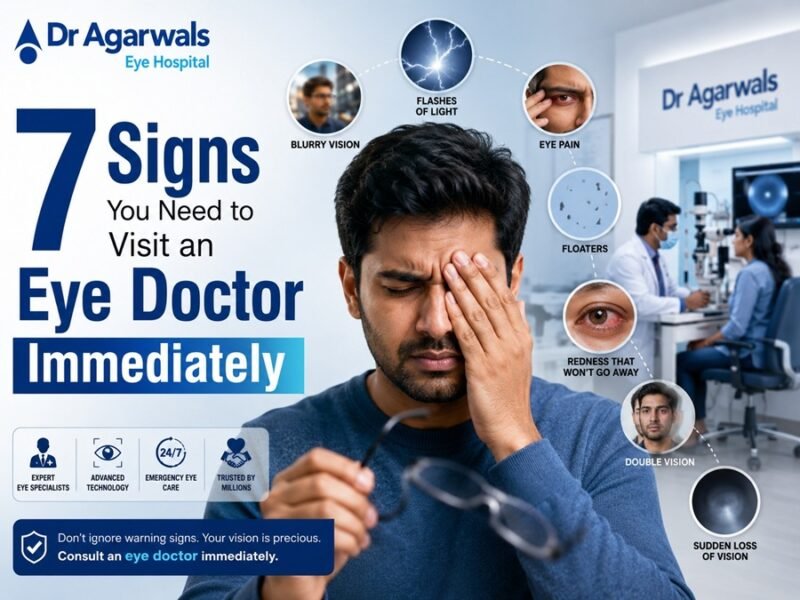
Don’t Wait Until It’s Too Late — Your Eyes Are Trying to Tell You Something
We rely on our eyes every single day — to read, to work, to recognise the faces we love. Yet when something feels “a little off,” most of us wait, hoping it will pass on its own.
Sometimes it does. But sometimes, that delay costs you your vision.
The truth is, many serious eye conditions — from retinal detachment to glaucoma — are completely treatable when caught early. The challenge is knowing when a symptom is a genuine warning sign and when it’s time to stop Googling and visit an eye specialist immediately.
This article walks you through 7 signs that your eyes are sending you an SOS — and why acting fast can make all the difference.
1. Sudden Blurry Vision
What It Feels Like
One moment your sight is perfectly clear, and the next, things look hazy, out of focus, or like you’re looking through frosted glass — even with your glasses on.
Why It Happens
Sudden blurry vision can be caused by a range of conditions, including:
- Diabetic retinopathy — high blood sugar damaging the blood vessels in your retina
- Macular degeneration — breakdown of the central vision area
- A spike in blood pressure — which can temporarily affect vision
- Stroke or TIA (mini-stroke) — blurry vision in one eye can be an early neurological warning
Why You Shouldn’t Wait
Unlike gradual vision changes that develop over months, sudden blurry vision is a red flag. It can signal that something urgent is happening inside your eye or your brain. Don’t wait for it to “clear up” on its own — book an appointment with an eye doctor the same day.
2. Severe or Persistent Eye Pain
What It Feels Like
A deep ache, sharp stabbing sensation, or throbbing pain in or around the eye — especially if it doesn’t go away after a few hours.
Why It Happens
- Acute angle-closure glaucoma — a sudden increase in eye pressure that is a medical emergency
- Corneal abrasion or ulcer — a scratch or infection on the surface of the eye
- Uveitis — inflammation inside the eye
- Sinusitis — sometimes sinus pressure radiates as eye pain
Why You Shouldn’t Wait
Eye pain, particularly when accompanied by nausea, headache, or vision changes, can indicate acute glaucoma — a condition that can cause permanent blindness within hours if untreated. If your eye pain is intense or does not improve, head to an eye hospital immediately.
3. Flashes of Light or Sudden Floaters
What It Feels Like
You notice small specks, cobwebs, or shadowy shapes drifting across your field of vision. Or you see sudden flashes — like a camera going off — especially in a dark room.
Why It Happens
Floaters are often harmless, caused by tiny fibres in your vitreous (the gel inside your eye) casting shadows on the retina. But a sudden increase in floaters or new flashes of light can indicate:
- Posterior vitreous detachment — the vitreous pulling away from the retina
- Retinal tear or detachment — a serious condition where the retina begins to lift away
- Bleeding inside the eye
Why You Shouldn’t Wait
A retinal detachment is one of the few true eye emergencies. If left untreated for even 24–48 hours, it can result in permanent vision loss. If you notice a sudden shower of floaters, flashing lights, or a dark curtain creeping across your vision — go straight to an eye specialist.
4. Persistent Redness That Won’t Go Away
What It Feels Like
Your eye looks red or bloodshot, and it’s been that way for more than a day or two — with or without discharge.
Why It Happens
- Conjunctivitis (pink eye) — bacterial or viral infection
- Subconjunctival haemorrhage — a small burst blood vessel (usually harmless but alarming)
- Dry eye syndrome — chronic irritation causing persistent redness
- Uveitis or iritis — inflammation that requires prescription treatment
Why You Shouldn’t Wait
While some causes of eye redness are mild and self-limiting, redness paired with pain, sensitivity to light, or vision changes needs immediate professional attention. Self-medicating with over-the-counter eye drops may mask a deeper problem and delay proper diagnosis.
5. Double Vision (Diplopia)
What It Feels Like
You see two images of a single object — side by side, on top of each other, or at an angle — either in one eye or both.
Why It Happens
- Muscle imbalance in the eye — caused by nerve or muscle problems
- Corneal issues — irregular astigmatism or a scarred cornea
- Neurological conditions — including a brain aneurysm, stroke, or multiple sclerosis
- Thyroid eye disease — swelling behind the eye affecting movement
Why You Shouldn’t Wait
New or sudden double vision is one of those symptoms that should always be evaluated urgently. Because of the potential link to neurological causes, it can sometimes be the first visible sign of a stroke or another serious condition affecting the brain. Do not drive and seek medical help immediately.
6. Sudden or Partial Loss of Vision
What It Feels Like
You suddenly can’t see out of one eye, or a section of your visual field goes dark — like a curtain has been drawn across part of your sight.
Why It Happens
- Retinal artery or vein occlusion — a blockage cutting off blood supply to the retina
- Retinal detachment — the retina pulling away from the back of the eye
- Ischemic optic neuropathy — reduced blood flow to the optic nerve
- TIA or stroke — affecting the visual cortex in the brain
Why You Shouldn’t Wait
Sudden vision loss — even if temporary — is a true medical emergency. Vision loss due to a retinal artery occlusion has a treatment window of just a few hours. Every minute of delay increases the risk of permanent, irreversible damage. Call your eye hospital or go to emergency care right away.
7. Eye Injury, Swelling, or Trauma
What It Feels Like
You’ve had something hit your eye, a chemical has splashed in, or you notice significant swelling around the eye area after an accident.
Why It Happens
- Blunt trauma — a ball, elbow, or fall can cause internal bleeding or retinal damage
- Chemical burns — household cleaners, acids, or alkalis can severely damage the cornea
- Foreign body injury — metal shards, glass, or grit embedded in the eye
- Penetrating injuries — cuts or punctures to the eye
Why You Shouldn’t Wait
Any direct trauma to the eye needs professional evaluation — even if it looks “fine” from the outside. Internal bleeding or pressure build-up may not be immediately visible. For chemical exposures, immediately flush the eye with clean water for 15–20 minutes and then go directly to an eye hospital.
When Should You Visit an Eye Hospital Instead of Waiting?
Here’s a quick rule of thumb: if your symptoms are sudden, severe, or affecting your vision, don’t wait for a regular appointment.
Visit an eye hospital immediately if you experience:
- ✅ Sudden or rapid loss of vision (even partial)
- ✅ Flashes of light with a shower of new floaters
- ✅ Severe eye pain, especially with nausea or headache
- ✅ Chemical or physical injury to the eye
- ✅ A dark shadow or curtain in your visual field
- ✅ Double vision that appears suddenly
- ✅ Redness with pain and light sensitivity
When in doubt, always get it checked. A false alarm is far better than a missed diagnosis.
How Dr Agarwals Eye Hospital Can Help
With over 70 years of trusted eye care and a network of hospitals across India and internationally, Dr Agarwals Eye Hospital is equipped to handle everything from routine vision checks to complex eye emergencies.
Here’s what sets them apart:
- Experienced Eye Specialists: A team of highly qualified ophthalmologists with expertise in retina, cornea, glaucoma, paediatric eye care, and more
- Advanced Diagnostic Technology: State-of-the-art equipment for accurate and early diagnosis of all eye conditions
- Emergency Eye Care: Dedicated emergency services for urgent cases like retinal detachment, eye injuries, and sudden vision loss
- Comprehensive Treatment: From prescription glasses and laser eye surgery to cataract procedures and retinal treatments — all under one roof
- Patient-Centred Approach: Every patient receives personalised care with transparency at every step
Whether you’re experiencing an emergency or just overdue for a routine checkup, Dr Agarwals Eye Hospital is here to protect your vision at every stage of life.
Don’t Wait — Book Your Eye Consultation Today
Your vision is one of your most precious senses. If you’ve noticed any of the symptoms described above — or simply haven’t had your eyes checked in a while — this is your sign to act.
Schedule an appointment at Dr Agarwals Eye Hospital and take the first step towards healthier, clearer vision. Early detection is always better than emergency treatment.
Conclusion: Your Eyes Deserve Urgent Attention
Eye problems rarely announce themselves dramatically. More often, they start with small, easy-to-ignore signs — a little blurring here, occasional floaters there. But some symptoms are your body’s urgent way of asking for help.
The 7 signs we’ve covered — sudden blurry vision, severe eye pain, flashes and floaters, persistent redness, double vision, sudden vision loss, and eye injuries — are not things to “wait and see” about. They require prompt evaluation by a qualified eye doctor.
Regular eye checkups (at least once a year for adults, more frequently if you have diabetes, high blood pressure, or a family history of eye disease) can catch problems before they become emergencies. But when warning signs appear between checkups, please — don’t delay.
Your eyes cannot afford it.
Frequently Asked Questions (FAQs)
Q1. When is blurry vision considered an eye emergency?
Blurry vision is considered an emergency when it comes on suddenly, affects one eye only, or is accompanied by other symptoms like headache, dizziness, eye pain, or vision loss. These can be signs of a retinal detachment, stroke, or glaucoma — all of which require immediate attention from an eye specialist.
Q2. Can eye pain go away on its own without treatment?
Mild eye strain or dryness-related discomfort may resolve with rest. However, severe, persistent, or worsening eye pain — especially when paired with redness, light sensitivity, or nausea — should never be left untreated. It could indicate an infection, inflammation, or a dangerous rise in eye pressure that needs urgent care.
Q3. What are the most common causes of sudden vision loss?
Sudden vision loss can be caused by retinal detachment, retinal artery or vein occlusion, ischemic optic neuropathy, or a neurological event such as a TIA or stroke. It is a medical emergency. Anyone experiencing sudden vision loss in one or both eyes should seek emergency eye care immediately.
Q4. How often should adults visit an eye doctor for a checkup?
Adults with no known eye conditions should ideally visit an eye doctor once every one to two years. If you have diabetes, hypertension, a family history of glaucoma or macular degeneration, or wear prescription glasses or contact lenses, annual visits are recommended. Children and senior citizens may also benefit from more frequent monitoring.
Q5. Are floaters in the eye always dangerous?
Not always. Occasional, long-standing floaters are usually harmless. However, a sudden increase in floaters — especially if accompanied by flashes of light or a shadow in your vision — can be a sign of a retinal tear or detachment. In such cases, visit an eye hospital without delay.