


Malnutrition doesn’t always look like what most people imagine. It’s not always a visibly underweight child or a frail elderly person — sometimes it hides behind tiredness, frequent colds, or a child who just seems “a little slow to grow.” At Cry America, we work closely with families and communities affected by poor nutrition, and one thing we’ve learned is this: the earlier malnutrition is spotted, the easier it is to treat.
This guide breaks down the real, research-backed signs of malnutrition in simple language — so you know exactly what to watch for in yourself, your child, or an elderly family member.
What Is Malnutrition, Exactly?
Malnutrition happens when the body doesn’t get the right balance of nutrients — either too little (undernutrition) or, in some cases, an imbalance of the wrong kind of calories (overnutrition). Most people associate the word with hunger and poverty, but doctors point out that malnutrition is not always the result of poor diet choices — it can also happen due to underlying health conditions that affect how the body absorbs or uses nutrients.
It’s also worth knowing this: it’s possible to be at a normal or even higher body weight and still be malnourished, since malnutrition is about nutrient balance, not just weight.
10 Common Signs of Malnutrition
1. Unexplained Weight Loss
One of the clearest red flags. Unintentional weight loss of more than 5% of body weight within 3–6 months is considered a significant warning sign that deserves medical attention.
2. Constant Fatigue and Weakness
Feeling drained even after rest is common. Fatigue, weakness, and dizziness are among the most frequently reported symptoms of malnutrition, since the body lacks the fuel and micronutrients it needs to function normally.
3. Slow Growth in Children
For kids, growth is often the earliest indicator. A child not growing or gaining weight as expected — known as faltering growth — is a key early sign of malnutrition. This is why regular growth tracking at check-ups matters so much.
4. Frequent Infections and Slow Healing
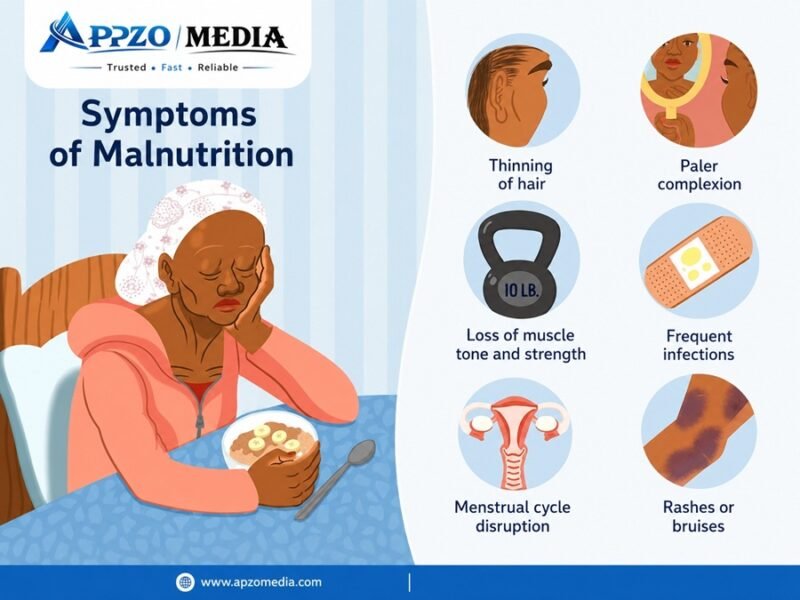
A poorly nourished body struggles to fight off illness. Frequent infections and slow wound healing are common symptoms, because the immune system depends heavily on protein, vitamins, and minerals to work properly.
5. Mood Changes, Irritability, or Low Concentration
Malnutrition affects the brain, not just the body. Irritability, apathy, and inattention are recognized symptoms of malnutrition, and in children this can show up as poor focus, mood swings, or trouble learning.
6. Dry Skin, Brittle Hair, and Nails
The skin and hair are often the first places nutrient deficiency shows up visibly. Dry, inelastic skin, rashes, and brittle hair with hair loss or pigment changes can all point to a lack of essential nutrients.
7. Swelling in the Legs, Feet, or Belly
This might seem counterintuitive, but swelling in the legs, feet, or abdomen can actually be a sign of malnutrition, especially in cases of severe protein deficiency where fluid builds up in the body.
8. Feeling Cold or Low Body Temperature
People who are malnourished often struggle to regulate body heat. A low body temperature and difficulty staying warm is a documented symptom of malnutrition.
9. Stunted Growth and Developmental Delays in Children
Long-term undernutrition in early childhood can cause lasting effects. Stunting — long-term growth retardation from poor diets or repeated infections — increases a child’s risk of illness and can lead to delayed mental development and reduced learning capacity. Infants who are malnourished may also be slower to reach milestones like crawling, walking, and talking.
10. Loss of Appetite and Disinterest in Food
This can be both a cause and a symptom. Reduced appetite and lack of interest in food or drink are common signs of malnutrition, and in older adults especially, this often goes unnoticed for a long time.
Who Is Most at Risk?
According to health experts, certain groups face a higher risk of malnutrition:
- Children, because their nutritional needs are higher relative to their size in order to support growth and development
- Older adults, particularly those who are hospitalized, in long-term care, or socially isolated
- People with chronic illness, since many long-term conditions directly affect appetite or the body’s ability to absorb calories
- Low-income households, where access to a variety of nutrient-dense food is limited
When Should You See a Doctor?
You don’t need to wait for severe symptoms to seek help. Anyone noticing signs like ongoing tiredness, unexpected weight loss, frequent illness, or poor concentration should speak to a doctor. If you notice these signs in a child, elderly parent, or someone else you care for, gently encourage them to get checked — many people don’t recognize the symptoms in themselves.
FAQs on Signs of Malnutrition
Q1. Can someone be overweight and still be malnourished? Yes. A person can be a healthy weight or even overweight and still be malnourished, since malnutrition depends on the balance of nutrients, not just body weight or calorie intake.
Q2. What are the earliest signs of malnutrition in a child? The earliest signs are usually slow growth or weight gain, combined with changes in behaviour such as irritability, low energy, or tiring more easily than other children.
Q3. Is malnutrition only linked to poverty? No. While poverty and food insecurity are major causes, malnutrition can also result from illness, digestive disorders, or conditions that affect nutrient absorption, regardless of income level.
Q4. Can malnutrition affect mental health? Yes. Malnutrition can cause irritability, apathy, and inattention, and in children it’s linked to poor concentration, anxiety, and difficulty learning new information.
Q5. Is malnutrition treatable? In most cases, yes. Early diagnosis followed by the right nutritional plan — often guided by a doctor or dietitian — leads to good recovery outcomes, though the timeline depends on the underlying cause.
Final Thoughts
Malnutrition is often silent in its early stages, which is exactly why awareness matters. Whether it’s a child not gaining weight, an elderly relative losing interest in meals, or unexplained tiredness in yourself — these small signs are worth paying attention to.
At Cry America, we believe that good nutrition is a right, not a privilege. Recognizing the signs early is the first step toward getting the right help — for your family, or for a child who needs it most.
This article is for informational purposes only and is not a substitute for professional medical advice. If you or someone you know shows signs of malnutrition, please consult a qualified healthcare provider.