

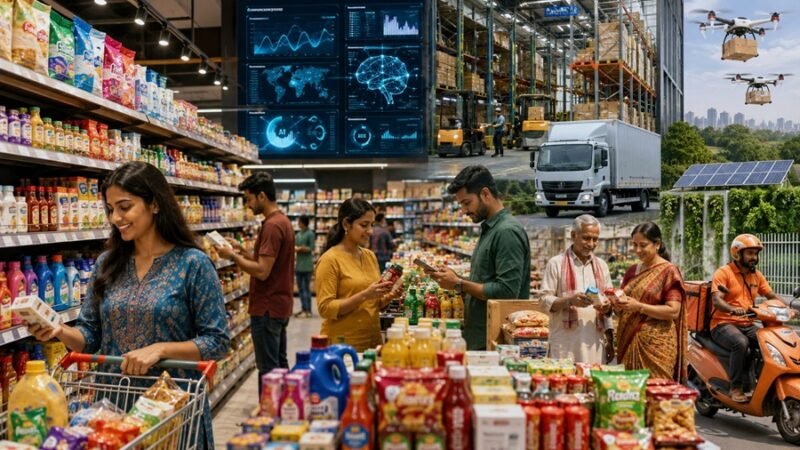
Walk into any Indian home — whether in Mumbai, Meerut, or a small village in Bihar — and you’ll find products from India’s FMCG sector. From the toothpaste you use in the morning to the biscuits you snack on in the evening, Fast-Moving Consumer Goods (FMCG) are an inseparable part of everyday life.
India’s FMCG market is one of the largest in the world and continues to grow at an impressive pace. In 2026, the sector is being fuelled by rising rural consumption, rapid e-commerce adoption, premiumization, and a growing health-conscious middle class. Industry estimates suggest the Indian FMCG market could reach USD 220–240 billion by 2025–26, making it one of the top growth stories in the Asia-Pacific region.
In this comprehensive guide, we take a deep dive into India’s top FMCG companies in india, their brands, market strategies, and what makes them the backbone of consumer India.
Understanding the FMCG Industry in India
What Does FMCG Mean?
FMCG stands for Fast-Moving Consumer Goods — products that are sold quickly, consumed regularly, and priced affordably. They have high turnover, short shelf lives, and are purchased frequently by consumers.
Major FMCG Product Categories
- Food & Beverages: Biscuits, packaged snacks, juices, noodles, tea, coffee
- Personal Care: Soaps, shampoos, toothpaste, skincare, deodorants
- Home Care: Detergents, dishwash, floor cleaners, mosquito repellents
- Healthcare: OTC medicines, nutritional supplements, Ayurvedic products
- Packaged Foods: Ready-to-eat meals, dairy products, breakfast cereals
Why FMCG is One of India’s Largest Industries
India’s 1.4 billion population — combined with a young demographic, increasing urbanisation, and growing disposable incomes — makes it a dream market for consumer goods companies. The FMCG sector contributes significantly to India’s GDP, employs millions directly and indirectly, and is one of the highest FDI-attracting industries.
Top FMCG Companies in India Driving Consumer Growth in 2026
Here is a detailed look at the leading FMCG players shaping India’s consumer landscape in 2026:
1. Hindustan Unilever Limited (HUL)
Hindustan Unilever is unquestionably India’s largest FMCG company. A subsidiary of the global giant Unilever, HUL has been a household name for over 85 years.
- Popular Brands: Lux, Dove, Lifebuoy, Surf Excel, Rin, Vim, Knorr, Horlicks, Pepsodent, Closeup
- Market Presence: Reaches over 9 million retail outlets across India; strong rural and urban penetration
- Recent Initiatives: Scaling its digital-first brands, investing in premiumization across skincare and beauty
- Competitive Advantage: Unmatched distribution network, decades of brand trust, global R&D support
2. ITC Limited
ITC started as a cigarette company but has transformed into a diversified FMCG powerhouse. Its FMCG segment has consistently outperformed industry averages.
- Popular Brands: Aashirvaad (atta, spices), Sunfeast (biscuits), YiPPee! (noodles), Savlon, Classmate, Engage, Fiama
- Market Presence: Strong pan-India presence with growing exports under Aashirvaad and Sunfeast
- Recent Initiatives: Doubling down on FMCG-first strategy, expanding agri-linked brands, health food innovation
- Competitive Advantage: Deep agri-network through e-Choupal, backward integration in raw materials
3. Nestlé India
Nestlé India is synonymous with quality packaged food. Its flagship product Maggi noodles is one of the most beloved food brands in India, bouncing back strongly after the 2015 controversy.
- Popular Brands: Maggi, Nescafé, KitKat, Munch, Milkmaid, Nestea, Nan (infant nutrition)
- Market Presence: Dominant in packaged foods in metros and Tier-1/Tier-2 cities
- Recent Initiatives: Expanding health and nutrition portfolio; investing in local manufacturing
- Competitive Advantage: Global brand equity, strong innovation pipeline, premium positioning
4. Britannia Industries
Britannia is India’s leading biscuit company and is rapidly evolving into a full-fledged foods company.
- Popular Brands: Good Day, Tiger, NutriChoice, Milk Bikis, Marie Gold, Treat
- Market Presence: Sold across 5 million retail outlets; strong rural reach through Tiger brand
- Recent Initiatives: High-protein biscuits, international expansion, dairy business scaling
- Competitive Advantage: Largest biscuit brand in India, strong rural and urban distribution
5. Dabur India
Dabur India is the world’s largest Ayurvedic and natural health care company, blending traditional Indian wisdom with modern science.
- Popular Brands: Dabur Honey, Chyawanprash, Real Juices, Vatika, Hajmola, Odomos, Dabur Red Paste
- Market Presence: Strong in India and 120+ international markets
- Recent Initiatives: Expanding in international markets; building immunity and wellness portfolio post-COVID
- Competitive Advantage: Heritage Ayurvedic brand, strong rural distribution, diverse category presence
6. Marico
Marico is a consumer goods company known for its iconic brand Parachute coconut oil and healthy foods brand Saffola.
- Popular Brands: Parachute, Saffola, Set Wet, Livon, Nihar, Hair & Care
- Market Presence: Present in 25+ countries; growing in Southeast Asia and Middle East
- Recent Initiatives: Digital-first strategy under Beardo and Just Herbs, premium skincare expansion
- Competitive Advantage: Market leader in coconut oil; strong health-positioning of Saffola
7. Godrej Consumer Products (GCPL)
GCPL is a leading FMCG company with a strong presence in home care and personal care categories.
- Popular Brands: Cinthol, Good Knight, Hit, Godrej No.1 Soap, Ezee, Aer
- Market Presence: Strong in India and emerging markets across Africa and Southeast Asia
- Recent Initiatives: Eco-friendly product lines, electric mosquito repellents, sustainable packaging
- Competitive Advantage: Category leader in home insecticides, strong international presence
8. Parle Products
Parle Products is an iconic Indian FMCG company and the maker of Parle-G — the world’s largest-selling biscuit by volume.
- Popular Brands: Parle-G, Monaco, Krackjack, Hide & Seek, Melody, Mango Bite
- Market Presence: Present across all Indian states with a strong rural and semi-urban footprint
- Recent Initiatives: Expanding into premium biscuits and snacks; scaling export markets
- Competitive Advantage: Unbeatable brand recall, affordable pricing, widest distribution in India
9. Emami
Emami is known for its niche Ayurvedic and health-based personal care products, with a particularly strong rural consumer base.
- Popular Brands: BoroPlus, Navratna, Fair & Handsome (now Smart & Handsome), Zandu Balm
- Market Presence: Strong in North and East India; growing international presence
- Recent Initiatives: Rebranding and men’s grooming expansion; Zandu healthcare products
- Competitive Advantage: Ayurvedic product trust, affordable pricing, strong OTC healthcare presence
10. Mamaearth
Mamaearth is the poster child of India’s new-age D2C (Direct-to-Consumer) FMCG revolution. Founded in 2016, it became one of India’s fastest-growing personal care companies.
- Popular Brands: Mamaearth (toxin-free baby & skincare), The Derma Co. (skincare), Aqualogica
- Market Presence: Digital-first; now expanding aggressively into offline retail
- Recent Initiatives: Expanding The Derma Co. range, entering new geographies, scaling offline distribution
- Competitive Advantage: Millennial-focused branding, natural/toxin-free positioning, D2C expertise
Comparison Table: Leading FMCG Companies in India 2026
Here is a quick side-by-side comparison of India’s top FMCG companies:
| Company | Key Brands | Main Product Categories | Market Strength | Growth Focus 2026 |
| Hindustan Unilever (HUL) | Lux, Dove, Surf Excel, Lifebuoy, Knorr | Personal Care, Home Care, Foods | Pan-India, Urban + Rural | Premiumization, D2C |
| ITC Limited | Aashirvaad, Sunfeast, Classmate, Savlon | Foods, Stationery, Personal Care | Diversified conglomerate | FMCG-first strategy |
| Nestlé India | Maggi, KitKat, Munch, Nescafé | Packaged Foods, Beverages | Urban & Tier-2 cities | Health & nutrition focus |
| Britannia Industries | Good Day, Tiger, NutriChoice, Milk Bikis | Biscuits, Bread, Dairy | Strong rural & urban reach | High-protein, premium SKUs |
| Dabur India | Dabur Honey, Chyawanprash, Real Juices | Healthcare, Juices, Hair Care | Ayurvedic brand trust | International expansion |
| Marico | Parachute, Saffola, Set Wet | Hair Care, Edible Oils, Skincare | Strong urban market | Premium & digital-first |
| Godrej Consumer Products | Cinthol, Good Knight, Hit, Godrej No.1 | Home Care, Personal Care | Africa + Asia presence | Eco-friendly products |
| Parle Products | Parle-G, Monaco, Hide & Seek, Krackjack | Biscuits, Snacks, Confectionery | Largest biscuit brand India | Affordable + premium range |
| Emami | BoroPlus, Navratna, Fair & Handsome | Skincare, Hair Oil, Healthcare | Strong rural India base | Ayurvedic innovations |
| Mamaearth | Mamaearth, The Derma Co., Aqualogica | Skincare, Haircare, Baby Care | Digital-first, D2C | Offline retail expansion |
Key Trends Shaping India’s FMCG Industry in 2026
1. Rural Consumption Growth
Rural India now accounts for 35–40% of total FMCG sales. Improving road connectivity, rising farm incomes, and mobile internet penetration are expanding the rural consumer base rapidly.
2. Digital Commerce and Quick Commerce
Platforms like Blinkit, Zepto, Swiggy Instamart, and BigBasket are changing how FMCG products are bought. FMCG brands are now allocating dedicated budgets for quick-commerce shelf visibility and digital promotions.
3. Premiumization
India’s rising middle class is trading up. From premium biscuits to luxury soaps and organic skincare — consumers are willing to spend more for perceived quality and wellness benefits.
4. Sustainable Packaging
Regulatory pressure and consumer awareness are pushing FMCG companies to adopt recyclable, biodegradable, and refillable packaging formats.
5. Health-Conscious Consumer Behaviour
Post-pandemic, Indians are more health-aware than ever. Products offering immunity benefits, natural ingredients, reduced sugar, and high protein are growing rapidly.
6. D2C Brand Expansion
Brands like Mamaearth, WOW Skin Science, Minimalist, and MCaffeine are leveraging Instagram, YouTube, and their own websites to reach consumers directly — bypassing traditional retail.
7. AI and Data-Driven Marketing
FMCG companies are increasingly using AI for demand forecasting, personalised marketing, and supply chain optimisation. HUL, ITC, and Nestlé have all invested significantly in data analytics capabilities.
Emerging FMCG Brands to Watch in 2026
Beyond the established giants, a new wave of FMCG brands is gaining consumer traction:
- Health Foods: mCaffeine, Yoga Bar (ITC), RiteBite Max Protein, Sattu-based brands
- Organic Products: Organic India, 24 Mantra Organic, Two Brothers Organic Farms
- Ayurvedic Products: Patanjali (still growing), Kerala Ayurveda, Zandu (Emami)
- Sustainable Goods: Paper Boat (natural beverages), Rustic Art (eco-personal care)
- Digital-First Brands: WOW Skin Science, Minimalist, Sugar Cosmetics, Plum
Challenges Facing FMCG Companies in India
Inflation and Rising Input Costs
Vegetable oils, packaging materials, and fuel costs have been volatile. FMCG companies have had to navigate price hikes carefully to avoid volume loss.
Supply Chain Disruptions
From COVID-19 aftershocks to global logistics bottlenecks, supply chain resilience has become a top priority for FMCG companies.
Intense Competition
The entry of D2C brands, regional players, and private labels from e-commerce platforms (like Amazon Basics and JioMart’s own brands) is intensifying competition.
Changing Consumer Preferences
Consumers are now more demanding than ever — they want transparency in ingredients, sustainable packaging, and authentic brand stories.
Regulatory Compliance
FSSAI, BIS, and new ESG-reporting norms are adding compliance costs. Companies that build regulatory readiness as a core capability will have a competitive edge.
Why FMCG Companies Continue to Attract Investors
The Indian FMCG sector remains one of the most investor-friendly sectors in India’s stock market. Here’s why:
- Stable demand: People need soaps, biscuits, and toothpaste regardless of the economy
- Strong brand loyalty: Decades-old brands like Parle-G, Dabur Chyawanprash, and Lifebuoy are deeply embedded in consumer habits
- Recurring revenue: FMCG products are repurchased regularly, ensuring predictable cash flows
- Expansion headroom: Tier-2, Tier-3, and rural markets still offer massive untapped potential
- Long-term growth: India’s demographics — young population, rising incomes — support multi-decade growth
Stocks like HUL, ITC, Britannia, Dabur, and Marico are considered blue-chip investments on Indian stock exchanges and are part of major indices like Nifty 50 and Nifty FMCG.
Future Outlook for FMCG Companies in India
The next 5 years look promising for India’s FMCG sector. Here’s what to expect:
- Market Size: India’s FMCG market is projected to reach USD 250–300 billion by 2030
- Technology Adoption: AI, ML, and IoT will transform supply chains, demand forecasting, and personalised marketing
- Tier-2/Tier-3 Expansion: The next billion consumers will come from smaller towns and rural areas
- Export Opportunities: Indian FMCG brands — especially Ayurvedic, organic, and natural — are finding traction in overseas markets
- Evolving Consumer Behaviour: Experience-first, health-first, and sustainability-first consumers will reshape product portfolios
The companies that invest in digital infrastructure, sustainability, and rural distribution today will be tomorrow’s market leaders.
Conclusion
India’s FMCG industry is not just a business sector — it’s the engine of everyday life. Whether you’re a consumer buying your favourite biscuits, an investor looking for stable blue-chip stocks, or an entrepreneur studying business models, the FMCG space offers rich insights and opportunities.
Companies like HUL, ITC, Nestlé, Britannia, and Dabur have built their dominance over decades through strong brands, deep distribution, and relentless consumer focus. Meanwhile, new-age brands like Mamaearth are proving that digital-first models can disrupt even the most established sectors.
In 2026 and beyond, India’s FMCG sector will be shaped by rural growth, premiumization, digital commerce, and sustainability. For consumers, this means more choice. For investors, it means long-term opportunity. And for India’s economy, it means a stronger, more resilient consumer backbone.
Frequently Asked Questions (FAQs)
Q1. Which is the largest FMCG company in India?
Hindustan Unilever Limited (HUL) is India’s largest FMCG company by market capitalisation and revenue. It reaches over 9 million retail outlets and owns some of India’s most iconic consumer brands.
Q2. What are FMCG products?
FMCG products (Fast-Moving Consumer Goods) are everyday essentials that are purchased frequently, consumed quickly, and sold at relatively low prices. Examples include soaps, shampoos, biscuits, noodles, juices, toothpaste, and detergents.
Q3. Which FMCG brands are growing fastest in India?
In 2026, brands like Mamaearth (D2C skincare), Yoga Bar (health snacks by ITC), Zandu (Ayurvedic), and The Derma Co. are among the fastest-growing FMCG brands in India, driven by digital-first strategies and health positioning.
Q4. Why is the FMCG sector important to India’s economy?
The FMCG sector is the 4th largest sector in the Indian economy. It contributes significantly to GDP, generates direct and indirect employment for millions, and supports the agricultural supply chain through raw material procurement.
Q5. How is e-commerce affecting FMCG companies?
E-commerce, especially quick commerce platforms like Blinkit and Zepto, has opened new sales channels for FMCG companies. Brands can now reach consumers in under 10 minutes in major cities, shortening purchase cycles and improving availability of premium products.
Q6. What are the latest FMCG trends in 2026?
Key trends in 2026 include rural consumption growth, health-first products, quick commerce adoption, sustainable packaging, premiumization, D2C expansion, and AI-powered marketing and supply chain management.
Q7. Which FMCG companies are best for investment?
Hindustan Unilever (HUL), ITC Limited, Nestlé India, Britannia Industries, Dabur India, and Marico are considered among the best FMCG stocks for long-term investment in India due to their strong fundamentals, brand portfolios, and consistent dividend track records. This is for informational purposes only — please consult a financial advisor before investing.
Q8. What is the future of the FMCG industry in India?
The future of India’s FMCG industry is bright. With a projected market size of USD 250–300 billion by 2030, expanding rural markets, growing e-commerce, and a young, aspirational population, the sector is set for sustained long-term growth. Sustainability, health, and digital innovation will be the defining themes.