
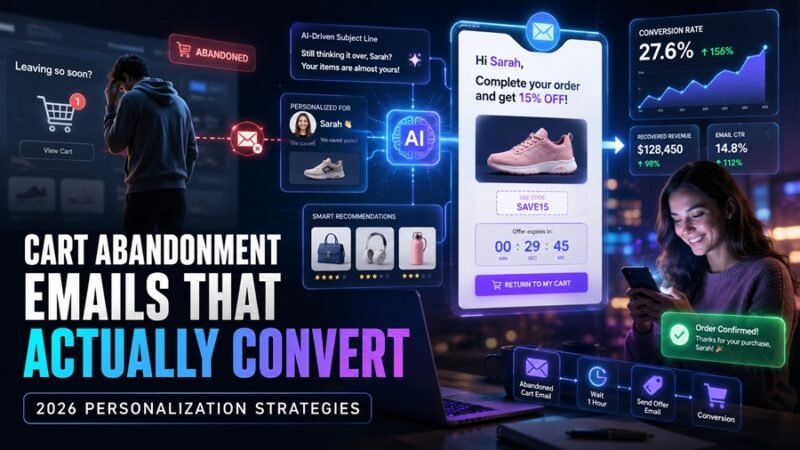
Cart abandonment continues to be one of the biggest challenges in ecommerce. Despite improvements in user experience and payment systems, a significant percentage of shoppers still leave without completing their purchase. For retailers, this represents a major revenue opportunity waiting to be recovered.
Email personalization has emerged as one of the most effective ways to address cart abandonment. However, as customer expectations evolve, the strategies that worked a few years ago are no longer enough. In 2026, success depends on delivering highly relevant, timely, and context-aware experiences.
Understanding what works today is essential for businesses looking to improve conversions and maximize the value of their email marketing efforts.
Why Cart Abandonment Happens
Before addressing solutions, it is important to understand why users abandon carts. Common reasons include:
- Unexpected costs such as shipping or taxes
- Complicated checkout processes
- Lack of trust or security concerns
- Comparison shopping
- Distractions or interruptions
Not all cart abandonment is negative. In many cases, users are still interested but need a nudge to complete the purchase.
This is where personalized email communication becomes critical.
The Evolution of Cart Abandonment Emails
Traditional cart abandonment emails were simple reminders. They included basic product details and a call to action.
While these emails still have value, modern users expect more. Generic reminders are often ignored because they do not provide additional value.
In 2026, effective cart abandonment emails are:
- Highly personalized
- Triggered in real time
- Context-aware
- Integrated with broader customer journeys
Key Elements of High-Converting Cart Abandonment Emails
Real-Time Triggers
Timing is one of the most important factors in cart recovery. Emails sent within minutes of abandonment are more effective than those sent hours later.
Real-time triggers ensure that the message reaches the user while the intent is still fresh.
Personalized Product Details
Including the exact products left in the cart is essential. However, personalization should go beyond this.
Effective emails also include:
- Product images
- Key features or benefits
- Availability status
This reinforces the value of the product and reminds users why they were interested.
Dynamic Product Recommendations
Adding personalized recommendations increases the chances of conversion. These can include:
- Similar products
- Complementary items
- Bestsellers in the same category
This helps users discover alternatives if they are still undecided.
Context-Aware Messaging
Messaging should reflect the user’s behavior and intent.
For example:
- A first-time visitor may need reassurance and trust signals
- A returning customer may respond better to urgency or incentives
Adapting the tone and content improves relevance.
Personalized Incentives
Discounts and offers can be effective, but they should be used strategically.
Instead of offering the same discount to all users, personalization can determine:
- Who needs an incentive
- What type of incentive works best
- When to introduce the offer
This prevents unnecessary margin loss while maximizing conversions.
Advanced Strategies for 2026
Multi-Step Email Sequences
A single email is often not enough to recover a cart. Multi-step sequences allow businesses to engage users over time.
A typical sequence may include:
- Immediate reminder
- Follow-up with additional information
- Final email with urgency or incentive
Each step builds on the previous one.
Real-Time Content Updates
Modern email systems can update content at the time of opening. This ensures that information such as pricing and availability is always accurate.
Behavioral Segmentation
Segmenting users based on behavior allows for more targeted communication.
Examples include:
- High-intent users
- Price-sensitive users
- Repeat customers
Each segment can receive tailored messaging.
Cross-Channel Integration
Email should not operate in isolation. Integrating email with other channels such as website personalization and push notifications creates a more cohesive experience.
For example, a user who receives a cart abandonment email may also see personalized recommendations when they return to the website.
Metrics That Define Success
To evaluate the effectiveness of cart abandonment emails, businesses should focus on metrics such as:
- Recovery rate
- Conversion rate
- Revenue per email
- Average order value
These metrics provide a clear view of performance and areas for improvement.
Common Mistakes to Avoid
Sending Emails Too Late
Delayed communication reduces effectiveness and misses the window of intent.
Overusing Discounts
Offering discounts too frequently can reduce profitability and train users to wait for offers.
Ignoring Personalization
Generic emails fail to engage users and lead to lower conversions.
Lack of Testing
Without testing, it is difficult to identify what works best.
Best Practices for Email Personalization
Use High-Quality Data
Accurate data is essential for effective personalization.
Optimize Timing
Send emails when users are most likely to engage.
Focus on User Experience
Ensure that emails are easy to read and navigate.
Continuously Test and Improve
Experiment with different strategies to optimize performance.
The Role of AI in Cart Abandonment Emails
Artificial intelligence is playing an increasingly important role in email personalization.
AI can:
- Predict which users are likely to convert
- Optimize send times
- Personalize content dynamically
- Recommend products effectively
This allows businesses to deliver smarter and more effective campaigns.
The Future of Cart Abandonment Strategies
Cart abandonment strategies will continue to evolve with advancements in technology.
Future trends include:
- More predictive personalization
- Greater integration across channels
- Increased use of real-time data
- More interactive email experiences
These developments will make cart recovery more efficient and effective.
Conclusion
Cart abandonment is a challenge, but it also presents a significant opportunity for growth. Email personalization has proven to be one of the most effective ways to recover lost sales.
In 2026, success depends on delivering relevant, timely, and personalized communication that aligns with user intent. By leveraging real-time data, dynamic content, and advanced strategies, businesses can significantly improve their cart recovery efforts.
Retailers that invest in modern email personalization techniques will be better positioned to drive conversions, increase revenue, and enhance customer experience.