


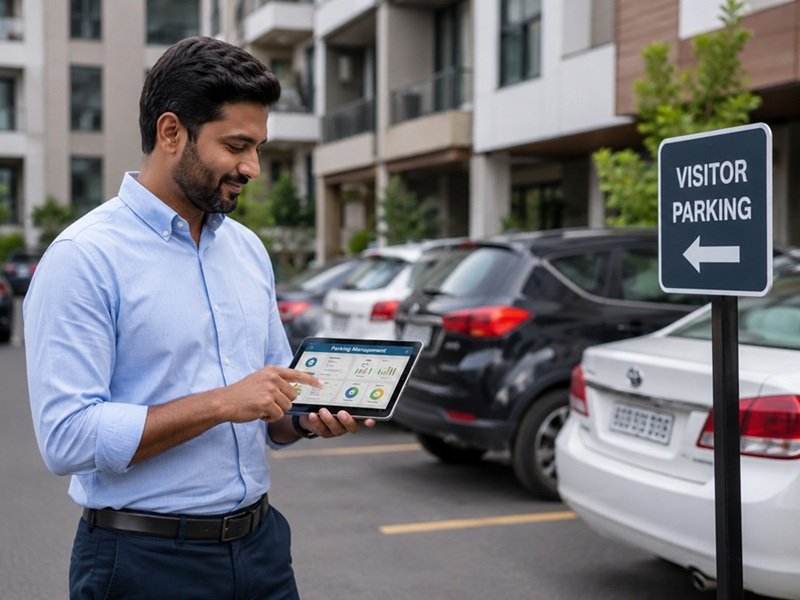
If you manage an apartment complex, HOA, or commercial lot, you already know visitor parking can turn into a full time headache. Someone’s cousin blocks a fire lane. A delivery driver can’t find guest parking. A resident swears they registered their visitor and the front gate has no record of it. That’s exactly what vrr parking is designed to solve, and if you’re researching it for your property, you probably want a straight answer on whether it actually works, not another page of marketing copy.
If your property deals with tight lot space on top of visitor headaches, it’s also worth reading our piece on the advantages of car elevators in urban parking solutions for a look at space-saving parking technology.
This guide walks through what VRR Parking is, how the setup actually looks from the admin side, what it really costs, and where it falls short. No fluff, just what you need to decide if it fits your property.
What Is VRR Parking? (Quick Overview)
At its simplest, vrr parking is a cloud based visitor and resident parking management platform, or put another way, a vrr parking car parking management system built to replace paper permits and manual sign in sheets. It uses digital registration that residents, visitors, and property staff can all access from a phone or browser. You can check the app directly on the App Store or Google Play before deciding whether to roll it out property wide.
The platform is used across hundreds of properties and processes well over a million visitor parking permits a year, according to VRR’s own published figures. That scale matters because it tells you the system has been tested across a wide range of property sizes, not just a handful of pilot buildings.
At its core, VRR Parking solves one specific problem: who is allowed to park here, and how do we prove it without a stack of paper tags. For HOA boards and property managers, that’s often the single biggest source of resident complaints and staff time.
If you’re comparing tools in this category more broadly, it’s worth reading through a parking management software comparison before committing to any single platform.
How VRR Parking Works (Step by Step Setup)
Here’s what the actual workflow looks like once a property is on VRR Parking.
For Property Managers (Admin Side)
This is where the platform functions as true vrr parking manager software rather than just a resident-facing app. Setting up a property starts with creating an account and adding your property details, unit count, and parking zones. From there, admins can:
- Add units and assign them to residents
- Set visitor parking limits (for example, a two visitor cap per unit per day)
- Configure rules for guest duration, like a 24 hour or 72 hour max stay
- Pull reports on who’s parked where and for how long
A mid sized apartment complex with 150 units typically takes an afternoon to get fully configured, assuming unit data is ready to import. Larger HOAs with multiple gated sections may need a bit more setup time to map out zone specific rules.
For Residents
Once the property is live, residents log into the app and:
- Add their own vehicle details
- Register a visitor by entering the guest’s license plate and expected arrival window
- Get a confirmation the permit is active
No printing, no dropping off a paper pass at the leasing office.
For Visitors
If a property allows it, visitors can self register instead of relying on the resident to do it for them. They enter their license plate and the unit they’re visiting, and the system checks it against approved guest lists. This is genuinely useful for properties with high visitor turnover, like complexes near a university or hospital where residents have unpredictable schedules.
VRR Parking Pricing Explained
This is where a lot of property managers get tripped up, so let’s break it down plainly. Understanding vrr parking pricing upfront saves you from surprises once your property is live.
VRR Parking uses a revenue share model rather than a flat monthly subscription:
- No upfront setup fee
- No fixed monthly charge
- The platform keeps 30% of parking related earnings, and the property keeps 70%
That structure works well if your property already monetizes visitor parking, guest passes, or overflow spots. It’s less attractive if your parking is entirely free for residents and visitors, since there’s no revenue to share and the value comes purely from the management tools themselves.
Here’s a simple way to think about it. If your property brings in $2,000 a month from visitor parking fees, VRR takes roughly $600 and you keep $1,400, along with the full software platform. Compare that to a flat fee competitor charging, say, $300 a month regardless of revenue. If your property earns less than $1,000 a month from parking, the revenue share model often costs you less. If you’re running a large commercial lot with high parking revenue, a flat fee tool might actually save you more over time.
Run the numbers against your property’s actual parking revenue before assuming either model is automatically cheaper.
Key Features for Property Managers
Taken together, these features are what make VRR one of the more complete vrr parking management solutions on the market for resident heavy properties, rather than just a simple permit app.
Visitor Self Registration and LPR
License plate recognition (LPR) lets the system identify vehicles at entry points without a physical permit or tag. This cuts down on lost or forgotten passes and speeds up gate entry, which matters most during move in weekends or big events when visitor traffic spikes.
Virtual Resident Permits
Residents don’t need a hanging tag or window sticker. Their vehicle is tied to their profile digitally, which means fewer replacement requests when tags fade, fall off, or get left in a car that’s sold.
Real Time Availability Tracking
Staff and residents can see current parking availability, which helps prevent overbooking visitor spots on busy days like holidays or community events.
Earnings Dashboard
For properties that charge for visitor or overflow parking, the dashboard shows exactly what’s been collected and when, which simplifies monthly reporting to ownership or the HOA board.
Analytics and Usage Reporting
You can pull data on peak parking times, how often visitor limits are hit, and which units generate the most guest traffic. This is useful when you’re deciding whether to add more visitor spots or tighten guest policies.
Pros and Cons of VRR Parking
Pros:
- No upfront cost makes it low risk to try
- Cuts down significantly on manual permit processing
- Self registration reduces front office phone calls
- Scales from small HOAs to larger commercial lots
- Reporting tools give real visibility into parking usage
Cons:
- Revenue share model isn’t ideal for properties with free parking and no monetization
- Relies on residents and visitors having smartphone access, which can be a barrier for some older communities
- LPR accuracy depends on camera quality and lighting at entry points, so results vary by property setup
- Support responsiveness has been inconsistent according to some user reports, so it’s worth testing support turnaround before fully committing
VRR Parking vs Other Parking Management Platforms
| Platform | Pricing Model | LPR Support | Self Registration | Best Fit |
| VRR Parking | Revenue share (30%) | Yes | Yes | Mid to large HOAs and apartment complexes |
| ParkMobile | Transaction fee per session | Limited | Yes | Commercial lots, on street parking |
| SpotHero | Booking commission | No | Yes | Public parking marketplaces, not resident heavy properties |
| ButterflyMX | Flat monthly fee | Yes (hardware dependent) | Yes | Properties already using ButterflyMX access control |
If your property already uses ButterflyMX for building access, it may make sense to check whether their parking module integrates before adding a separate platform. If you’re running a public facing commercial lot rather than a resident community, ParkMobile or SpotHero are generally a closer fit than VRR.
If you’re also exploring alternative approaches to visitor parking, our guide on Pass2Park’s stress-free parking system covers another option worth comparing before you decide.
Is VRR Parking Secure? Data and Privacy Overview
VRR Parking collects license plate numbers, resident contact information, and payment details when applicable. The platform states that data is encrypted during transactions and stored in the cloud, with regular security audits.
For property managers, the practical takeaway is this: you’re responsible for how resident data is handled even when a third party platform manages it. Before rolling this out, it’s worth reviewing VRR’s privacy policy directly and confirming it aligns with any state specific data protection requirements your property is subject to, particularly if you’re in California or another state with stricter consumer privacy laws. The National Apartment Association publishes updated guidance on resident data handling that’s worth a look if you manage multifamily properties.
Common Issues and Troubleshooting
Visitor registration not going through: Usually caused by a typo in the license plate field or an expired visitor window. Double check the plate format matches exactly what’s on the vehicle.
LPR not detecting a plate at the gate: Often a camera angle or lighting issue rather than a software problem. Dirty or damaged plates also cause misreads.
Login or access issues: Password resets are handled in app. If a resident recently changed units or moved out, their old login may need to be deactivated by an admin before a new one is created.
Support escalation: For issues beyond basic troubleshooting, VRR offers email and phone support. Response times can vary, so for time sensitive gate access problems, it’s worth having a manual backup process in place.
Is VRR Parking Worth It? Apzo Media’s Verdict
At Apzo Media, we think VRR Parking makes the most sense for mid to large HOAs and apartment communities that already deal with high visitor turnover and want to cut down on manual permit work. The no upfront cost setup makes it low risk to test, and the self registration features genuinely reduce the burden on front office staff.
It’s a weaker fit if your community has an older resident base with limited smartphone use, or if your parking is entirely free with no revenue to share. In those cases, a flat fee platform or a simpler digital permit tool might serve you better.
The best move is to run a short pilot on one building or section before rolling it out property wide. That gives you real usage data on your specific resident base before you commit to a full switch. Overall, vrr parking is worth serious consideration if visitor management is currently eating up your team’s time.
Ready to compare your options? Browse more property management and parking tech reviews on Apzo Media before you decide.
FAQs
What is vrr parking used for?
It’s used to manage visitor and resident parking digitally, replacing paper permits with app based registration, license plate recognition, and real time availability tracking for HOAs, apartment complexes, and commercial lots.
Is VRR Parking free for property managers?
There’s no upfront setup fee or fixed monthly charge. VRR takes a 30% share of parking related earnings instead, so it’s free to start but not free if your property monetizes parking.
How does VRR Parking make money?
Through a revenue share model. The platform keeps 30% of earnings generated from visitor and guest parking fees, while the property keeps 70%.
Can visitors park without registering in advance?
It depends on how the property configures the platform. Many properties allow self registration on arrival, but this can be restricted if the property requires advance notice.
Does VRR Parking work with existing gate or LPR hardware?
Integration depends on your current hardware setup. It’s worth confirming compatibility with your existing gate system before assuming a seamless integration.
How is resident data kept secure on VRR Parking?
VRR states it uses encryption for transactions and stored data, along with regular security audits. Review their privacy policy directly for specifics relevant to your state’s data protection requirements.
What happens if a visitor doesn’t have a smartphone?
This is a real limitation. Properties with a significant portion of residents or visitors without smartphone access may need a manual backup process for guest registration.
Is VRR Parking available outside the U.S.?
VRR Parking primarily serves U.S. based properties. If you’re managing a property outside the U.S., confirm availability directly with VRR before assuming coverage.
Have you used VRR Parking at your property? Share your experience in the comments, we’d like to hear what’s working and what isn’t.