


India’s digital payment landscape is witnessing a significant shift starting August 1, 2025, as new guidelines by the National Payments Corporation of India (NPCI) come into effect. These changes aim to streamline UPI transactions, reduce server overload, and enhance user security. From daily limits on balance checks to strict timing for autopay mandates, here’s everything you need to know.
Key UPI Rule Changes from August 1
1. Balance Check Limit — 50 Times Per Day Per App
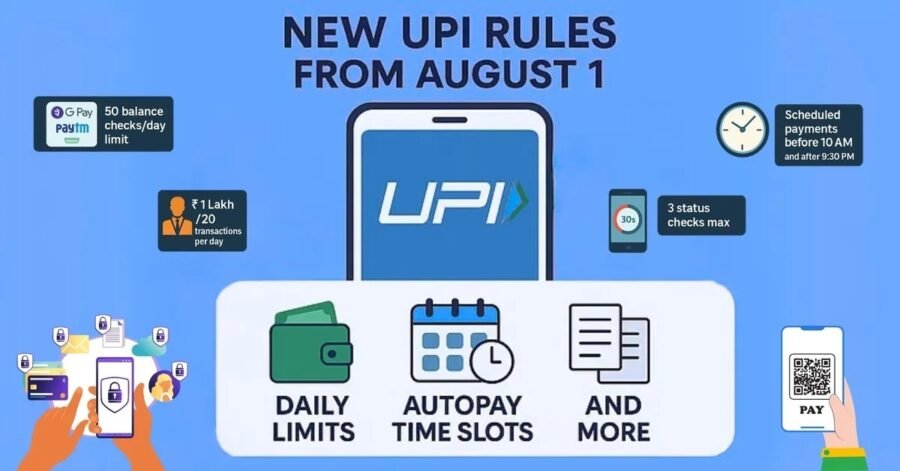
One of the most noticeable changes is the restriction on the number of times users can check their bank account balance through a UPI app. You can now perform a maximum of 50 balance inquiries per day per application. This applies to all popular apps like Google Pay, PhonePe, Paytm, and others.
The move is aimed at preventing excessive server load due to repeated balance checks, which often happen through background processes.
2. Balance Will Auto-Display After Every Transaction
To reduce the need for manual balance checks, UPI apps will now automatically display your remaining balance on the screen after every successful payment. This ensures users are always informed without having to perform separate balance inquiries.
3. View Linked Bank Accounts — Limited to 25 Times Per Day
Users can now view the list of bank accounts linked to their UPI profile only 25 times a day per app. Previously, there were no restrictions, which sometimes led to unnecessary API requests clogging the system.
4. Pending Transaction Status — Limited Attempts
If a UPI transaction remains pending, users will now be allowed to check its status only three times, with a mandatory 90-second gap between attempts. This is designed to reduce unnecessary status queries that burden the payment networks.
5. Autopay Mandates — Time Windows Introduced
Scheduled autopay mandates such as utility bills, subscriptions, or loan EMIs will now be executed during specified time windows:
Before 10 AM
Between 1 PM to 5 PM
After 9:30 PM
This scheduling helps reduce transaction failures by easing peak-time network congestion.
6. Payee Name & Transaction ID Visibility
For every UPI transaction, users will now be shown the recipient’s registered name and transaction ID before approving the payment. This critical step will help prevent errors in transferring money to unintended recipients and reduce fraud incidents.
7. Retry Limit & Faster Refunds for Failed Transactions
In case of failed UPI transactions, users will get up to three retry attempts. Refunds for failed payments will also be processed faster under the new framework, offering a smoother user experience.
Impact on SBI Credit Card Holders
Coinciding with these UPI changes, SBI Card is implementing a significant update for its credit card customers. From August 11, 2025, the complimentary air-accident insurance cover provided on premium cards like SBI ELITE, PRIME, and selected Platinum variants will be withdrawn.
Earlier, these cards offered accident insurance coverage of ₹1 crore or ₹50 lakh as a free benefit, but this will no longer be available. Cardholders are advised to check the updated terms and conditions and consider alternative insurance coverage if needed.
Why Are These Changes Important?
The NPCI’s objective behind these measures is clear:
Reduce backend load on UPI systems, ensuring faster, more reliable transactions.
Improve transaction security by giving users more visibility and control.
Smoothen payment processes by regulating autopay executions and limiting unnecessary system queries.
Protect users from fraud with enhanced verification steps before transactions are approved.
For SBI Card users, the removal of complimentary insurance emphasizes the need to revisit card benefits and assess if the card aligns with their financial protection needs.
What Should You Do as a User?
Limit unnecessary balance checks to avoid hitting the new daily cap.
Plan your autopayments within the allowed time windows to ensure successful transactions.
Always verify the recipient’s name and transaction ID before finalizing payments.
SBI Card users should review alternative insurance options if they relied on the complimentary cover.
Stay updated on your UPI app’s notification for smoother payment experiences.
Final Thoughts
With digital payments becoming a daily necessity, these new UPI rules from August 1, 2025, are a step towards building a more robust, efficient, and secure ecosystem. While users may initially find these restrictions an adjustment, the long-term benefits of faster transactions and reduced payment errors are undeniable. Similarly, SBI Card users need to be proactive in understanding the policy changes to avoid any surprises.