



Not everyone wants to route every financial move through a bank, and plenty of people don’t have that option at all. Fortunately, accessing digital assets no longer depends on holding a traditional account. Here’s how cash-based access works and what to weigh before you begin.
Why some consumers seek alternatives
Banking isn’t the default choice for everyone. A Federal Reserve Bank of Cleveland study found that more than 18% of U.S. households are unbanked or underbanked, often citing high fees, privacy concerns, and distrust as reasons for stepping outside the mainstream system. Others simply prefer the immediacy and control of cash for certain transactions. Whatever the motivation, demand for flexible, non-bank ways to manage money is real and steady.
The rise of alternative financial access points
Financial technology has widened the range of ways people can move and store value. Payment apps, prepaid cards, and peer-to-peer transfer tools have all grown as consumers look for convenience without a branch visit. This wave of innovation has made financial services more accessible to people who once had few choices, and digital assets sit squarely within that shift: reachable through channels that don’t require a checking account.
Converting cash into digital assets
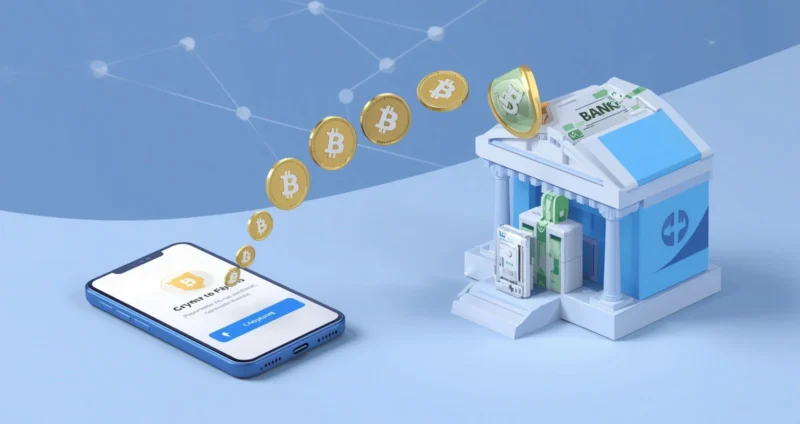
For anyone holding physical cash, moving into the digital asset market can be refreshingly direct. A Bitcoin ATM lets you insert cash and receive cryptocurrency sent straight to your own wallet, usually within minutes and without linking a bank account. The appeal is obvious for cash-reliant users: the FDIC reports that around 4.2% of U.S. households were unbanked in 2023, and roughly two-thirds of them rely entirely on cash. A kiosk offers them a practical on-ramp.
Important considerations before transacting
Convenience shouldn’t override caution. Before using any cash-to-crypto service, understand the fees involved, since kiosks often charge more than online exchanges. Check the security of the wallet you’re sending to, confirm the address carefully, and be ready for identity-verification steps, which are standard and help keep transactions legitimate. A little research upfront prevents costly, irreversible mistakes.
Participating responsibly
Digital assets can lose value quickly, so never commit more than you can comfortably afford to lose. Stay alert to anyone pressuring you to act fast, and treat unsolicited advice with suspicion. Responsible participation comes down to staying informed and moving at your own pace.
Cash-based access has opened the digital asset market to people banks often leave behind. Approach it with clear eyes by understanding the costs, protecting your funds, and keeping learning, and you can take part on your own terms, safely and with confidence. There’s no need to hurry the process, either. The steadiest participants tend to be those who start small, ask plenty of questions, verify every detail before confirming, and let their knowledge grow with each transaction they complete along the way.
Frequently Asked Questions
Can I buy cryptocurrency with cash if I don’t have a bank account?
Yes. Bitcoin ATMs and similar kiosks let you insert physical cash and receive crypto directly in your own wallet, no linked bank account needed. Most transactions complete within minutes, making them one of the few crypto on-ramps built specifically for cash-based users.
How much does it cost to convert cash to crypto at a kiosk?
Kiosk fees typically run higher than online exchanges, often between 5–15% depending on the operator and location. Always check the fee breakdown before confirming a transaction — it’s usually displayed on-screen prior to checkout.
Is using a Bitcoin ATM safe?
It can be, if you take basic precautions. Double-check the wallet address you’re sending to, use machines from reputable operators, and complete any identity-verification steps requested — these exist to keep transactions legitimate, not to slow you down unnecessarily.
Do Bitcoin ATMs require ID verification?
Most do, especially for larger transactions. This is standard practice under anti-money-laundering rules, not a red flag. Expect to provide a phone number, ID scan, or both depending on the amount you’re converting.
Why do people choose cash-based crypto access over traditional banking?
Reasons vary — high bank fees, privacy preferences, distrust of financial institutions, or simply no access to banking services. Federal Reserve Bank of Cleveland research found that a meaningful share of U.S. households remain unbanked or underbanked, and cash-to-crypto kiosks fill that access gap.
Can I lose money using a crypto kiosk?
Yes, in two ways: through fees eating into your conversion, and through crypto’s inherent price volatility. Never convert more than you’re comfortable losing, and avoid acting on pressure from anyone urging you to transact quickly.
What should I check before my first transaction?
Verify the kiosk operator’s reputation, confirm your receiving wallet address carefully, understand the fee structure upfront, and start with a small amount. Building confidence with a low-stakes first transaction is safer than starting big.






One response to “Turning Cash into Digital Assets Without Using a Bank Account”