

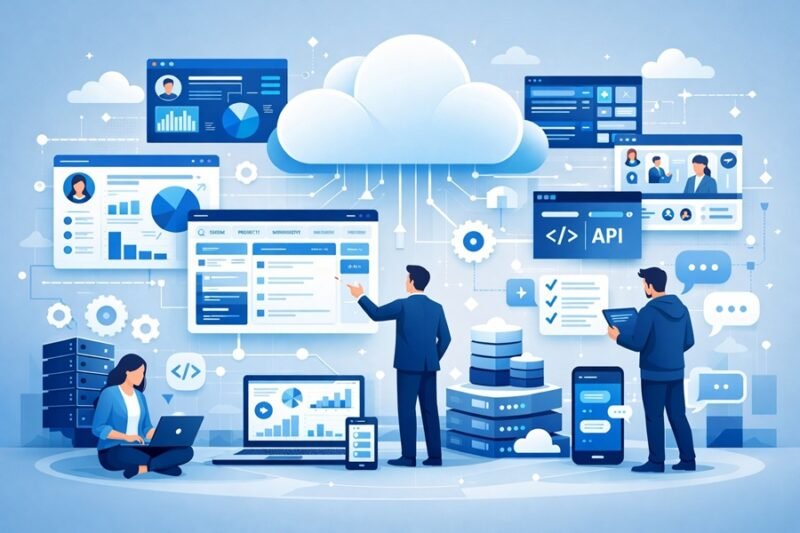
The way we access technology has fundamentally shifted. Gone are the days of buying expensive physical discs, installing them on a single machine, and hoping the hardware doesn’t crash. Today, a SaaS Service acts as the backbone for nearly every agile business, providing flexibility that legacy software simply cannot match.
If you have ever used Gmail, Dropbox, or Slack, you are already participating in the SaaS economy. But understanding the deeper mechanics of this model is crucial for anyone looking to scale a business or optimize IT infrastructure in 2026.
What is a SaaS Service? (Defining the Cloud Model)
At its core, a SaaS Service (Software as a Service) is a software distribution model where a third-party provider hosts applications and makes them available to customers over the Internet. Think of it like a utility. Instead of digging your own well (building on-premise software), you simply pay a water bill (subscription) to access the water (software) whenever you need it.
This shift removes the burden of maintenance, security patching, and hardware upgrades from your internal IT team. The provider handles the heavy lifting, allowing you to focus purely on using the tool to drive revenue.
The “Rent vs. Buy” Analogy
To put it simply, traditional software is like buying a house. You own it, but you are also responsible for the leaky roof, the plumbing, and the taxes. SaaS is like renting a luxury apartment. You pay a monthly fee, and if the AC breaks, the landlord fixes it. This low barrier to entry is why saas software as a service has become the global standard for software deployment.
Real-World Software as a Service Examples
Understanding the concept is easier when we look at the giants who paved the way. You likely interact with software as a service examples daily without realizing it.
- Salesforce: The pioneer that moved Customer Relationship Management (CRM) to the cloud, proving that complex enterprise data could be safe off-premise.
- Google Workspace: A classic example of productivity tools (Docs, Sheets, Drive) replacing installed desktop applications like Microsoft Office.
- Shopify: Empowering merchants to set up online stores without needing to code a website from scratch.
- Zoom: The video conferencing tool that became a verb, operating entirely on a subscription-based cloud model.
These platforms demonstrate the versatility of the model, covering everything from communication to complex data analytics. While CRMs manage customer interactions, large enterprises are simultaneously streamlining their internal finance and supply chain operations by adopting modern SaaS ERP systems.
Why Modern Businesses Pivot to SaaS
Why is everyone moving in this direction? In my ten years of consulting with enterprise clients, the answer usually comes down to three things: speed, scalability, and cost.
- Lower Upfront Costs: You don’t need to invest in expensive server farms or permanent licenses. CapEx becomes OpEx.
- Instant Scalability: Need to add 50 new employees to your CRM? With a SaaS Service, it’s usually just a few clicks. No new hardware required.
- Accessibility: Your team can work from anywhere. In the hybrid work culture of 2026, this is non-negotiable.
Navigating SaaS Development Services in 2026
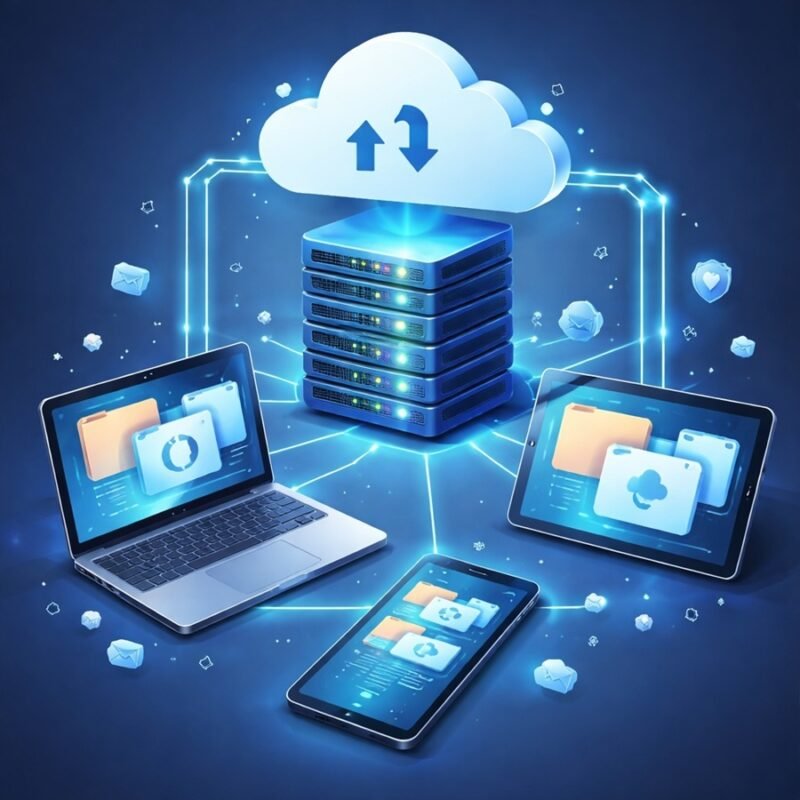
For entrepreneurs and CTOs, using SaaS is only half the picture. Building one is where the real challenge lies. The market for saas development services has exploded as companies rush to build their own proprietary tools to sell or use internally.
Building a SaaS product isn’t just about writing code; it’s about architecture. You need a multi-tenant environment where a single instance of the software serves multiple customers (tenants) while keeping their data strictly isolated. This requires robust backend engineering and a deep understanding of cloud security.
If you are looking to hire a partner for this, look for agencies that specialize specifically in cloud-native architectures, not just general web design.
The Role of SaaS Application Development Services
When we talk specifically about saas application development services, we are focusing on the user experience (UX) and the specific functionality of the app.

In 2026, users expect consumer-grade design even in B2B enterprise software. Clunky interfaces are a death sentence. A competent development partner will focus on:
- API-First Design: Ensuring your software can talk to other tools (like Slack or Zapier) easily.
- Mobile Optimization: A huge percentage of SaaS usage now happens on tablets and phones.
- Microservices: Breaking the app into smaller, independent services so that if one feature fails, the whole app doesn’t crash.
Future Trends: SaaS in the AI Era
The landscape is changing fast. We are seeing a massive integration of Artificial Intelligence into standard SaaS offerings. It’s no longer enough to just store data; the SaaS Service must now analyze that data and offer predictive insights.
We are also seeing the rise of “Micro-SaaS”—small, niche tools dedicated to solving one very specific problem very well, rather than trying to be an all-in-one suite. This unbundling allows for leaner, more affordable software stacks for small businesses.
Conclusion
Whether you are a startup founder looking to disrupt an industry or an IT manager trying to streamline costs, the SaaS Service model offers a path to efficiency that legacy systems cannot match. By understanding the development requirements and the strategic benefits, you can leverage this technology to future-proof your business. The cloud isn’t just the future; it is the current standard.
For More Updates, follow me on X Platform.
FAQ Section
Q: What is the main difference between SaaS and PaaS?
A: SaaS (Software as a Service) delivers a fully functional app to users. PaaS (Platform as a Service) provides the hardware and software tools for developers to build those apps.
Q: Is my data safe with a SaaS Service provider?
A: Generally, yes. Reputable providers invest heavily in cyber security, encryption, and compliance (SOC2, HIPAA) that often exceeds what small businesses can afford on-premise.
Q: Can I customize a SaaS application?
A: Most SaaS platforms allow for configuration (changing settings, branding, workflows) but do not allow you to change the underlying source code like open-source software does.
Q: How much does typical SaaS application development cost?
A: It varies wildly based on complexity. A simple Micro-SaaS might cost $15,000–$30,000 to build, while a complex enterprise platform can easily exceed $100,000+.
Author Bio :
Aarav Kashyap is a Senior SEO Content Strategist and tech consultant with over a decade of experience in the digital landscape, associated with Apzo Media, a digital marketing and SEO consulting brand focused on B2B SaaS and cloud technologies. He helps businesses translate complex technical concepts into user-centric content and effective growth strategies.