



In today’s fast-moving digital world, businesses and professionals rely heavily on digital tools to stay productive, competitive, and organized. From managing tasks and communication to automating workflows and analyzing performance, digital tools for business and productivity have become essential rather than optional.
This guide explains what digital productivity tools are, how businesses use digital tools, and real examples of productivity tools—in simple, practical language. Whether you are a business owner, freelancer, student, or remote worker, understanding these tools will help you work smarter and save time.
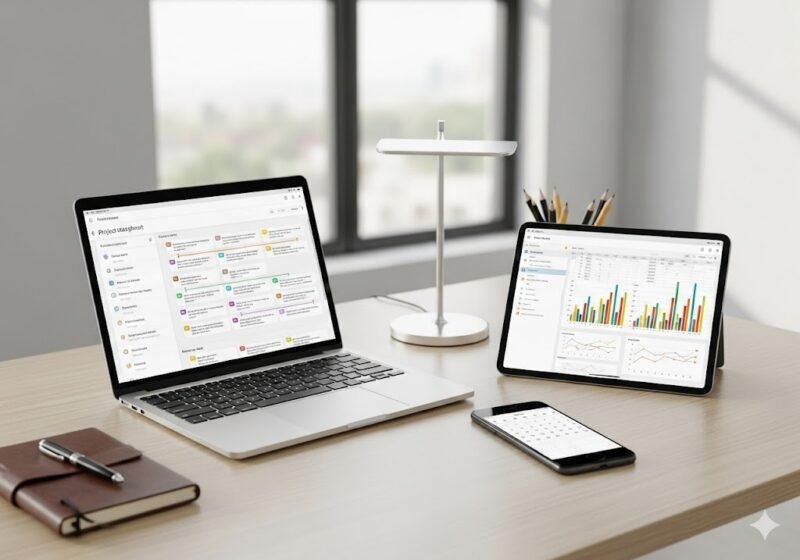
What Are Digital Productivity Tools?
Digital productivity tools are software, applications, or digital systems designed to help individuals and teams complete tasks more efficiently. These tools reduce manual effort, improve collaboration, and help users manage time, information, and workflows effectively.
What Is Digital Productivity?
Digital productivity refers to using digital technology to increase efficiency, accuracy, and output while reducing time and effort. Instead of doing tasks manually, people use apps and platforms to automate repetitive work, track progress, and collaborate in real time.
What Are the Four Types of Productivity Tools?
Task & Project Management Tools – help plan and track work
Communication Tools – support messaging, meetings, and collaboration
Time & Focus Tools – manage schedules and reduce distractions
Automation & Organization Tools – streamline repetitive tasks and data
What Are the 5 Most Commonly Used Productivity Tools?
Task management software
Email and communication platforms
Spreadsheet tools
Cloud storage systems
Calendar and scheduling tools
Examples of Digital Productivity Tools
Examples include task planners, note-taking apps, project management software, collaboration platforms, and cloud-based office tools used daily by businesses and individuals.
What Are Digital Tools in Business?

Digital tools in business are technologies that help organizations operate efficiently, communicate internally and externally, and make data-driven decisions. These tools support marketing, finance, operations, customer service, and team management.
What Is Meant by Digital Tools for Business?
Digital tools for business include software and platforms that help manage operations, sales, marketing, accounting, customer relationships, and internal workflows. They replace or improve traditional manual systems.
What Are Digital Workplace Tools?
Digital workplace tools enable employees to work together remotely or in hybrid environments. These tools include communication platforms, document-sharing systems, project dashboards, and collaboration software.
What Are the Latest Digital Tools?
Modern digital tools focus on:
Automation
Artificial intelligence
Cloud-based collaboration
Data analytics
Integration across platforms
Businesses now prefer tools that connect multiple functions in one system.
What Are Examples of Digital Tools?

Digital tools are not limited to software only; they include both hardware and software that support digital work.
What Are Digital Tools and Examples?
Digital tools include:
Software applications
Online platforms
Digital devices
Cloud services
Examples range from laptops and smartphones to business management software.
Is a Laptop a Digital Tool?
Yes. A laptop is a digital tool because it enables users to run software, access the internet, manage data, and perform digital tasks.
What Are the 5 Basic Digital Skills?
Using digital devices
Internet and email usage
File and data management
Online communication
Basic cybersecurity awareness
What Are Some Free Digital Tools?
Many digital tools offer free versions, such as:
Note-taking apps
Cloud storage (limited plans)
Task managers
Communication platforms
These are ideal for startups and individuals.
What Are 5 Examples of Digital Devices?
Laptop
Smartphone
Tablet
Desktop computer
Smart wearable devices
Is Facebook a Digital Tool?
Yes. Facebook is a digital tool used for communication, marketing, advertising, and audience engagement, especially for businesses and creators.
What Are Examples of Productivity Tools?

Productivity tools focus specifically on improving efficiency, focus, and output.
What Are the Types of Productivity Tools?
Task management tools
Time-tracking tools
Collaboration tools
Automation tools
Organization and planning tools
What Is an Example of a Basic Productivity Tool?
A simple to-do list app or calendar is a basic productivity tool used to organize daily tasks.
What Is the 3-3-3 Rule for Productivity?
The 3-3-3 rule suggests:
Do 3 hours of deep work
Complete 3 important tasks
Finish 3 small tasks
This method helps maintain focus without burnout.
What Are the 5 C’s of Productivity?
The 5 C’s commonly include:
Clarity
Concentration
Control
Consistency
Commitment
Is Excel a Productivity Tool?
Yes. Excel is widely used for data management, analysis, budgeting, and reporting, making it a powerful productivity tool for individuals and businesses.
Conclusion
Digital tools for business and productivity are no longer optional. From simple task management apps to advanced workplace platforms, these tools help save time, improve collaboration, and boost efficiency. Choosing the right combination of digital and productivity tools can significantly improve both personal and professional performance.