
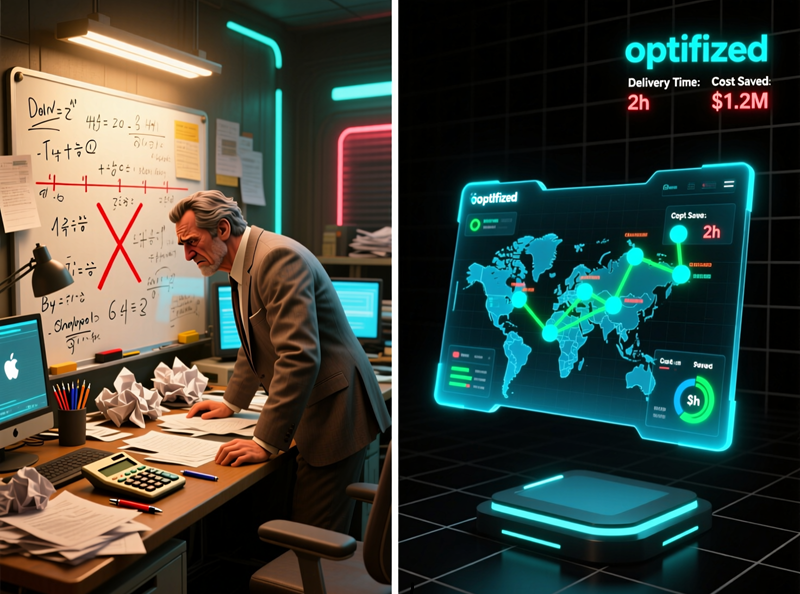
Let’s be honest for a second. If your procurement strategy still relies on a master Excel sheet that takes ten minutes to load and three people to update, you’re already behind.
The Consumer Packaged Goods (CPG) industry has always been fast, but lately? It’s been relentless. Between fluctuating commodity prices, geopolitical supply shocks, and consumers who change their minds faster than a TikTok trend cycle, the old way of buying simply doesn’t cut it anymore.
CPG procurement digital transformation isn’t just a buzzword to throw around at shareholder meetings. It’s the difference between thriving in volatility or getting crushed by it.
It’s time to stop fighting fires and start building a fireproof house. Here is how you make the shift.
The “Too Long; Didn’t Read” (TL;DR)
Quick Takeaways for Leaders:
- Shift from Reactive to Proactive: Digital tools let you predict disruptions, not just respond to them.
- Data is Your Currency: Unifying data siloes unlocks savings that are currently invisible to you.
- It’s About People: Automation removes the grunt work, freeing your buyers to be actual strategists.
- Speed Wins: In 2025, agility beats pure buying power every time.
Why the “Old Way” is Bleeding Money
Remember when procurement was just about beating up suppliers for the lowest unit price? Those days are gone.
In the current landscape, cost is still king, but resilience is queen.
Traditional procurement operates in silos. Marketing doesn’t talk to Production; Production doesn’t talk to Sourcing until it’s too late. You end up with “dark data”—valuable insights trapped in email chains and PDFs that no one can analyze.
When you lack visibility, you carry extra inventory “just in case.” You expedite shipping because you missed a lead time signal. You overpay for raw materials because you didn’t see the market spike coming.
That is money left on the table.
What CPG Procurement Digital Transformation Actually Looks Like
So, what does it mean to “go digital”? It’s not just buying new software and hoping for the best. It’s a fundamental rewiring of how you source, contract, and manage suppliers.
1. The Single Source of Truth
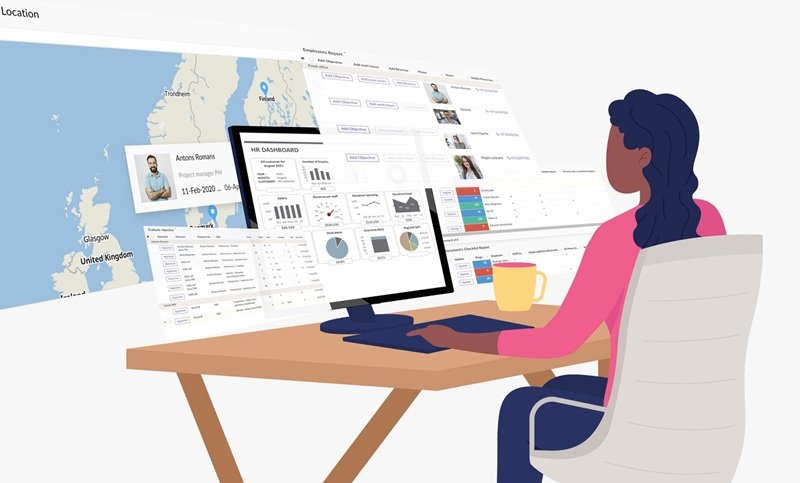
Imagine a dashboard where you can see every supplier, every contract, and every risk factor in real-time.
Digital transformation consolidates your fragmented data. Instead of chasing down invoices in three different ERP systems, you have a unified view. This allows for spend analytics—seeing exactly where every dollar goes and identifying leakage instantly.
2. Predictive AI, Not Just History
Historical data tells you what happened. AI tells you what will happen.
Modern CPG procurement platforms use machine learning to analyze weather patterns, strike risks, and commodity trends.
- Scenario: The system flags a potential resin shortage six months out based on oil prices.
- Result: You lock in contracts now, while your competitors are scrambling later.
3. Supplier Relationship Management (SRM) on Autopilot
Your suppliers are your partners, not your adversaries. But it’s hard to be a good partner when you’re bogged down in administrative hell.
Digital portals allow suppliers to self-onboard, update their own certifications, and communicate directly. This reduces friction and makes you the “customer of choice” when supply gets tight.
The Tale of the Tape: Analog vs. Digital
Still on the fence? Let’s look at the breakdown.
| Feature | Traditional Procurement | Digital Transformation |
|---|---|---|
| Data Access | Manual entry, siloed, delayed | Real-time, unified, automated |
| Focus | Cost containment & admin tasks | Value creation & innovation |
| Risk Mgmt | Reactive (fighting fires) | Predictive (mitigating risks) |
| Supplier Relationship | Transactional & adversarial | Collaborative & strategic |
| Speed | Weeks to analyze data | Minutes to generate insights |
Overcoming the “Change Fatigue”
I get it. Implementing new tech is scary. You’re worried about adoption rates. You’re worried about the learning curve.
The biggest hurdle to CPG procurement digital transformation isn’t the software; it’s the mindset.
You have to sell the vision to your team. Show them that this isn’t about replacing them with robots. It’s about taking the boring, repetitive tasks—like invoice matching and PO generation—off their plates.
Give your buyers the bandwidth to do what humans do best: negotiate complex deals, innovate with suppliers, and drive sustainability initiatives.
Future-Proofing with Sustainability
Speaking of sustainability, you can’t hit your ESG goals with a spreadsheet.
Consumers today demand transparency. They want to know if that palm oil is ethically sourced or if that packaging is truly recyclable. Digital procurement tools provide the traceability you need to back up your marketing claims.
If you can’t track it, you can’t improve it. Digital transformation gives you the granular data needed to reduce your Scope 3 emissions and meet regulatory requirements without breaking a sweat.
Frequently Asked Questions (FAQ)
1. How long does a procurement digital transformation take? It varies, but don’t aim for a “big bang” launch. A phased approach—starting with spend analytics or contract management—can show ROI in as little as 3-6 months. Full maturity is a journey of 1-3 years.
2. Is AI going to replace my procurement team? No. AI replaces the tasks that your team hates doing anyway. It acts as a co-pilot, crunching the numbers so your team can make the strategic decisions.
3. What is the biggest risk in digital transformation? Bad data. If you feed a fancy AI tool garbage data, you’ll get garbage insights. Data cleansing and standardization must be your first step.
The Bottom Line
The market isn’t going to slow down. Inflation isn’t going to magically disappear. The only variable you can control is how agile your organization is.
CPG procurement digital transformation is the lever that turns your supply chain from a cost center into a competitive advantage.
Don’t let legacy systems hold your growth hostage. The tools exist. The strategy is proven. The only thing missing is the decision to start.