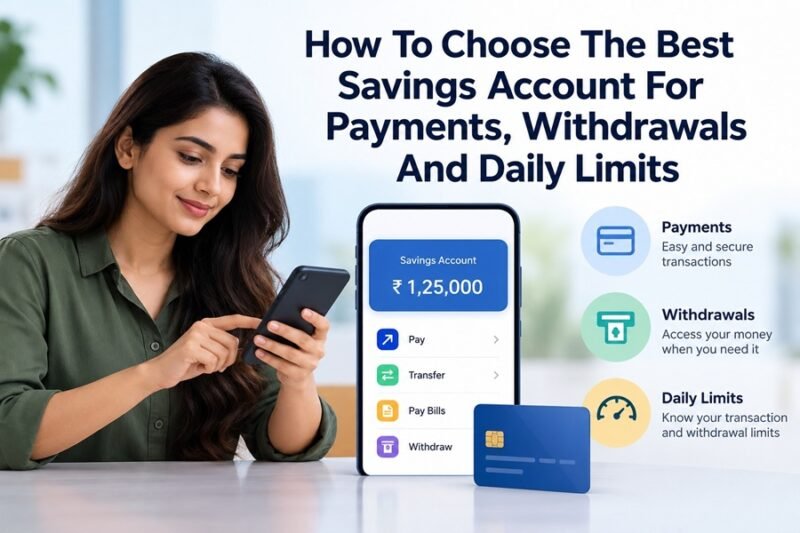



Choosing a bank account involves more than comparing interest rates. Your everyday banking needs, including bill payments, cash withdrawals and transaction limits, determine how conveniently you can access and manage your money. Understanding these features helps you select an account that aligns with your spending habits, financial priorities and preferred banking methods.
Evaluate your everyday payment requirements
Start by identifying how you typically use your account. You may need it to receive your salary, pay utility bills, transfer money, make online purchases or manage household expenses. Consider the following features before making a decision:
- Digital payments: Check whether the account supports UPI, internet banking, mobile banking and other payment facilities you regularly use
- Fund transfers: Review the availability and applicable limits for NEFT, RTGS and IMPS transactions
- Bill payments: Check whether you can pay utility bills, recharge services and manage recurring payments through the bank’s digital platforms
- Debit card access: Review the card’s availability, usage conditions and applicable charges
Compare withdrawal limits and access options
Withdrawal limits determine how much money you can access through different channels within a specified period. These limits may vary according to the account type, debit card variant and the bank’s operating policies.
Review these aspects when comparing accounts:
- ATM withdrawal limits: Check the maximum amount permitted per day and whether the limit varies by debit card
- Cash withdrawal charges: Review the number of free transactions and applicable charges beyond the permitted limit
- Branch withdrawals: Understand the procedures and documentation required for cash withdrawals at a branch
- Non-home branch access: Check whether you can withdraw cash from branches other than the one where you opened the account
Understand daily transaction limits
Daily limits help regulate how much money can be transferred, withdrawn or spent through specific channels. Banks may prescribe separate limits for UPI payments, debit card purchases, ATM withdrawals and online fund transfers.
Before opening an account, review the limits applicable to each transaction type. Also check whether limits can be modified, how to request changes and whether additional verification is required for higher-value transactions.
These details are particularly relevant if you regularly pay large bills, transfer funds to family members or make substantial purchases. Selecting an account with suitable limits can help you manage these transactions without unnecessary inconvenience.
Security is equally important. Check whether the bank provides transaction alerts, card controls, temporary card blocking and other security features that help you monitor account activity and respond to unauthorised transactions.
Compare savings account interest rates and charges
While transaction facilities influence convenience, savings account interest rates affect the interest you earn on eligible balances. Compare the applicable rates, balance requirements and interest calculation and crediting frequency before choosing an account.
Do not evaluate interest rates in isolation. Review the following factors alongside the rate offered:
- Minimum balance requirements: Determine whether the account requires a minimum average balance and what happens if you fall short
- Service charges: Check fees for debit cards, additional ATM transactions, account services and other facilities
- Interest calculation: Understand how the bank calculates interest on your balance and credits it to your account
- Account conditions: Review eligibility, account maintenance requirements and any restrictions on specific services
Consider how the account supports everyday banking
The best bank for savings account users should offer a combination of convenient payment options, suitable withdrawal allowances and transparent service conditions. Compare the available features against your typical monthly transactions rather than choosing an account based on a single benefit.
Use the following checklist to compare your options:
- Confirm the daily UPI, ATM withdrawal and debit card purchase limits
- Check the number of free ATM transactions and any applicable charges
- Review savings account interest rates and how frequently interest is credited
- Compare minimum balance requirements and service fees
- Check whether digital banking allows you to monitor transactions and manage card limits
- Verify whether the account can accommodate your expected payment and withdrawal needs
Conclusion: Make a choice based on your banking habits
The best bank for this purpose is not necessarily the one offering the highest interest rate. Your decision should reflect how frequently you make payments, how much cash you withdraw and which transaction limits you need.
Compare savings account interest rates alongside charges, access facilities and daily limits. A well-matched account can help you manage everyday expenses efficiently while earning interest on your balance.
Frequently asked questions
1. What should I compare when choosing a savings account for everyday payments?
Compare digital payment facilities, fund transfer options, debit card features and applicable transaction limits. Also review service charges and account maintenance requirements to understand the overall cost of banking.
2. Are daily ATM withdrawal limits the same for every savings account?
No. ATM withdrawal limits can vary according to the bank, account variant and debit card type. Check the applicable daily limit and the charges for withdrawals beyond the permitted free transactions.
3. How can I check the transaction limits on my account?
You can review the bank’s website, mobile banking application, internet banking portal or account documents. Check the limits separately for ATM withdrawals, debit card purchases, UPI payments and online fund transfers.
4. Should I prioritise interest rates or transaction facilities when selecting an account?
Consider both, along with account charges and minimum balance requirements. A suitable account should offer competitive interest on eligible balances while providing the payment and withdrawal facilities you regularly need.
5. How many free ATM transactions are available each month?
Under RBI guidelines, banks must offer at least five free transactions per month at their own ATMs, including financial and non-financial transactions. At other banks’ ATMs, the minimum is three transactions per month in six metro locations and five in non-metro locations. Banks may offer additional free transactions.