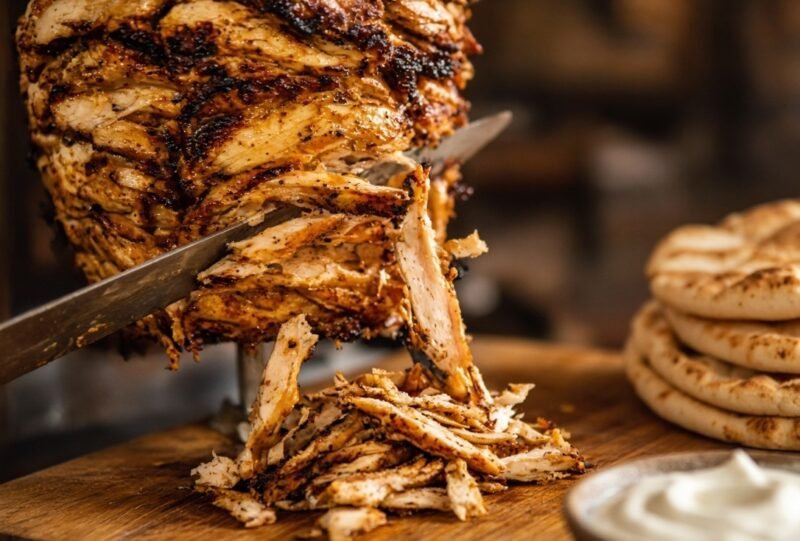



Quick Answer: Shawarma is a Middle Eastern street food made of thin, marinated meat slices (chicken, lamb, or beef) slow-roasted on a vertical rotating spit and wrapped in pita or flatbread with sauces like garlic toum or tahini. It originated in Turkey in the 19th century and was later popularized across Lebanon, Syria, and Jordan.
What Is Shawarma? (Quick Definition)
Shawarma is a Middle Eastern street food made from thin slices of marinated meat, usually chicken, lamb, or beef, slow-roasted on a vertical rotisserie and then wrapped in pita or flatbread. It’s often served with sauces like garlic toum or tahini, along with pickles and fresh vegetables.
Think of it as the Middle East’s answer to a burrito. You’ve got a protein-packed filling, warm bread, and sauce, all rolled into one handheld meal you can eat while walking down the street.
Here’s what makes shawarma, well, shawarma:
- The meat is stacked, not grilled flat. Layers of marinated meat are piled onto a vertical spit, one on top of another, so the fat drips down and bastes the meat below it as it cooks.
- It’s sliced fresh, not pre-cut. Vendors shave off thin strips from the outer, crispier layer as customers order, which is why the texture has that mix of charred edges and juicy center.
- The spice blend does the heavy lifting. Cumin, coriander, turmeric, sumac, and black pepper are common, though every region and even every vendor has their own mix.
- It’s built to be portable. Whether it’s wrapped in pita, saj bread, or served on a plate with rice, shawarma was designed as fast, on-the-go food for busy street corners.
If you’ve ever eaten a doner kebab or a gyro and wondered whether shawarma is the same thing, it’s not exactly. They’re cousins from the same cooking technique, but each one has its own identity, which we’ll break down later in this article.
One more thing worth knowing upfront: shawarma isn’t tied to one specific country. You’ll find versions in Lebanon, Jordan, Syria, Egypt, and across the Gulf, and each place puts its own spin on the meat, the sauce, and even the bread it’s served in.
Shawarma Meaning and Word Origin
The word “shawarma” comes from the Turkish word çevirme, which means “turning.” It refers directly to the rotating vertical spit the meat is cooked on.
Here’s how the word traveled:
- Turkish origin: çevirme described the act of turning the meat slowly on a spit.
- Arabic adaptation: As the cooking style spread into Syria, Lebanon, and Jordan, the word was borrowed into Arabic and became shawārmā.
- Same root, different names: In Greece, the exact same idea of rotating roasted meat became “gyro,” which also translates to “turn.”
So the name isn’t about the meat or the spices. It’s literally naming the cooking method itself.
Is the Word Arabic or Turkish?
The short answer is both, depending on which part you’re asking about.
- The cooking technique and original word are Turkish.
- The dish as we know it today, with its Levantine spice blends, garlic sauce, and pita wrap, was shaped and popularized in the Arab world.
This is why you’ll see some sources call shawarma “Turkish” and others call it “Arabic street food.” Neither is wrong. The technique traveled from Turkey, but the dish itself was refined and made famous in Lebanon, Syria, and Jordan.
History and Origin of Shawarma
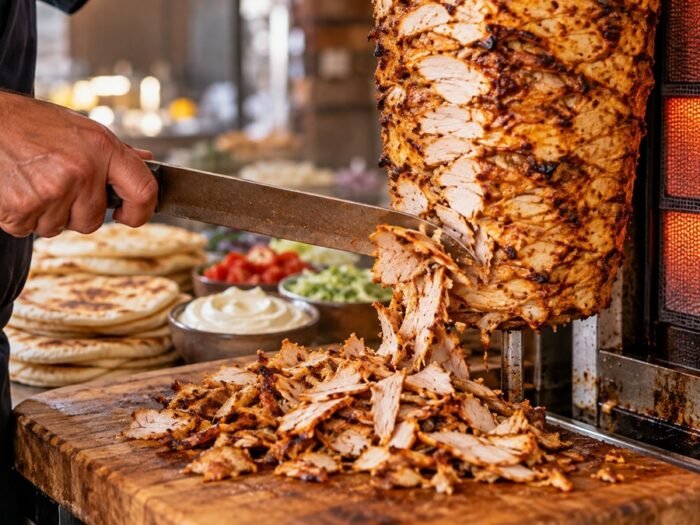
Shawarma’s story starts with a butcher, not a chef in a fancy kitchen. It began as a Turkish cooking technique in the 1800s and evolved into the dish we recognize today as it spread through the Levant region.
The Ottoman and Turkish Roots (18th–19th Century)
Vertical spit-roasting isn’t new. Cooking meat over an open flame on a rotating spit dates back centuries in the Ottoman Empire. But the version that led to modern shawarma is usually credited to a 19th-century butcher in Bursa, Turkey, named İskender Efendi.
Here’s what he did differently:
- Instead of roasting a whole lamb horizontally, he stripped the meat off the bone.
- He layered thin cuts of meat vertically on an upright skewer.
- He cooked it slowly, letting the outer layer crisp up while the fat basted the meat underneath.
- He carved off slices as customers ordered, instead of serving the whole roast at once.
This became known as döner kebab, meaning “rotating kebab,” and it’s the direct ancestor of shawarma.
How It Spread Across the Levant (Lebanon, Syria, Jordan)
As Ottoman influence expanded, so did this cooking style. When it reached Lebanon, Syria, and Jordan, local cooks didn’t just copy it, they changed it.
- Spices got bolder. Turkish seasoning was milder. Levantine cooks added cumin, sumac, garlic, and cardamom for a stronger flavor profile.
- Sauces became central. Garlic toum and tahini weren’t part of the original Turkish version but became essential in the Arab adaptation.
- Marinades got longer. Meat was often marinated overnight in yogurt, vinegar, or lemon juice with spices, which made it more tender and flavorful.
In Jordan and Lebanon today, shawarma is close to a national dish, and it’s usually made with lamb, beef, or a mix of both.
Shawarma’s Journey to Global Street Food
By the mid-20th century, shawarma had left the Middle East entirely. Migration played the biggest role here.
- Middle Eastern communities moving to cities like New York, Paris, London, and later Delhi and Mumbai carried the dish with them.
- Street vendors adapted it for local tastes, adding things like fries inside the wrap or swapping in local sauces.
- Chicken shawarma became more popular globally than lamb, mainly because it’s cheaper, cooks faster, and appeals to a wider range of eaters.
Today, you can find shawarma stalls from Cairo to Chicago, and each one tells you something about how the dish absorbed the culture around it.
What Is Shawarma Made Of? (Ingredients Breakdown)
Shawarma has four core components: the meat, the marinade and spices, the bread, and the sauces or toppings. Change any one of these, and you get a completely different regional style of shawarma.
The Meat (Chicken, Lamb, Beef, Mixed)
| Meat Type | Common In | Flavor Notes |
|---|---|---|
| Chicken | Global street food, India, Gulf countries | Lighter, mild, absorbs marinade fast |
| Lamb | Lebanon, Jordan, Syria | Rich, slightly gamey, traditional choice |
| Beef | Egypt, parts of the Levant | Hearty, dense texture |
| Mixed (lamb + beef) | Lebanon, Jordan | Balances richness with a firmer bite |
Chicken shawarma has become the most widely eaten version worldwide, mainly because it’s quicker to cook and more affordable for vendors to sell at scale.
Marinade and Spice Blend
The marinade is where shawarma gets its identity. A typical marinade includes:
- Yogurt, vinegar, or lemon juice as the base
- Garlic and olive oil
- Cumin, coriander, turmeric, sumac, and black pepper
- Sometimes cardamom or allspice, depending on the region
Meat is usually marinated for several hours, often overnight, before it goes on the spit. This step is non-negotiable for authentic shawarma. Skipping it is one of the biggest reasons homemade versions taste flat compared to the real thing.
Bread, Sauces, and Toppings (Toum, Tahini, Pickles)
The wrap is just as important as the meat inside it.
- Bread: Pita, saj (a thinner, softer flatbread), or laffa are the most common choices.
- Garlic sauce (toum): A whipped garlic and oil sauce that’s sharp, creamy, and the most recognizable shawarma condiment.
- Tahini: A sesame-based sauce, often used alongside or instead of toum.
- Pickled vegetables: Turnips, cucumbers, and onions add crunch and cut through the richness of the meat.
- Extras: Tomatoes, lettuce, and in some street stalls, even fries get layered right inside the wrap.
How Is Shawarma Cooked? (The Vertical Spit Method)
Shawarma is cooked by stacking marinated meat in layers on a vertical rotisserie, then slow-roasting it as it rotates in front of a heat source, and slicing off thin strips from the outside as it cooks.
Here’s the process step by step:
- Marinated meat is skewered vertically, layer by layer, building up a large cone or cylinder shape on the spit.
- The spit rotates slowly in front of a heat source, traditionally an open flame, though gas or electric heat is standard today.
- The outer layer cooks first, developing a slightly crisp, charred edge.
- Fat drips downward, basting the layers below and keeping the meat moist throughout the cooking process.
- A vendor shaves off thin slices from the outer layer using a long knife, right when a customer orders.
- The spit keeps rotating, exposing a fresh outer layer to the heat, so the cooking never really stops until the whole stack is used up.
This is exactly why shawarma tastes different from meat grilled flat on a pan. The self-basting effect from the dripping fat is what keeps every slice tender, even the parts that have been on the spit for hours.
Expert Tip: If you’re ordering shawarma and want to judge quality fast, watch the spit before you order. Fresh, well-run stalls keep the outer layer visibly charred and constantly shaved down, never sitting untouched for long stretches. A spit that looks dry, overly dark, or hasn’t been trimmed in a while is usually a sign the meat has been sitting too long under heat. This one habit tells you more about freshness than any menu description can.
Shawarma vs Doner Kebab vs Gyro vs Shish Kebab: What’s the Difference?
Shawarma, doner kebab, and gyro all use the same vertical rotisserie technique, but they differ in origin, spice profile, and how they’re served. Shish kebab is a completely different style altogether, since it’s grilled on a skewer rather than stacked on a rotating spit.
| Dish | Origin | Meat Style | Bread | Common Sauces |
|---|---|---|---|---|
| Shawarma | Levant (via Turkey) | Marinated overnight, bold spices | Pita or saj flatbread | Toum, tahini |
| Doner Kebab | Turkey | Milder spice, less marinade | Thick flatbread or bread pocket | Yogurt-based sauces |
| Gyro | Greece | Often pork or lamb, oregano-forward | Pita | Tzatziki |
| Shish Kebab | Middle East, Turkey | Chunks grilled on a skewer, not sliced from a spit | Varies, often served with rice | Varies regionally |
A few quick ways to tell them apart if you’re ordering at a restaurant:
- If the sauce is a garlicky white paste, you’re probably eating shawarma (toum).
- If it’s a cool cucumber-yogurt sauce, that’s gyro (tzatziki).
- If the meat came off a rotating spit but tastes milder and less spiced, that’s likely doner.
- If the meat is in solid chunks on a stick, not sliced from a spit at all, that’s shish kebab, a different cooking method entirely.
Types of Shawarma
Shawarma isn’t a single fixed recipe. It changes based on the meat used and, increasingly, based on dietary preferences.
Chicken Shawarma
The most commonly eaten version worldwide today. It’s lighter than lamb or beef, cooks faster, and takes on marinade flavor quickly, which makes it popular with street vendors who need speed and volume.
Lamb and Beef Shawarma
The more traditional choice in Lebanon, Jordan, and Syria. Lamb brings a richer, slightly gamey flavor, while beef offers a denser bite. Many vendors in the Levant still mix both on the same spit for a balanced flavor.
Vegetarian and Paneer Shawarma (India-Specific Angle)
In India, where a large portion of street food customers are vegetarian, paneer shawarma has become a genuine alternative rather than just a gimmick.
- Paneer is marinated in the same style of spices used for meat.
- It’s grilled or pan-roasted rather than spit-cooked, since paneer doesn’t hold up the same way on a rotisserie.
- It’s wrapped the same way, with mayo, garlic sauce, and vegetables, giving vegetarians a genuinely similar eating experience.
Mushroom and soy-based shawarma are also gaining ground in vegetarian-heavy markets, following the same idea.
Is Shawarma Healthy? Nutrition and Calories
Shawarma can be a reasonably balanced meal or a high-calorie indulgence, and the difference usually comes down to the sauce and bread rather than the meat itself.
Average Calories Per Wrap or Plate
| Type | Approx. Calories (per wrap) | Protein | Fat |
|---|---|---|---|
| Chicken shawarma wrap | 450–550 kcal | 25–30g | 15–20g |
| Lamb/beef shawarma wrap | 550–650 kcal | 25–28g | 25–30g |
| Paneer shawarma wrap | 500–600 kcal | 18–22g | 20–25g |
These numbers can shift a lot depending on portion size, how much sauce is used, and whether fries are added inside the wrap, which is common in some street versions.
How to Make It Healthier
If you’re eating shawarma regularly and want to keep it lighter:
- Ask for less mayo or sauce, or request it on the side.
- Choose chicken over lamb or beef if you’re watching fat intake.
- Skip the fries-in-the-wrap option that some vendors offer.
- Go for a plate version with salad instead of a bread wrap, which cuts down on refined carbs.
- Add extra pickled vegetables, they’re low calorie and add real flavor without needing more sauce.
Shawarma isn’t inherently unhealthy. It’s grilled, not deep-fried, and the meat itself is a solid protein source. The calorie count mostly comes from how generous the sauce and bread portions are.
Shawarma Around the World (Regional Variations)
Shawarma looks and tastes noticeably different depending on where you order it, even though the core cooking method stays the same everywhere.
- Lebanon: Known for garlic-forward toum, thin pickles, and often served with pickled turnips for that signature tang.
- Jordan: Frequently made with lamb, marinated with cardamom and allspice, wrapped in thinner bread than you’d find elsewhere.
- Egypt: Often includes tahini as the primary sauce instead of toum, with a slightly different spice mix.
- Gulf countries (UAE, Saudi Arabia): Tends to be heavier on garlic mayo, influenced by a mix of Levantine and South Asian expat communities.
- India: Leans into mayo-heavy sauces, added cheese in some cases, and vegetarian versions like paneer shawarma that you won’t find in the Middle East.
- Western cities (New York, London, Paris): Fusion versions are common, think shawarma burritos or shawarma bowls, adapted for local fast-casual dining habits.
One dish, dozens of personalities. That’s part of why “what is shawarma” doesn’t have a single, one-size-fits-all answer.
How to Make Shawarma at Home (Quick Overview)
You don’t need a vertical rotisserie to make a decent version of shawarma at home. A simple pan or oven method gets you close enough for a weeknight dinner.
Basic steps:
- Marinate chicken, lamb, or beef strips in yogurt, lemon juice, garlic, and shawarma spices for at least 4 hours, ideally overnight.
- Cook the meat in a hot pan or under a grill until the edges char slightly, this mimics the crispy outer layer from a real spit.
- Warm your pita or flatbread.
- Layer the cooked meat with toum or tahini, pickles, and fresh vegetables.
- Roll it tight and serve immediately while the bread is still warm.
This is a simplified version. If you want exact measurements and a full step-by-step recipe, that deserves its own dedicated guide rather than a quick summary here.
Shawarma: Pros and Cons at a Glance
| Aspect | Pros | Cons |
|---|---|---|
| Nutrition | High in protein, meat is grilled not fried | Can be high in fat and sodium depending on sauce |
| Convenience | Fast, portable, easy street food | Not always consistent quality across vendors |
| Customization | Works with chicken, lamb, beef, or paneer | Vegetarian options are harder to find outside India |
| Cost | Generally affordable compared to sit-down meals | Prices vary a lot by region and meat type |
| Health Control | Easy to make lighter (less sauce, more veggies) | Easy to overload with mayo, cheese, or fries |
Frequently Asked Questions
Is shawarma Arabic or Turkish? The cooking technique and the word itself started in Turkey. The dish people eat today, with garlic sauce and bold Levantine spices, was shaped and made popular in Arab countries like Lebanon, Syria, and Jordan. So it’s really both, depending on which part of the story you mean.
What is shawarma made of? Shawarma is made of marinated meat, usually chicken, lamb, or beef, slow-roasted on a vertical rotisserie. It’s sliced fresh and wrapped in pita or flatbread with sauces like toum or tahini, plus pickled vegetables for crunch and tang.
Is shawarma healthy or junk food? It’s neither by default. The meat itself is grilled and a solid protein source, not fried. It becomes less healthy when vendors add extra mayo, cheese, or fries inside the wrap, so the sauce and extras matter more than the meat.
What’s the difference between shawarma and doner kebab? Shawarma uses bolder Levantine spices and comes with sauces like toum or tahini. Doner kebab, its Turkish predecessor, has milder seasoning and often uses yogurt-based sauces instead. Both are cooked the same way, on a rotating vertical spit.
Can vegetarians eat shawarma? Yes, in markets like India, paneer, mushroom, or soy-based shawarma have become common alternatives, prepared with the same spice blend and wrapped the same way as meat versions.
Conclusion
Shawarma is what happens when a simple cooking technique, meat stacked on a rotating spit, gets passed through different cultures and comes out the other side as something new each time. What started as a Turkish butcher’s shortcut became Lebanon’s street food icon, Jordan’s near-national dish, and now shows up as a paneer wrap on a street corner in Mumbai.
Whether you’re eating a classic lamb shawarma in Beirut or a mayo-heavy chicken version in Delhi, you’re eating a piece of that same 200-year-old rotating spit tradition, just adapted for wherever you happen to be standing.