



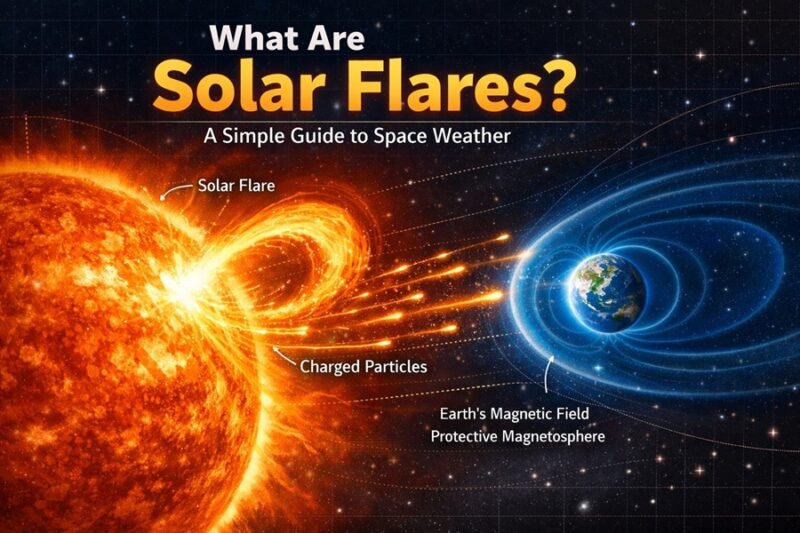
Imagine looking up at the sky and knowing that the calm, yellow sun is actually a roaring ball of magnetic energy. Every so often, it unleashes a burst of power so massive it’s hard to comprehend. You might have seen headlines about solar storms and wondered: what are solar flares, exactly, and how do they affect Earth?
It sounds like science fiction, but it happens all the time in our solar system. While the idea of an explosion on the sun sounds terrifying, understanding the science behind it is surprisingly reassuring. In this guide, we will break down exactly what these cosmic fireworks are, how they happen, and why you don’t need to panic.
What Causes Solar Flares?
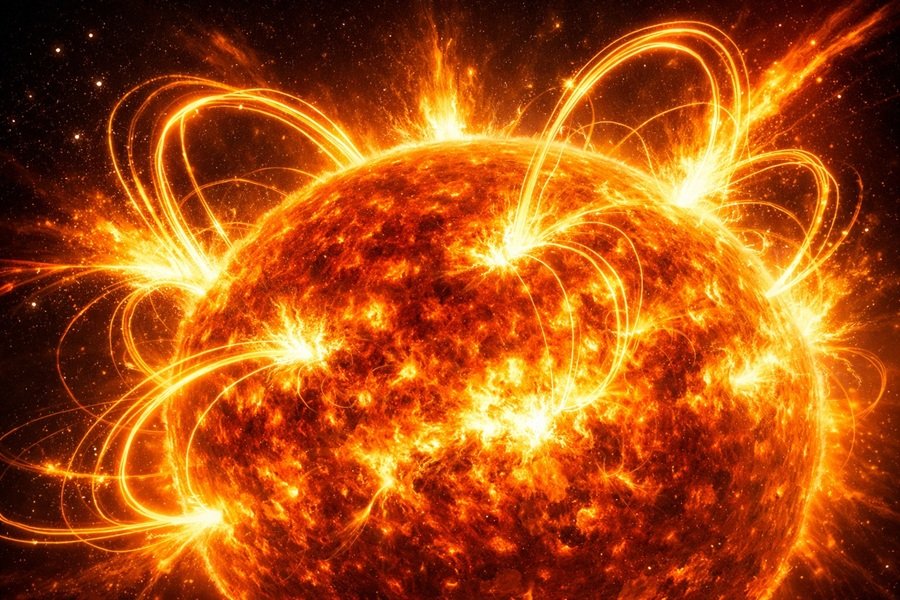
To understand a solar flare, you have to look at the sun as a giant magnet rather than just a ball of fire. The sun is made of plasma—an electrically charged gas—that generates powerful magnetic fields.
Think of these magnetic fields like rubber bands. As the sun rotates, these “rubber bands” twist, tangle, and stretch. Eventually, the tension becomes too great. When the magnetic lines snap and reconnect, they release a sudden, intense burst of radiation.
This release is what we call a solar flare. It blasts energy, light, and high-speed particles out into the solar system.
The Scale of the Explosion
These aren’t small sparks. A single solar flare can release the energy equivalent of millions of hydrogen bombs exploding at the same time. Yet, because the sun is 93 million miles away, we usually just see it as a bright flash on specialized telescopes.
Are Solar Flares Dangerous to Us?
This is the most common question people ask. When we hear about explosions equal to millions of bombs, it is natural to worry. So, are solar flares dangerous to humans on the ground?
The short answer is: No.
Here is why you are safe:
- Distance: The sun is incredibly far away.
- The Atmosphere: Earth’s atmosphere acts as a thick shield. It absorbs the harmful radiation (X-rays and UV light) long before it touches the surface.
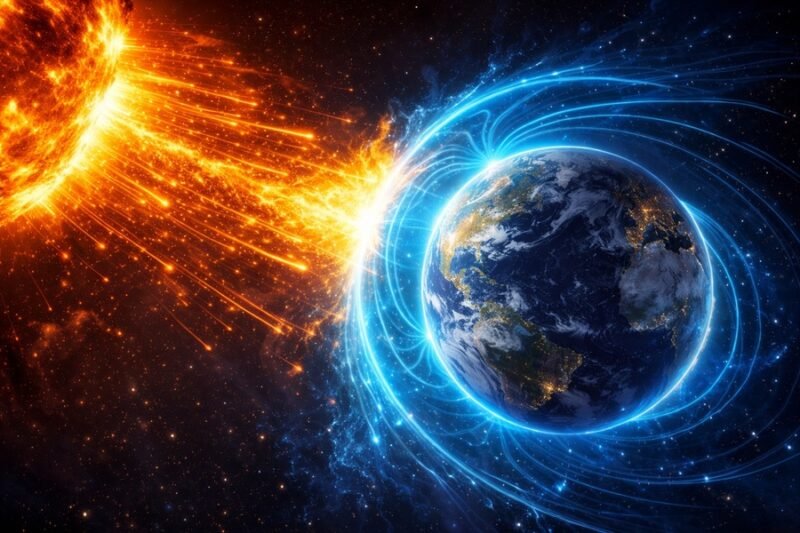
- The Magnetosphere: Earth has its own magnetic field that deflects most of the charged particles away from us.
While astronauts in space need to take shelter during major solar events because they are outside our atmospheric shield, those of us walking on Earth are perfectly protected.
Will a Solar Flare Destroy Earth?
Every few years, a sensational news story claims a “kill shot” from the sun is coming. This leads many to search, “will a solar flare destroy earth?“
Rest assured, a solar flare cannot physically destroy the planet. The sun does not have enough energy to blow Earth apart or burn the surface to a crisp from that distance.
However, while the planet is safe, our lifestyle is a bit more vulnerable. The real risk isn’t to our bodies, but to our technology.
- Radio Blackouts: Strong flares can disrupt high-frequency radio communications used by airlines and emergency response teams.
- GPS Issues: Navigation systems can become less accurate during solar storms.
- The Power Grid: In extreme cases, the magnetic storm following a flare can induce electrical currents in power lines, potentially blowing out transformers.
So, while the Earth itself isn’t going anywhere, we might occasionally lose internet or power for a few hours during a historic storm.
Where Solar Energy is Found: The Sun’s Dual Nature
It is fascinating to think that the same forces causing these scary explosions are also responsible for life on Earth. To understand the flare, you must understand the source.
Where solar energy is found is deep within the sun’s core. Here, nuclear fusion crushes hydrogen atoms into helium, releasing massive amounts of energy. This energy travels outward, eventually reaching the surface (the photosphere) where flares occur.
This same energy travels to Earth to:
- Power our solar panels.
- Drive our weather systems.
- Feed plants through photosynthesis.
The solar flare is just a temporary “hiccup” in the massive, consistent flow of energy that keeps our planet alive. Without the sun’s magnetic activity, we wouldn’t have the protective heliosphere that shields our entire solar system from galactic cosmic rays.
Are There Any Benefits to Solar Flares?

Believe it or not, solar flares aren’t all bad news. When a flare is directed toward Earth, it often arrives with a Coronal Mass Ejection (CME)—a cloud of solar plasma. When this hits Earth’s magnetic field, it creates one of nature’s most beautiful sights: the Aurora Borealis (Northern Lights) and Aurora Australis (Southern Lights).
If you live far enough north or south, a strong solar flare is your ticket to a spectacular light show.
Summary
Solar flares are a powerful reminder that we live in a dynamic, active solar system. While the stats sound scary, nature has provided us with excellent shields.
- Solar flares are magnetic explosions on the sun.
- They are caused by tangled magnetic field lines snapping.
- They are not dangerous to humans on Earth’s surface.
- They won’t destroy the planet, but they can mess with GPS and radios.
Next time you hear about a solar storm, don’t worry about the end of the world. Instead, look up at the night sky—you might just see the northern lights dancing.
Frequently Asked Questions (FAQs)
1. What are solar flares and how do they form?
Solar flares are intense bursts of radiation coming from the release of magnetic energy associated with sunspots. They form when magnetic loops in the sun’s atmosphere twist, snap, and reconnect, releasing massive amounts of energy.
2. Can solar flares affect Earth’s technology?
Yes. Strong solar flares can disrupt high-frequency radio communications and GPS navigation. If accompanied by a Coronal Mass Ejection (CME), they can also cause geomagnetic storms that may impact power grids and satellite operations.
3. How often do solar flares occur?
It depends on the solar cycle, which lasts about 11 years. During “solar maximum,” flares can happen several times a day. During “solar minimum,” they might occur less than once a week.
4. What is the difference between solar flares and solar storms?
A solar flare is the flash of light and radiation (the muzzle flash). A solar storm often refers to the Coronal Mass Ejection (CME) that follows—the cloud of particles (the bullet) that travels slower but causes magnetic disturbances when it hits Earth.
This comparison helps scientists explain the scale, not the danger—because distance and Earth’s shields make all the difference.
Read Also: How Solar Energy Works: A Simple Guide