


Your recreational vehicle is likely the second biggest investment you’ll ever make, right after your home. It’s your ticket to freedom, open roads, and unforgettable weekends. But what happens when the adventure ends and you park your rig for the season? Leaving it exposed to the elements is a quick way to turn that dream machine into a money pit of repairs.
UV rays, torrential rain, bird droppings, and snow accumulation can wreak havoc on seals, paint, and tires. This is where proper protection becomes non-negotiable. However, walking into the world of RV protection can be overwhelming. From lightweight fabrics to permanent steel structures, the options vary wildly in cost and effectiveness. This guide breaks down the different types of RV covers to help you decide exactly which shield your vehicle needs to stay road-ready.
Why use an RV protection guide?
Before we dive into the specific types, let’s clarify why covering your RV is essential. Many new owners assume their vehicle is built for the outdoors, so it can withstand being parked outside indefinitely. This is a costly misconception.
An uncovered RV is vulnerable to:
- Sun Damage: UV radiation is the number one enemy of RVs. It fades decals, cracks tires, and dries out the rubber roof seals, leading to leaks.
- Moisture Intrusion: Rain and snow can seep into tiny cracks. If that water freezes and expands, it causes significant structural damage.
- Debris and Dirt: Sap, bird droppings, and wind-blown debris can stain your exterior and scratch the finish.
Investing in a cover isn’t just about keeping the rig clean; it’s about preserving resale value and preventing leaks that cause mold and rot.
The main contenders: An overview of RV cover types
Broadly speaking, you have two main categories to choose from: soft, portable options and hard, permanent structures.
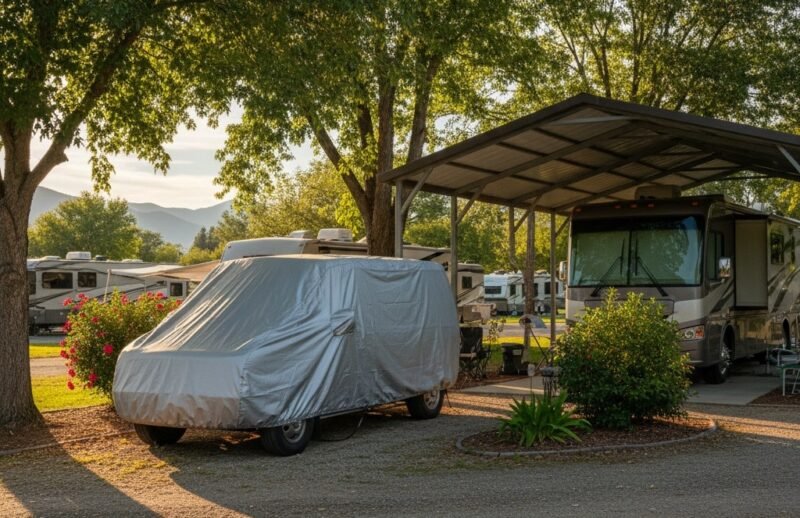
- Fabric RV Covers: These are fitted “blankets” made from polypropylene or polyester that drape over the vehicle.
- Metal RV Carports: These are permanent, open-sided structures built on your property to house the vehicle.
Fabric RV covers: Pros and cons
Fabric covers are the most common choice for owners who store their RVs in driveways or storage lots where building a structure isn’t permitted.
The advantages
- Cost-Effective: This is the most affordable way to get full coverage.
- Portability: You can take it with you. If you move houses or change storage lots, the cover goes too.
- Breathability: High-quality covers are designed with vents to allow moisture to escape, preventing mold growth underneath.
- Snug Fit: Custom or semi-custom covers are designed to fit the contours of your specific RV type, reducing wind flapping.
The disadvantages
- Durability: Even the best fabric wears out. Expect to replace it every 3–5 years depending on your climate.
- Installation Effort: Putting a 40-pound cover on a tall vehicle can be a physical workout and often requires getting up on the roof.
- Chafing: In high winds, loose fabric can rub against the paint, potentially causing dull spots or scratches if the RV wasn’t washed first.
Metal RV carports: Pros and cons
For those with land and a larger budget, metal RV carports offer a different level of security. These are typically made from galvanized steel.
The advantages
- Superior Durability: Steel doesn’t tear, fade, or rot. These structures can last for decades with minimal maintenance.
- Convenience: There is no wrestling with heavy fabric. You simply back the RV in and walk away.
- Load Bearing: A metal roof can handle heavy snow loads that would crush or tear a fabric cover.
- Airflow: Because it’s an open structure, air circulates freely around the rig, keeping it dry and cool.
The disadvantages
- High Initial Cost: You will pay significantly more upfront for materials and professional installation compared to a fabric cover.
- Permits: Depending on your local zoning laws, you may need building permits or HOA approval.
- Immobility: Once it’s built, you can’t easily move it.
Fabric vs metal RV covers: A detailed comparison
When weighing fabric vs metal RV covers, your decision usually comes down to three factors: climate, budget, and convenience.
Durability and Climate
If you live in an area with heavy snowfall or frequent hail, a fabric cover offers limited protection. Heavy snow can weigh down the fabric, potentially tearing it or damaging the RV roof vents underneath. In these climates, a metal carport is superior. Conversely, in dry, sunny climates, a high-quality fabric cover with UV treatment can be sufficient to protect the finish.
Best shelter for Triple Wide RVs
If you own a massive rig, standard solutions might not fit. When looking for the best shelter for Triple Wide RVs or large park models, metal carports are the clear winner. Wrestling a fabric cover onto a unit of that size is dangerous and nearly impossible for one person. Custom metal structures can be built to any width, ensuring that even the largest vehicles have ample roof clearance and side protection.
Cost-Effectiveness
Fabric covers are a lower barrier to entry. If you are renting a storage space, they are your only option. However, over a 15-year period, you might buy four or five fabric covers. A metal carport is a “buy once, cry once” investment that adds value to your property.
Factors to consider when choosing your protection
Still on the fence? Use this checklist to narrow down your choice:
- RV Type: A small teardrop trailer is easy to cover with fabric. A 45-foot Class A motorhome is much harder.
- Local Climate: Is wind your main issue? Or is it UV index? Heavy wind shreds cheap fabric covers quickly.
- Access: Do you take the RV out every weekend? If so, removing and folding a fabric cover every Friday will become tedious very quickly. A carport allows for instant departures.
- Space: Do you have the physical footprint on your property to erect a steel structure?
Installation tips for RV covers
Proper installation is the key to longevity for both types.
For Fabric Covers:
- Clean the RV: Never cover a dirty RV. Dust acts like sandpaper under the cover.
- Pad the Sharp Edges: Use foam noodles or old towels to cover rain gutters, awning corners, and step edges. These are the primary causes of rips.
- Secure the Straps: Ensure the belly straps are snug (but not overtightened) to prevent the wind from billowing the fabric like a sail.
For Metal Carports:
- Level the Ground: The structure needs a flat foundation, whether that’s concrete, gravel, or dirt.
- Anchor it Down: Ensure the installers use appropriate anchors (rebar for dirt, concrete anchors for slabs) to rate the structure for local wind speeds.
Maintenance tips for longevity
Even your protection needs protection.
- Fabric Care: Spot clean with water and a mild soap. Avoid harsh detergents that strip the water-resistant coating. Store it dry to prevent mildew.
- Metal Care: Inspect the structure annually for rust spots, especially around the screws. tightening bolts that may have loosened in the wind is also a good safety practice.
Conclusion
Choosing the right protection for your rig is about matching the solution to your lifestyle. If you need flexibility, lower upfront costs, or rent your storage space, a high-quality fabric cover is an excellent choice. However, if you have the property and want a “park and forget” solution that offers maximum defense against snow and hail, a metal RV carport is the gold standard.
Assess your local weather, be realistic about how much effort you want to put into parking, and choose the shield that keeps your RV ready for the next adventure.
Ready to protect your investment? Browse our top-rated selection of covers today and extend the life of your RV.
Frequently Asked Questions
Can I just use a blue plastic tarp instead of a specialized RV cover?
It is highly recommended that you avoid using blue plastic tarps. Unlike breathable RV covers, plastic tarps trap moisture, which creates a greenhouse effect that promotes mold, mildew, and delamination of your RV’s exterior. They are also abrasive and can scratch your paint in the wind.
Are custom-fit covers worth the extra money over universal fit covers?
Generally, yes. A custom-fit cover hugs the contours of your specific RV model. This reduces the amount of loose fabric that can flap in the wind, which is the primary cause of cover tears and paint damage. They typically last longer than universal “baggy” covers.
Do I need a permit to install a metal RV carport?
In most municipalities, yes. Because a metal carport is considered a permanent or semi-permanent structure, you will likely need to check with your local zoning office and potentially your Homeowners Association (HOA) before installation.
Must Read: Triple Wide RV Maintenance: A Comprehensive Guide for Owners