


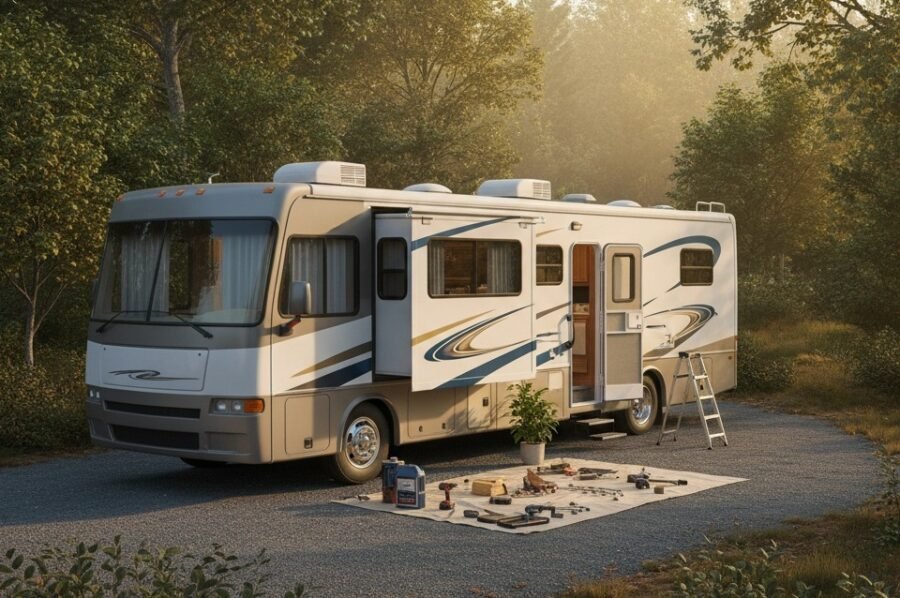
Owning a Triple Wide RV is the pinnacle of the recreational vehicle experience. You have the square footage of a small apartment, the luxury of high-end appliances, and the freedom to take your home wherever the road leads. However, that extra space and luxury come with a unique set of responsibilities. A Triple Wide isn’t just a vehicle; it’s a complex machine that requires diligence to keep running smoothly.
Ignoring routine care can lead to costly repairs that keep you off the road and in the shop. Regular maintenance protects your investment, ensuring your mobile estate retains its value and safety for years to come. This guide breaks down the essential steps to keep your Triple Wide in showroom condition, from the roof down to the tires.
Exterior Maintenance
The exterior of your RV acts as the first line of defense against the elements. Because Triple Wide RVs have massive surface areas, they are particularly susceptible to sun damage, wind, and rain.
Roof Inspection and Cleaning
Your RV’s roof is the most critical component to maintain. A leak here can cause thousands of dollars in hidden water damage before you even notice a stain on the ceiling.
- Frequency: Inspect your roof at least twice a year and after any severe storms.
- Cleaning: Use a mild, non-abrasive cleaner designed for your specific roof material (rubber, fiberglass, or aluminum). Keeping the roof clean prevents dirt accumulation that can degrade the membrane and cause unsightly black streaks on the sides of your RV.
- Sealant: Check all lap sealant around vents, skylights, and the AC unit. If you see cracking or peeling, clean the area and apply self-leveling sealant immediately.
Sidewall Maintenance and Sealant Checks
The vast sidewalls of a Triple Wide are impressive, but they catch a lot of UV radiation. Over time, fiberglass can oxidize and turn chalky.
- Washing and Waxing: Wash your RV regularly to remove road grime and bugs. Apply a high-quality RV wax at least once a year to protect the finish and prevent delamination (where the outer layer separates from the structure).
- Seams: Check the corner moldings and seams where the sidewalls meet the roof and floor. These are high-stress areas that can open up as the RV twists and flexes during travel.
Window and Door Maintenance
Slide-outs are a defining feature of Triple Wide RVs, but they introduce potential gaps for water and drafts.
- Seals: Lubricate the rubber seals around your slide-outs and windows with a rubber conditioner spray. This keeps them pliable and prevents them from cracking or sticking.
- Functionality: Ensure weep holes (drainage slots at the bottom of window frames) are clear of debris so water can drain properly during heavy rains.
Interior Maintenance
While the outside battles the weather, the inside battles the wear and tear of daily living. Keeping systems running efficiently ensures comfort on the road.
Appliance Maintenance
Your RV appliances endure vibrations that residential units never face.
- Refrigerator: Keep the cooling fins clean and ensure the door seals are tight. If you have a propane fridge, check the burner area for spider webs or soot buildup annually.
- Air Conditioner: Clean the intake filters monthly when in use. A clogged filter forces the unit to work harder, reducing its lifespan and cooling efficiency.
- Furnace: Vacuum the floor vents to remove dust and pet hair that can restrict airflow.
Plumbing System Checks
Water damage is the number one killer of RVs, so the plumbing system requires vigilance.
- Leak Detection: periodically check under sinks and behind the toilet for any signs of dripping. Tighten fittings that may have vibrated loose.
- Tank Maintenance: flush your grey and black water tanks regularly. Use tank treatments to break down solids and keep sensors working correctly. Never leave the black tank valve open when hooked up to sewer; keep it closed until the tank is full to rely on gravity for a forceful flush.
Electrical System Maintenance
Your Triple Wide operates on two systems: 12-volt DC (battery) and 120-volt AC (shore power).
- Batteries: If you use lead-acid batteries, check the water levels monthly and top off with distilled water. Ensure terminals are free of corrosion.
- Converter/Inverter: Listen to the cooling fan on your converter. If it never turns on or makes excessive noise, it may need attention.
- Connections: Periodically check your shore power cord for burn marks or loose prongs, which can indicate dangerous voltage drops.
Chassis and Undercarriage
The house is important, but the foundation gets you to your destination. Neglecting the chassis can lead to dangerous blowouts or mechanical failures.
Tire Maintenance and Replacement
Tires are arguably the most safety-critical component. Triple Wide RVs are heavy, placing immense stress on rubber.
- Pressure: Check tire pressure before every trip when the tires are cold. Under-inflation generates heat, which causes blowouts.
- Age: RV tires often age out before they wear out. Inspect the sidewalls for checking (cracking). Even with good tread, tires should generally be replaced every 5 to 7 years. Look for the DOT date code on the sidewall to verify age.
Brake System Inspection
Stopping a massive Triple Wide requires brakes in top condition. Have the brake pads and rotors (or drums) inspected annually. If you have a towable unit, ensure the breakaway cable is intact and the electric brakes are adjusted correctly.
Suspension System Checks
A smooth ride prevents your RV from shaking apart. Inspect leaf springs, shock absorbers, and airbags for signs of wear. If your RV feels like it is swaying excessively or bouncing after bumps, it may be time for suspension upgrades or repairs.
Seasonal Maintenance
Different seasons pose different threats. Preparing your rig for weather changes is non-negotiable.
Preparing for Winter
If you live in a climate where temperatures drop below freezing, you must “winterize” the plumbing.
- Drain and Bypass: Drain the fresh water tank and water heater. Bypass the water heater before adding antifreeze.
- Antifreeze: Pump non-toxic RV antifreeze through the lines until it runs pink from every faucet, ensuring the P-traps are filled.
- Moisture Control: Remove all food and place moisture absorbers (like DampRid) throughout the interior to prevent mold growth during storage.
Preparing for Summer
“De-winterizing” involves flushing the antifreeze out of the system with fresh water. Sanitize the fresh water tank with a bleach solution to kill any bacteria that grew during storage. This is also the best time to inspect the AC unit before the summer heat hits.
Troubleshooting Common Issues
Even with perfect maintenance, things break. Knowing where to look can save your trip.
Water Leaks
If you find water inside, trace it up and out. Water travels, so a wet spot on the floor might originate from a roof vent five feet away. Use a moisture meter to detect hidden dampness in walls.
Electrical Problems
If an appliance or outlet stops working, check the fuse box (12v) and breaker panel (120v) first. A blown fuse or tripped breaker is the most common culprit. If you lose all power, check the main breaker on the campground pedestal.
Appliance Malfunctions
If gas appliances (stove, fridge, water heater) aren’t lighting, check your propane levels. Sometimes the safety valve in the propane tank engages if the valve is opened too quickly. Close the valve, wait a minute, and open it very slowly.
Protect Your Investment
Maintaining a Triple Wide RV requires time and effort, but the payoff is reliability and longevity. By adhering to a consistent schedule for exterior, interior, and chassis care, you ensure that your rig remains a safe, comfortable haven for you and your family. Don’t wait for a breakdown to open the hood or climb the ladder. Preventive maintenance is always cheaper and less stressful than emergency repairs on the side of the highway.
Must Read: Your First EV? These 3 Cars Under ₹10 Lakhs Make It Possible in 2026