



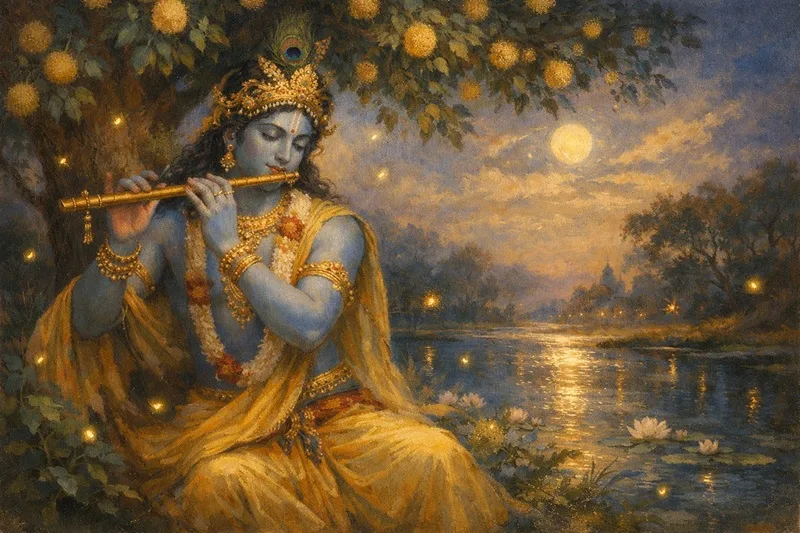
There is a specific stillness that settles in a room when you place a piece of devotional art on the wall. It changes the atmosphere, shifting the energy from mundane to something softer, more sacred. For many, a Lord Krishna painting is not just a decorative item; it is a window into the divine, a daily reminder of love, joy, and the playful nature of the universe.
When you look at the vibrant blues and yellows often used to depict Krishna, you might feel an immediate sense of calm. Whether he is playing the flute by the Yamuna river or stealing butter as a mischievous child, the imagery evokes emotions that bypass the intellect and speak directly to the heart.
Art has always been a bridge between the human and the divine. In Indian culture, painting the deity is a form of meditation in itself. The artist isn’t just applying color to canvas; they are engaging in Bhakti, or devotion, capturing the essence of a god who is as accessible as a friend and as vast as the cosmos.
The Spiritual Language of Color and Form
Lord Krishna paintings are rich with symbolism. Every element, from the peacock feather in his crown to the posture of his standing form, carries a specific spiritual vibration.
Krishna is almost always depicted with blue skin, a color that historically represents the infinite. Just as the sky and the ocean are blue, Krishna’s form represents a consciousness that has no boundaries. This visual cue reminds the viewer that while the figure looks human, the essence is boundless.
The flute he holds is perhaps the most poignant symbol. It represents the human heart—hollow and empty of ego—so that the divine breath can flow through it to create music. When you choose a Krishna painting for your home, you are inviting this reminder: to empty yourself of worry and let life play through you.
Depictions vary greatly depending on which aspect of the deity you connect with. The Bal Gopal (child Krishna) brings energy of innocence and joy. These paintings are often placed in family rooms or nurseries to invoke protection and happiness. Conversely, the Geetopadesha (Krishna teaching Arjuna) represents wisdom and guidance, perfect for a study or workspace.
Traditional Styles: A Legacy of Devotion
The history of Indian art provides us with incredible variety in how Krishna is portrayed. The classical Tanjore paintings from the south are known for their richness. They use gold foil and semi-precious stones to create a piece that literally glows, treating the painting as a shrine.
In the north, the Rajasthani and Pahari miniature paintings offer a different flavor. These works are intricate, focusing on the romantic and pastoral scenes of Krishna’s life in Vrindavan. The lines are delicate, and the landscapes are lush, often depicting the deep connection between nature and the divine.
Madhubani art, with its folk roots, offers a more geometric and earthy interpretation. Using natural dyes and distinct cross-hatching patterns, these paintings capture a raw, vibrant energy that feels deeply connected to the soil and the stories passed down through generations.
Radha Krishna: The Soul’s Longing
While Krishna alone represents the supreme consciousness, a Radha Krishna painting represents the union of that consciousness with the individual soul. This is the epitome of divine love.
Radha is not just a consort; she is the personification of devotion. Her love for Krishna is considered the highest form of spirituality because it asks for nothing in return. Paintings that depict the two of them together—often gazing into each other’s eyes or swinging on a jhula (swing)—are not merely romantic images. They are visual metaphors for the soul finding its home.
For artists and admirers alike, finding the right radha krishna images for painting inspiration can be a spiritual pursuit. You are looking for an image that captures intimacy without being physical, a look that conveys centuries of longing resolved in a single moment.
These artworks carry a vibration of harmony. Placing a Radha Krishna artwork in the bedroom or the southwest corner of a home is believed to harmonize relationships and bring a sense of unity to the household.
Modern Interpretations and Digital Inspiration
Art is never static. It moves with the times, and today, contemporary artists are reimagining how we see these ancient figures. We are seeing a surge in abstract expressionism where the figure of Krishna is suggested rather than detailed—a silhouette with a flute, or a swirl of peacock colors.
Digital art has also opened new doors. A quick search for pinterest lord krishna paintings reveals a treasure trove of modern creativity. You will find hyper-realistic digital portraits, minimalist line art, and mixed-media collages that blend traditional iconography with modern aesthetics.
These platforms are invaluable for those looking to create their own art. Artists often browse Pinterest to study how light hits the face of the deity or how to render the folds of the pitambar (yellow garment) in a new way. It allows the tradition to breathe and evolve, ensuring that the imagery remains relevant for younger generations who might connect more with a modern aesthetic than a traditional one.
Finding the Right Piece for Your Sanctuary
Selecting art for your personal space is an intuitive process. When looking for a krishna painting, pay attention to how your body reacts when you see it. Does your breath slow down? do you feel a subtle smile forming?
The right painting will act as a tuning fork for your environment. If your home feels chaotic, look for images of Krishna in a meditative pose or surrounded by cows, which symbolize peace and nourishment. If you need inspiration and energy, look for images of him dancing or playing the flute dynamically.
Size and placement matter, but intention matters more. Whether it is a small, framed print on your work desk or a large oil painting in your living room, the purpose is connection. It serves as a visual anchor, pulling you back to your center whenever you glance at it.
Inviting Grace In
The enduring appeal of Lord Krishna and Radha Krishna paintings lies in their ability to reflect our own highest potential back to us. They remind us that life can be playful, that love is real, and that the divine is not far away in some distant heaven, but right here, accessible through beauty and devotion.
By bringing these images into your life, you aren’t just decorating walls. You are curating the vibration of your life, inviting a presence that has comforted and inspired millions for thousands of years.