

If you’ve been scrolling through X or Instagram lately, you’ve probably stopped dead in your tracks at that photo. You know the one. Extreme close-up. High contrast. Every pore, freckle, and makeup line visible.
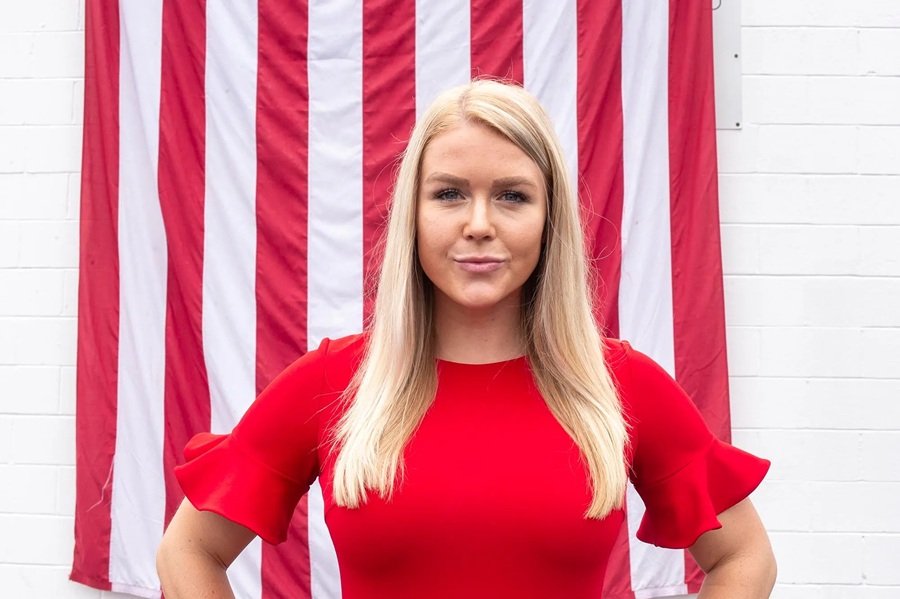
It’s the Vanity Fair profile of the incoming Trump administration, and specifically, the portrait of White House Press Secretary Karoline Leavitt that has everyone talking.
Is it high art? Is it a calculated “hit piece”? Or is it just what happens when you put a 100-megapixel camera inches away from someone’s face? Let’s cut through the noise and look at what’s really going on with the Karoline Leavitt Vanity Fair saga.
The “Diabolical” Close-Up: What Happened?
In mid-December 2025, Vanity Fair dropped a profile on President Trump’s “core team.” The article itself was standard political fare, but the visuals? They were anything but standard.
Photographer Christopher Anderson took a series of portraits that can only be described as aggressively intimate. We’re talking lens-in-your-face tight. The photo of Karoline Leavitt, the 28-year-old Press Secretary, quickly became the main character of the internet for the day.
Why? Because it didn’t use the soft, airbrushed lighting we’re used to seeing in political glamour shots. Instead, it highlighted:
- Skin texture and pores (yes, humans have pores).
- The texture of her makeup.
- The distinct outline of her lips, sparking a whole new wave of online speculation about fillers.
Critics called it “unflattering” and “rude,” while others argued it was a raw, truthful look at the people in power.
Key Takeaway: The controversy isn’t just about how she looks; it’s about the editorial choice to present a political figure without the usual “polish.”
The Backlash: “A Disingenuous Hit Piece”
It wasn’t just the internet commentators who had feelings about this. The Trump camp fired back almost immediately.
Susie Wiles, the White House Chief of Staff (who also got the extreme close-up treatment), slammed the feature. She called the article a “disingenuously framed hit piece” that lacked context. The general sentiment from the administration was that they expected an Annie Leibovitz-style gloss, and instead, they got a gritty, documentary-style exposé.
Leavitt herself has been quieter on the specific photo, but her supporters have been loud. They argue that Vanity Fair deliberately chose lighting and angles that would make the administration look “rough” or “villainous.”
Who Is Karoline Leavitt?
Before we get too lost in the photography debate, it’s worth remembering who is actually in the picture.
Karoline Leavitt isn’t just a viral photo subject. She is making history as the youngest White House Press Secretary ever. At 28, she’s taking on one of the toughest jobs in Washington.
- The “Mouthpiece”: Leavitt is known for her combative, rapid-fire defense of the President. Trump himself has praised her “beautiful face” and described her speaking style as a “machine gun”—a quote that the Vanity Fair article made sure to highlight.
- The Scrutiny: This isn’t the first time her appearance has been a talking point. From her lip gloss to her age-gap marriage (her husband is 32 years her senior), Leavitt is used to the spotlight.
This Vanity Fair moment is just the latest chapter in her rapid ascent—and the intense public gaze that comes with it.
The Photographer’s Defense: “Cutting Through the Theater”
So, did the photographer have a vendetta? According to Christopher Anderson, no.
Anderson has gone on record saying his goal wasn’t to make anyone look “bad,” but to look real. In a world of filtered Instagram posts and carefully staged political rallies, he wanted to “cut through the image that politics want to project.”
He admitted he found it “interesting to be even closer” to Leavitt, noting that his style is about capturing the “truth” of the subject, even if that truth is uncomfortable. Whether you buy that as artistic integrity or see it as editorial bias is up to you.
Comparison: The Visual Strategy
| Traditional Political Portrait | The Vanity Fair / Anderson Style |
|---|---|
| Soft, diffused lighting | Harsh, directional lighting |
| Airbrushed skin, smoothed imperfections | High definition, visible pores & lines |
| Respectful distance, posed | Uncomfortably close, confrontational |
| Goal: Project stability and authority | Goal: Expose the “human” (or raw) reality |
FAQ: People Also Ask
1. Why is the Karoline Leavitt Vanity Fair photo controversial? The photo is controversial because of its “unfiltered” style. It is an extreme close-up that highlights skin texture and makeup imperfections, which many found unflattering and mean-spirited compared to typical glossy magazine spreads.
2. Did Karoline Leavitt respond to the Vanity Fair article? While Leavitt hasn’t issued a dedicated statement solely about her photo, she publicly supported Chief of Staff Susie Wiles, who condemned the article as a “hit piece.” Leavitt defended Wiles and the administration’s record.
3. Who took the Vanity Fair photos of the Trump team? The photos were taken by Christopher Anderson, a photographer known for his candid and often stark documentary style.
4. Is Karoline Leavitt the youngest Press Secretary? Yes. At 28 years old, Karoline Leavitt is the youngest person to serve as White House Press Secretary in American history.
Conclusion
Love it or hate it, the Karoline Leavitt Vanity Fair profile did exactly what it was designed to do: it got our attention.
In an era where every image is curated and every statement is scrubbed, seeing a high-definition, unretouched close-up feels jarring. It forces us to look at the people running the country—literally—pore for pore. Whether you see it as a “hit job” or a brave artistic choice, one thing is certain: Karoline Leavitt isn’t hiding from the camera