


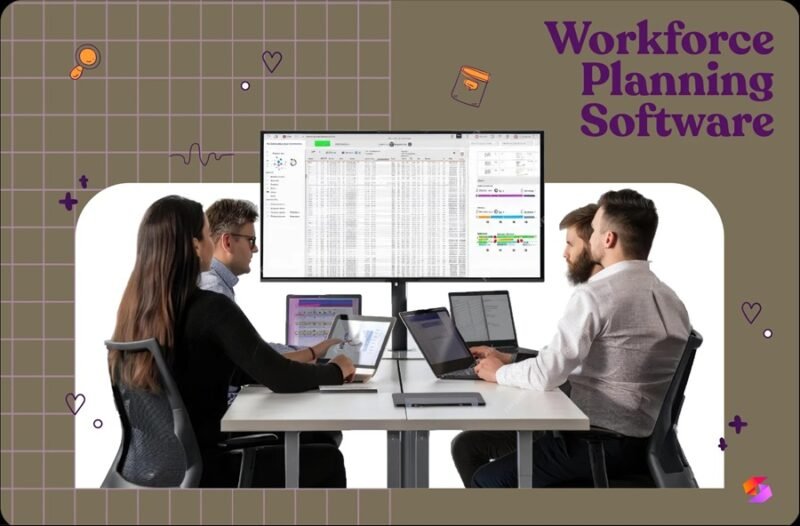
Every business wants the right people in the right roles at the right time. However, achieving this balance becomes difficult when companies rely on guesswork instead of data. Rapid business changes, evolving skill requirements, and shifting market demands make workforce planning more challenging than ever.
This is where strategic workforce planning software plays a crucial role. It helps organizations predict future talent needs, identify workforce gaps, and make informed hiring decisions before problems arise. Instead of reacting to workforce shortages, businesses can proactively prepare for future demands.
In this article, we will explore how strategic workforce planning software improves talent forecasting and why it has become an essential part of modern workforce management.
Understanding Strategic Workforce Planning Software
Strategic workforce planning software helps organizations align their workforce strategy with long-term business goals. It combines workforce data, employee skills information, business forecasts, and workforce trends into a single platform.
The software provides insights into:
- Future hiring needs
- Workforce capacity planning
- Employee skill gaps
- Succession planning
- Resource allocation strategies
Rather than making workforce decisions based on assumptions, companies gain access to accurate data that supports smarter planning.
Why Talent Forecasting Matters
Talent forecasting is the process of predicting future workforce requirements based on business objectives, industry trends, and employee data.
Without proper forecasting, organizations often face challenges such as:
- Unexpected talent shortages
- Overstaffing or understaffing
- Increased recruitment costs
- Delayed project delivery
- Reduced productivity
Effective forecasting allows companies to prepare for future workforce demands while maintaining operational efficiency.
How Strategic Workforce Planning Software Enhances Talent Forecasting
Provides Data-Driven Workforce Insights
Traditional workforce planning often depends on spreadsheets and manual reporting. These methods can create inaccuracies and make forecasting difficult.
Strategic workforce planning software collects data from multiple sources and transforms it into meaningful insights. Managers can review workforce trends, employee performance data, and hiring patterns in real time.
This data-driven approach helps organizations make informed workforce decisions rather than relying on assumptions.
Identifies Future Skill Gaps
Business needs continue to evolve as industries adopt new technologies and processes. The skills employees possess today may not meet future business requirements.
Strategic workforce planning software helps companies identify skill shortages before they become major challenges. By comparing current workforce capabilities with future business goals, organizations can determine which skills require development.
This enables HR teams to focus on targeted training programs, internal mobility initiatives, and strategic recruitment plans.
Improves Workforce Demand Forecasting
Accurate workforce demand forecasting is one of the most valuable benefits of workforce planning software.
The system analyzes factors such as:
- Business growth projections
- Upcoming projects
- Employee turnover trends
- Market conditions
- Historical workforce data
These insights help businesses estimate future workforce requirements more accurately. As a result, organizations can avoid last-minute hiring and reduce recruitment pressure.
Better Resource Allocation Across Teams
Resource allocation remains a major challenge for growing businesses. Many organizations struggle to determine whether they have enough employees to support future projects.
Strategic workforce planning software provides visibility into workforce capacity across departments. Leaders can identify overloaded teams, underutilized employees, and upcoming staffing requirements.
This improves resource allocation in project management and ensures that employees are assigned where they can deliver the greatest value.
Supports Succession Planning
Many companies face operational disruptions when experienced employees retire, resign, or move into different roles.
Workforce planning software helps organizations prepare for these transitions by identifying high-potential employees and future leadership candidates.
Succession planning becomes more effective because managers can track employee development, leadership readiness, and skill progression over time.
This ensures business continuity and reduces the risks associated with sudden talent gaps.
Enhances Workforce Planning Accuracy
One of the biggest advantages of strategic workforce planning software is improved planning accuracy.
Instead of making workforce decisions based on incomplete information, organizations gain access to comprehensive workforce analytics.
The software can forecast:
Future Hiring Requirements
Businesses can estimate how many employees they will need over the next few months or years.
Employee Retention Risks
The system can highlight departments with high turnover trends and help managers address retention issues before employees leave.
Workforce Productivity Trends
Organizations can monitor workforce performance and identify areas where productivity improvements may be needed.
These capabilities help companies build more reliable workforce strategies.
Supports Business Growth and Expansion
Expanding into new markets often requires significant workforce planning. Companies must determine how many employees they need, what skills are required, and when recruitment should begin.
Strategic workforce planning software supports expansion initiatives by providing accurate workforce projections.
Leaders can assess future workforce demands and ensure they have the talent needed to support business growth.
This proactive approach reduces hiring delays and allows organizations to scale more efficiently.
Helps HR Teams Make Faster Decisions
Human resource management software often focuses on employee administration and operational tasks. While these functions remain important, workforce planning software adds a strategic layer to workforce management.
With real-time dashboards and workforce analytics, HR leaders can quickly evaluate workforce scenarios and make informed decisions.
Instead of spending hours compiling reports, teams can focus on strategic initiatives that drive business results.
Scenario Planning for Future Workforce Needs
Modern workforce planning solutions often include scenario planning features.
For example, companies can evaluate:
- What happens if employee turnover increases?
- How will a new business unit affect staffing needs?
- What workforce changes will be required during expansion?
These simulations help leaders prepare for multiple outcomes and reduce uncertainty.
Strengthens Employee Development Strategies
Organizations often focus heavily on external recruitment while overlooking internal talent development.
Strategic workforce planning software provides visibility into employee skills, career aspirations, and development opportunities.
This information helps companies create personalized development plans and promote internal talent whenever possible.
As a result, businesses reduce recruitment costs while improving employee engagement and retention.
Integrates with Resource Management Software
Many organizations use resource management software alongside workforce planning systems.
When integrated together, these solutions provide a complete view of workforce availability, project requirements, and organizational capacity.
This combination allows managers to:
- Allocate resources more effectively
- Improve project delivery timelines
- Reduce employee burnout
- Optimize workforce utilization
The result is stronger operational performance and better business outcomes.
Reduces Workforce Planning Risks
Every workforce decision carries some level of risk. Hiring too many employees increases costs, while hiring too few can impact growth.
Strategic workforce planning software helps reduce these risks by providing predictive insights and workforce forecasting capabilities.
Organizations gain a clearer understanding of future workforce demands, allowing them to make balanced staffing decisions that support both growth and profitability.
Choosing the Right Strategic Workforce Planning Software
When evaluating workforce planning solutions, organizations should focus on features that support long-term workforce strategy.
Look for software that offers:
- Workforce analytics and reporting
- Talent forecasting capabilities
- Resource allocation tools
- Skill gap analysis
- Succession planning support
- Scenario planning features
- Integration with human resource management software
The right solution should provide actionable insights that help align workforce planning with business objectives.
Conclusion
Workforce planning has become a critical business function in today’s competitive environment. Companies can no longer rely on intuition when making workforce decisions. They need accurate data, predictive insights, and a clear understanding of future talent requirements.
Strategic workforce planning software helps organizations improve talent forecasting by identifying skill gaps, predicting workforce demand, supporting succession planning, and optimizing resource allocation. It enables businesses to make smarter workforce decisions while preparing for future growth.
Organizations that invest in effective workforce planning strategies gain a significant advantage. They can attract the right talent, improve operational efficiency, and build a workforce that supports long-term business success.
Must Read: Mietmakler: Alles, was Sie über Mietmakler in Deutschland wissen müssen