

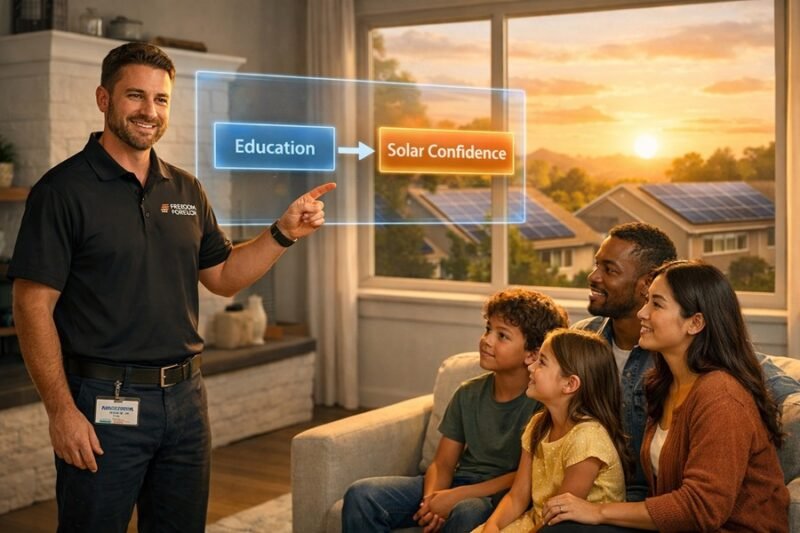
Residential solar continues to gain attention as families look for ways to manage rising electricity costs and achieve greater predictability in their long-term energy planning. Freedom Forever Solar operates on a national scale in this environment, where homeowner hesitation is often driven less by technology and more by uncertainty surrounding the process, timing, and expectations. Despite growing interest, many households still pause before moving forward because they want clarity, not just projections. They want to understand the steps, challenges, and timelines before making a commitment. This gap between interest and understanding has made customer education one of the most important, yet underdeveloped, elements of the solar experience.
The companies leading the industry today are not only installing panels efficiently, but they are also educating customers with transparency from the outset. Clear onboarding and expectation-setting have emerged as essential drivers of customer satisfaction, reducing churn and creating smoother journeys from design to activation. In a market where word-of-mouth influences brand reputation, the quality of education is becoming a crucial factor in solar decision-making.
Homeowners Want Understanding That Goes Beyond the Sales Conversation
Most families exploring solar start with online research. They search for reviews, watch videos, and compare answers from different providers. Even after gathering information, many still find the process confusing. They may know that solar requires permitting, inspections, and utility approvals, while they do not understand how those pieces connect or what timelines to expect.
Education bridges this gap. When homeowners receive clear explanations during onboarding, including how the process works, why certain steps take time, and what can happen next, they feel more confident as they move into the design phase. Without these explanations, even a well-prepared project can feel unclear. Homeowners say they value honesty and clarity more than speed. They want a realistic road map, not an idealized one. Customer education creates that foundation long before the first permit is submitted.
Expectation-Setting Reduces the Most Common Causes of Churn
Cancellations in residential solar energy systems rarely occur because homeowners typically lose interest in clean energy. They happen when expectations do not align with the experience. If families believe that installation can be immediate or that permitting is straightforward, they may become frustrated during the longer administrative phases. When they are not prepared for tasks such as HOA approvals or utility reviews, they may misinterpret normal delays as signs of disorganization. Permitting is simple; they may become frustrated during longer administrative phases. When they are not prepared for tasks such as HOA approvals or utility reviews, they may misinterpret normal delays as signs of disorganization.
Expectation-setting eliminates these misunderstandings. A simple conversation about how permitting works in their city, what inspections look like, and how utilities review solar systems helps customers remain engaged when progress slows.
Design Education Helps Homeowners Feel in Control
One of the earliest opportunities for strong education appears in the design phase. Even the most detailed system model can feel abstract without explanation. Customers want to know why panels are placed in specific positions, how shading affects production, and what equipment choices mean for performance.
When design teams walk homeowners through their model, highlighting key decisions and reviewing production estimates, customers feel more engaged. They begin to view the system as something tailored to their home rather than a generic layout. This understanding builds confidence that the provider is prioritizing accuracy.
Permitting and Inspection Education Prevents Confusion During the Longest Stretch
Permitting remains one of the most unpredictable parts of the solar process, and many homeowners are surprised by how long it can take. Municipalities vary widely in review times, and some require additional documentation that families do not expect.
This is where education becomes essential. When companies explain the permitting process early, including how long it typically takes, what documents are needed, and why jurisdictions vary, homeowners stay grounded even when the process feels slow. They are less likely to assume something has gone wrong if they understand that local offices often influence timing. The same applies to inspections. Customers appreciate knowing when inspectors can arrive, what they can evaluate, and how inspections relate to utility approval. These explanations make unfamiliar procedures more predictable.
Installation Education Helps Homeowners Prepare for the Big Day
Although installation is typically one of the fastest stages of a solar project, it is also the moment when families are most attentive. They want to know what time crews can arrive, how long the work can take, and whether they need to prepare their property in any way. Education ahead of installation helps the day unfold more smoothly. When companies clearly explain the work structure, the equipment being used, and the expected timeline, homeowners feel more comfortable. They can decide with confidence whether that involves planning for pets, parking, or access to specific areas around the home.
Freedom Forever reviews frequently highlight installation teams who explained the process and checked in throughout the day. These firsthand accounts show how informed customers often have more positive installation experiences.
Post-Install Education Strengthens Long-Term Satisfaction
Once a system is activated, customer education remains just as important. Homeowners rely on monitoring apps, seasonal production patterns, and utility bill adjustments to understand how their system is performing. Without guidance, these shifts can be confusing.
When companies guide customers through monitoring features, explain expected production ranges, and assist them in interpreting their first utility bill after activation, the experience becomes far clearer. These conversations help customers understand what “normal” looks like for their system and assist them in interpreting their first utility bill after activation. These conversations help customers understand what “normal” looks like for their system.
Educated Customers Become Confident Customers
Solar adoption relies heavily on word-of-mouth. Families share their experiences in online communities, neighborhood groups, and among friends when considering solar energy for the first time. An educated customer is far more likely to speak positively about their experience because they understand each step and feel prepared throughout the process.
Customer education sets the stage for that confidence. It equips homeowners with the knowledge needed to navigate their project without confusion. It reduces churn by preventing misunderstandings. And it positions the provider as a partner rather than just an installer. In a market where reviews influence nearly every decision, the companies investing in strong education are the ones building the most trust. Customer education is not an add-on; it is the missing piece that turns interest into adoption, and adoption into long-term satisfaction.