



Let’s be honest—nobody gets excited about the idea of eye surgery. If you’ve started noticing that driving at night feels like navigating a foggy maze, or if your morning paper looks a little more yellow than it used to, you’re likely dealing with cataracts.
It’s frustrating. It feels like you’re looking through a dirty window that you just can’t wipe clean.
But here is the good news: Cataract surgery is one of the safest, most commonly performed, and most effective surgeries in the world.
In the United States alone, surgeons perform nearly 4 million of these procedures every year. It’s not just about fixing a medical issue; it’s about getting your life back.
If you are on the fence or just gathering facts, this guide breaks down exactly what happens, how long it takes to bounce back, and why waiting might be the wrong move.
Quick Snapshot: What You Need to Know
- The Procedure: Takes about 15 to 20 minutes.
- Pain Level: Minimal to none (numbing drops are used).
- Recovery: Vision usually improves within 24 to 48 hours.
- Longevity: The results are permanent. Cataracts cannot grow back.
What Is Actually Happening to Your Eye?
Skip the medical textbook jargon for a second. Think of your eye like a camera.
Inside that camera, there is a clear lens that focuses light. When you are young, that lens is flexible and crystal clear. But as we age, proteins in the lens start to break down and clump together.
That clump is the cataract.
It’s not a growth on your eye; it’s a clouding inside your eye. Over time, it blocks light from reaching your retina, leading to that telltale blurry, hazy vision. Glasses won’t fix it because the problem isn’t the focus—it’s the filter.
The only way to fix it? Swap out the dirty lens for a brand new, clear one.
The Procedure: 20 Minutes to Clarity
The anticipation is almost always worse than the event itself. Most patients are surprised when the doctor says, “All done!”
Here is a step-by-step of what actually happens in the operating room.
1. The Prep
You aren’t “put under” with general anesthesia. Instead, you’ll likely get a mild sedative to help you relax (the “twilight” sleep) and plenty of numbing drops. You are awake, but you won’t feel pain.
2. The Breakdown (Phacoemulsification)
The surgeon makes a microscopic incision in the cornea. Using a tiny probe that emits ultrasound waves, they break up the cloudy lens into tiny pieces and gently suction them out.
3. The Upgrade
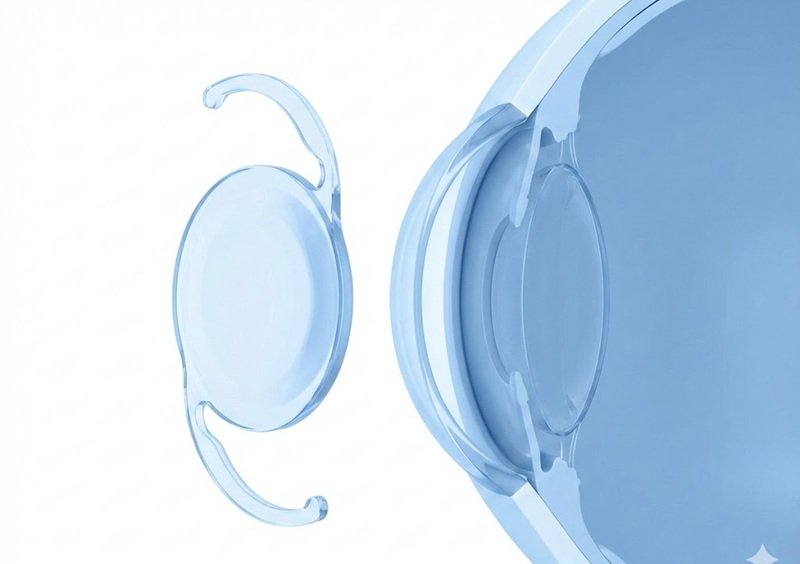
Once the old lens is gone, the surgeon inserts a new Intraocular Lens (IOL). This artificial lens unfolds inside your eye and sits permanently in place. No stitches are usually needed because the incision is self-sealing.
Choosing Your Lens: It’s Not One-Size-Fits-All
This is the most important decision you’ll make with your doctor. In the past, you only had one option. Today, modern technology gives you choices based on your lifestyle and budget.
| Lens Type | Best For… | Cons |
|---|---|---|
| Monofocal (Standard) | Excellent distance vision. Usually fully covered by Medicare/Insurance. | You will still need reading glasses for close-up work (menus, phones). |
| Toric IOLs | People with astigmatism. Corrects the football-shape of the cornea. | Often an out-of-pocket cost. |
| Multifocal (Premium) | Seeing near, far, and in-between without glasses. | Higher cost. Some patients see “halos” around lights at night initially. |
| Accommodating IOLs | Mimics the eye’s natural ability to shift focus. | Can be expensive; technology is still evolving compared to standard options. |
Pro Tip: If you are an avid golfer, you might prioritize distance vision. If you knit or read constantly, near vision matters more. Be honest with your doctor about your daily habits.
The Recovery Timeline: When Can I Drive?
You won’t be driving yourself home from the surgery center, so line up a ride. But you won’t be sidelined for long.
Day 1: Your vision might be blurry as your eye adjusts. This is normal. You’ll wear a protective shield to sleep so you don’t accidentally rub your eye.
Week 1: Colors will likely look brighter immediately. Many patients describe it as seeing the world in HD. You can do light activities, but avoid heavy lifting or bending over at the waist (which increases eye pressure).
Month 1: Your eye should be fully healed. You’ll have a follow-up to check your prescription for new glasses (if you even need them anymore).
Red Flags to Watch For
Recovery is usually smooth, but call your doctor immediately if you experience:
- Sudden vision loss.
- Severe pain (not just grittiness).
- Flashes of light or a “curtain” falling over your vision.
Frequently Asked Questions (FAQs)
1. Can I have both eyes done at the same time? Generally, no. Surgeons usually wait a week or two between eyes. This ensures the first eye recovers without infection or complications before addressing the second one. It also lets you maintain some vision while the first eye heals.
2. Do cataracts come back? No, the artificial lens cannot develop a cataract. However, some patients develop a “secondary cataract” (PCO), where the capsule holding the lens gets cloudy. This is easily fixed with a quick, painless 5-minute laser procedure right in the office.
3. Does Medicare pay for cataract surgery? Yes, Medicare and most private insurance plans cover medically necessary cataract surgery. However, they typically cover the standard Monofocal lens. If you want a premium lens (like one that corrects astigmatism or eliminates the need for reading glasses), you will likely pay the difference out of pocket.
The Bottom Line
Living with cataracts is a choice you don’t have to keep making. The technology is advanced, the recovery is quick, and the impact on your quality of life is massive.
Imagine reading a menu without squinting or driving at night without fear. That clarity is just a 20-minute procedure away.