


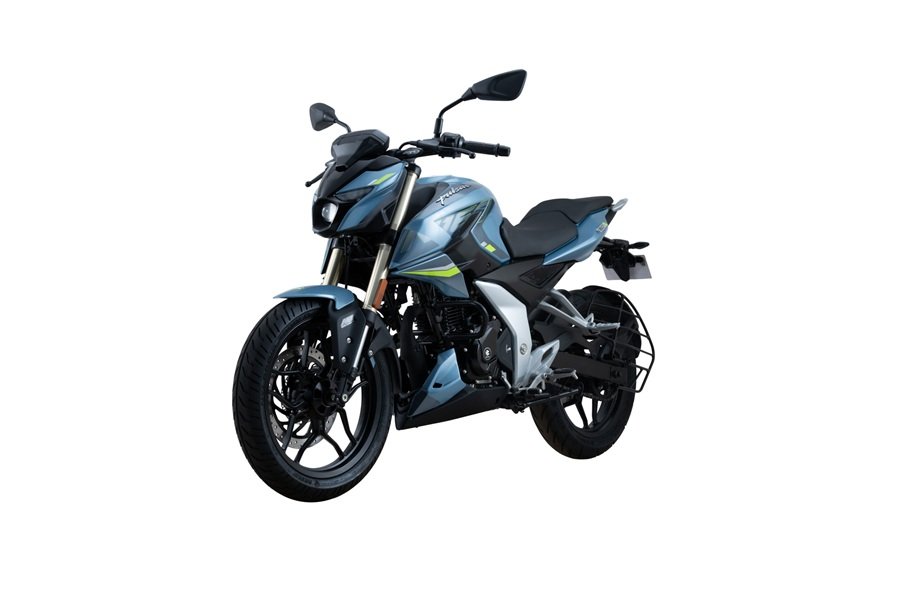
Is the new Bajaj Pulsar N160 the perfect upgrade for your city rides? We break down the real-world mileage, new USD fork update, and why it might just beat the Apache RTR 160 4V.
Quick Verdict: The “Real” Streetfighter
If you’ve ever felt that 150cc bikes are too dull but 200cc beasts are too thirsty for your wallet, the Bajaj Pulsar N160 sits right in that sweet spot. With the latest December 2025 update bringing premium Champagne Gold USD Forks and a practical single-seat option, Bajaj isn’t just playing the game—they are changing the rules. It’s smooth, looks like a mini-N250, and handles our chaotic Indian roads like a pro.
Bajaj Pulsar N160 Price in India (2025 Updated)
Let’s talk money first because that’s what matters. Bajaj has played a smart card by offering multiple variants to fit different pockets.
| Variant | Ex-Showroom Price (approx.) | Best For |
|---|---|---|
| Single Channel ABS | ₹ 1.23 Lakh | Budget buyers |
| Dual Channel ABS (Standard) | ₹ 1.33 Lakh | Safety lovers |
| USD Fork Variant (New 2025) | ₹ 1.40 Lakh | Enthusiasts (Best Value) |
Note: On-road prices will vary by state (approx. +₹15k–20k for RTO & Insurance).
My Take: Go for the Dual Channel ABS variant with USD forks. The extra few thousand rupees are worth every penny for the stability you get during panic braking on wet roads.
New Features: What’s Changed in 2025?
I remember riding the older 160s where vibrations would tickle your palms after 60 kmph. That’s gone. The N160 feels surprisingly refined.
1. The USD Fork Upgrade (The Game Changer)
The biggest talking point is the new 33mm Upside Down (USD) Front Forks. Why does this matter?
- Better Cornering: The bike feels planted when you lean.
- Braking Dive: When you hit the front brake hard, the nose doesn’t dip as scary-fast as it used to.
- Looks: Let’s be honest, those gold forks make it look like a 300cc bike.
2. Digital Console & Bluetooth
Finally! The new fully digital instrument cluster replaces the old semi-analog one.
- Turn-by-Turn Navigation: No more mounting your phone on a cheap holder.
- Call/SMS Alerts: See who’s bugging you without stopping.
- Distance to Empty (DTE): A lifesaver for those who ride on “reserve” mode.
3. Engine & Performance
- Engine: 164.82cc, Oil-Cooled, Single Cylinder
- Power: 16 PS @ 8,750 rpm
- Torque: 14.65 Nm @ 6,750 rpm
- Gearbox: 5-Speed (Smooth shifts, but a 6th gear is missed on highways).
Real-World Mileage: What Owners Say
Company claims are one thing; real traffic is another. I spoke to three owners—Rahul (college student), Amit (delivery partner), and Sarah (IT professional). Here is the average real-world mileage:
- City Traffic (Bumper to Bumper): 44 – 46 kmpl
- Highway Cruising (70-80 kmph): 50 – 52 kmpl
- Aggressive Riding: ~40 kmpl
Pro Tip: Keep the “Eco” indicator on the dash active to squeeze out that extra 3-4 kmpl.
Bajaj Pulsar N160 Colours (2025)
Looks are subjective, but the N160 is objectively handsome. The projector headlamp with those “eyebrow” DRLs gives it a robotic, predator face.
- Polar Sky Blue: (My personal favorite; stands out in traffic)
- Brooklyn Black: (The stealth mode option)
- Pearl Metallic White: (Classy but hard to keep clean)
- Racing Red: (For those who want the sporty vibe)
Riding Experience: The Human Truth
The Good: The seating posture is “sporty-commuter.” You lean forward slightly, but not enough to hurt your back. The single-piece seat variant is a blessing for families. My mom found the pillion seat much easier to climb onto compared to the split-seat version on the NS160.
The Bad: The weight. At 154 kg, it is heavier than the TVS Apache RTR 160 4V (146 kg). You feel this weight when trying to park in a tight spot or moving it manually. However, once you start moving, the weight vanishes and actually helps stability on windy highways.
N160 vs. The Rivals
| Feature | Bajaj Pulsar N160 | TVS Apache RTR 160 4V | Hero Xtreme 160R 4V |
|---|---|---|---|
| Braking | Best (Dual Channel ABS) | Good (Single Channel) | Good |
| Suspension | USD Forks (Plush) | Telescopic (Stiff) | USD (Top variant) |
| Refinement | Excellent | Very Good | Good |
| Features | Practical | Tech-Loaded (Ram Air etc.) | Decent |
Expert Insight: If you want raw acceleration and track features, the Apache is still the fun king. But if you want a bike that feels mature, safe (thanks to Dual Channel ABS), and solid for daily commutes, the N160 wins.
Final Thoughts: Should You Buy It?
The Bajaj Pulsar N160 isn’t trying to be a race track machine. It’s trying to be the best street machine. It balances the “Pulsar” thrill with modern maturity.
Buy it if:
- You prioritize safety (Dual Channel ABS is non-negotiable for me).
- You want a big-bike feel on a budget.
- You ride 70% in the city and 30% on highways.
Skip it if:
- You are a pure speed junkie (The NS200 or Apache 200 is better for you).
- You have a very petite frame (The 154kg weight might be annoying).
Frequently Asked Questions (FAQs)
1. Is the Pulsar N160 good for long rides? Yes, for rides up to 150-200 km. The oil-cooled engine manages heat well, and the stability is great. Just take a break every hour because the seat cushioning is slightly on the firm side.
2. Does the N160 have Bluetooth connectivity? Yes, the updated 2024-25 top variants come with Bluetooth. You can accept/reject calls and see battery health, but don’t expect map directions like Google Maps on the screen—it’s turn-by-turn.
3. Is the maintenance cost high for the N160? Not really. Being a Bajaj, parts are everywhere. A general service costs between ₹1,200 to ₹1,500. It’s very wallet-friendly compared to Yamaha or KTM.
4. Can I retrofit the USD forks on my old N160? Technically, anything is possible, but I wouldn’t recommend it. You’d need to change the triple clamp, handle assembly, and fenders. It will cost you ₹15k-₹20k and might void your insurance/warranty. Better to exchange for the new model!
5. What is the top speed of the Bajaj Pulsar N160? I’ve personally clocked 115 kmph on the speedometer. It can push to 120 kmph with a tailwind, but the engine feels most comfortable cruising at 85-90 kmph.