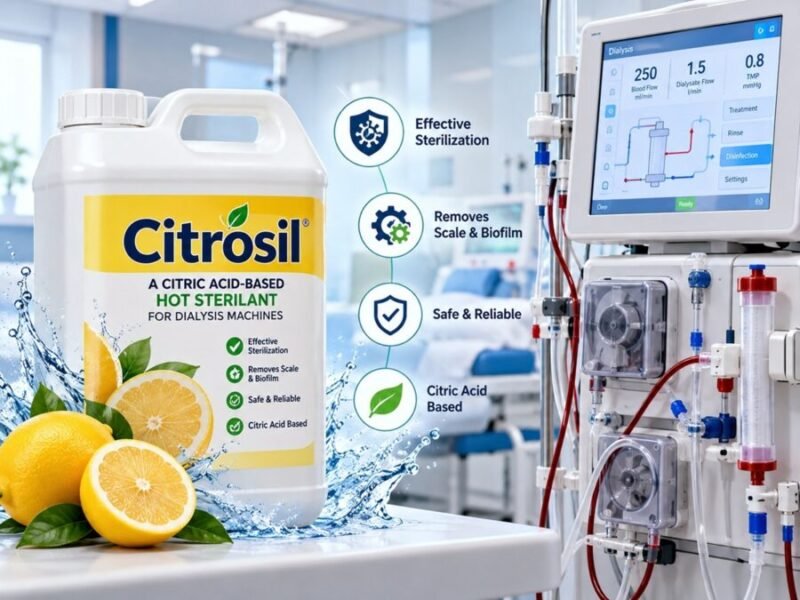



Every dialysis session depends on one thing you cannot see: a clean fluid pathway. Inside a hemodialysis machine, water, concentrate, and dialysate move through tubing, pumps, and chambers. Left untreated, these surfaces collect mineral scale and microbial biofilm.
Citrosil, from Surni Labs, is a citric acid-based hot sterilant designed for this exact problem. It combines the descaling power of citric acid with the germ-killing effect of heat. The result is a gentler, more eco-friendly way to keep dialysis machines safe and ready for the next patient.
This guide explains what Citrosil is, how heat-based citric acid disinfection works, and how dialysis teams can use it well.
Quick Answer
What is Citrosil? Citrosil is a citric acid-based hot sterilant from Surni Labs used to disinfect and descale the internal fluid pathways of hemodialysis machines. The heated citric acid solution removes mineral deposits and reduces microbial contamination without the harsh effects of chlorine-based chemicals.
What Is Citrosil?
Citrosil is a ready-to-use citric acid formulation made by Surni Labs for dialysis machine disinfection. It is run through the machine’s internal fluid pathways during a heated cycle.
Definition: A hot sterilant is a disinfecting solution that works best when circulated at elevated temperature. Heat boosts the chemical’s action and helps reach every internal surface.
Citrosil is built for facilities that want effective disinfection with fewer corrosion concerns and less hazardous chemistry.
Why Dialysis Machines Need Hot Disinfection
Dialysis patients are vulnerable. Their blood is exposed to large volumes of fluid, so water and dialysate quality matter enormously.
Two problems build up inside a machine over time:
- Mineral scale: Calcium and magnesium deposits from water form on internal surfaces and sensors.
- Biofilm: Bacteria attach to surfaces and form a protective layer that is hard to remove.
Regular disinfection controls both. Organizations such as the CDC and AAMI publish guidance on dialysis water quality and machine reprocessing. Facilities should always follow those standards alongside the machine maker’s instructions.
How Citric Acid and Heat Work Together
Citric acid is a mild organic acid found naturally in citrus fruit. It does two useful jobs in a dialysis machine.
Descaling
The acid dissolves calcium and other mineral deposits. This keeps flow paths clear and protects pumps, valves, and conductivity sensors.
Microbial Reduction
Heat denatures proteins in microorganisms. A warm acidic environment also disrupts biofilm. Together, they reduce bacterial load more effectively than either one alone.
Why Heat Matters
Cold citric acid mainly descales. Hot citric acid does both: it cleans scale and disinfects. That is why the hot cycle is the heart of a citric acid-based approach.
How to Use a Citric Acid Hot Disinfection Cycle
Always follow Surni Labs’ instructions for use and the dialysis machine manufacturer’s manual. The general flow looks like this:
- Finish the treatment and drain the machine according to your facility protocol.
- Connect the Citrosil supply as directed for your machine model.
- Start the machine’s heat disinfection program.
- Allow the solution to circulate for the full programmed time and temperature.
- Run the rinse program to flush out all citric acid.
- Test for residual disinfectant using the method required by your facility.
- Record the cycle in the machine log.
Never shorten a cycle to save time. Contact time and temperature are what make the process work.
Citrosil vs Other Dialysis Machine Disinfectants
| Feature | Citrosil (Citric Acid, Hot) | Bleach (Sodium Hypochlorite) | Peracetic Acid Blends |
|---|---|---|---|
| Main action | Descaling and heat disinfection | Chemical disinfection | Chemical disinfection |
| Handling | Mild, low hazard | Irritating fumes | Strong odor, irritant |
| Corrosion risk | Low | Higher on some parts | Moderate |
| Scale removal | Excellent | Poor | Limited |
| Environmental profile | Biodegradable | Chlorinated byproducts | Breaks down to acetic acid |
| Rinse needed | Yes | Yes | Yes |
Many facilities rotate or combine methods. The right choice depends on machine design, water quality, and facility protocol.
Pros and Cons
Pros
- Gentle on machine components
- Removes mineral scale and disinfects in one process
- Biodegradable and easier to handle
- Pleasant, low-odor working environment for staff
Cons
- Requires a heating cycle, which takes time
- Needs thorough rinsing and residual checks
- May not suit machines that lack a heat disinfection program
Expert Tips
- Check your water treatment system first. Poor feed water means faster scale and more work for any disinfectant.
- Store Citrosil in a cool, dry place with the cap tightly closed.
- Train every technician on the full cycle, including the rinse and residual test.
- Review disinfection logs monthly to spot trends.
- Schedule preventive maintenance with your machine supplier.
Common Mistakes
- Skipping or cutting short the heat cycle
- Rinsing too briefly and leaving residue
- Using a product not approved for the machine model
- Forgetting to record disinfection cycles
- Storing the solution in direct sunlight or high heat
Benefits
- Patient safety: Lower microbial load in fluid pathways supports safer treatments.
- Machine longevity: Regular descaling protects pumps, sensors, and valves.
- Staff safety: A milder chemical profile reduces exposure risks.
- Sustainability: Citric acid is biodegradable and easier on drainage systems.
- Consistency: A standard hot cycle makes results repeatable across shifts.
Frequently Asked Questions
What is Citrosil used for?
Citrosil is used to disinfect and descale the internal fluid pathways of hemodialysis machines. It is a citric acid-based solution that works during a heated cycle, helping remove mineral deposits and reduce microbial contamination between treatments.
Who makes Citrosil?
Citrosil is offered by Surni Labs, a brand focused on dialysis care solutions. For product specifications, approvals, and ordering details, dialysis centers should contact Surni Labs directly.
Why is citric acid used in dialysis machines?
Citric acid dissolves calcium and magnesium scale and is gentler on machine parts than harsher chemicals. When heated, it also helps reduce bacteria and biofilm. It is also biodegradable, which makes disposal simpler.
Is a citric acid hot disinfection cycle effective against bacteria?
Yes, when run at the correct temperature and contact time. Heat combined with an acidic solution reduces microbial load and disrupts biofilm. Effectiveness depends on following the machine manufacturer’s validated program exactly.
How often should a dialysis machine be disinfected?
Most facilities disinfect machines after every treatment or at least daily, depending on protocol and machine type. Deeper descaling cycles may be scheduled separately. Always follow the manufacturer’s guidance and local regulations.
Does Citrosil need to be rinsed out?
Yes. Every disinfectant must be fully rinsed from the machine before the next patient. Staff should also test for residual disinfectant as required by facility policy before starting treatment.
Can Citrosil be used on all dialysis machines?
Not necessarily. Compatibility depends on the machine model and its approved disinfection programs. Check the machine manual and confirm with Surni Labs before use.
Is hot citric acid disinfection better than bleach?
Each has a role. Citric acid is gentler, removes scale, and is easier to handle. Bleach is a strong chemical disinfectant but can be harsher on components. Many clinics use both in a planned rotation.
Conclusion
Clean machines make safer dialysis. Citrosil from Surni Labs offers a practical, citric acid-based hot sterilant that descales and disinfects in one routine. It is milder on equipment, kinder to staff, and better for the environment.
Success depends on discipline. Follow the full heat cycle, rinse thoroughly, test for residuals, and document every run. With the right process, Citrosil helps dialysis centers protect both their patients and their machines.
Must Read: Beauty Salon Guide: Services, Tips & How to Choose the Best Studio Beauty Salon