


Introduction: Why the Ceiling Is Now the “Fifth Wall”
For decades, ceilings were an afterthought. White paint, maybe a fan — done.
Not anymore.
In 2026, interior designers, architects, and builders are treating the ceiling as one of the most powerful design surfaces in any space. It is now officially called the “fifth wall” — and it is transforming how we experience rooms.
Modern ceiling panels do far more than just look good. They absorb noise, improve energy efficiency, support smart lighting, and even purify air. Whether you are designing a cozy bedroom, a corporate boardroom, a luxury hotel lobby, or a busy retail store, the right ceiling panel solution can completely elevate the space.
The global demand for ceiling panels is booming. Driven by urbanization, sustainability goals, and a post-pandemic focus on healthier indoor environments, both residential and commercial clients are investing in ceiling design like never before.
This guide breaks down the top 20 ceiling panel trends shaping 2026 — covering materials, applications, design tips, and sustainability insights.
Top 20 Ceiling Panel Trends in 2026
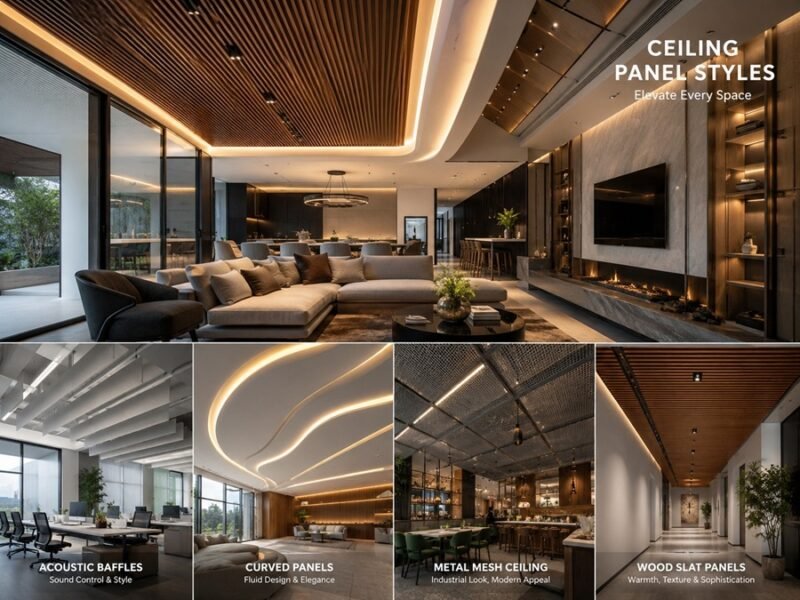
1. Wood Slat Ceiling Panels
What it is: Parallel strips of real or engineered wood installed with uniform spacing, creating a sleek linear look.
Why it is trending: Wood adds warmth, texture, and a biophilic connection to nature — all top priorities in 2026 design.
Best for: Living rooms, bedrooms, hotel lobbies, high-end restaurants, corporate lounges.
Materials: Oak, walnut, pine, MDF with wood veneer.
Design benefits: Adds depth and visual rhythm; pairs beautifully with ambient recessed lighting.
Tip: Use dark-stained walnut slats for a dramatic statement wall-to-ceiling flow in open-plan homes.
2. Acoustic Felt Ceiling Systems
What it is: Panels made from compressed wool or recycled PET felt, suspended or mounted directly on ceilings.
Why it is trending: Open-plan offices and homes suffer from noise. Acoustic felt panels solve this without looking industrial.
Best for: Home offices, coworking spaces, meeting rooms, schools, restaurants.
Acoustic advantage: NRC (Noise Reduction Coefficient) ratings of 0.70–0.95 — highly effective.
Sustainability edge: Many brands use 60–100% recycled plastic bottles.
Tip: Mix geometric felt shapes in muted tones for a design-forward acoustic solution.
3. Sustainable Bamboo Ceiling Panels
What it is: Panels crafted from rapidly renewable bamboo, either in natural, carbonized, or strand-woven form.
Why it is trending: Bamboo is harder than most hardwoods, grows in 3–5 years, and has a minimal carbon footprint.
Best for: Eco-friendly homes, wellness centers, yoga studios, green-certified commercial buildings.
Sustainability advantage: Absorbs CO₂ during growth; qualifies for LEED green building points.
Maintenance: Seal with a UV-resistant finish to prevent yellowing.
4. Metal Mesh Ceiling Designs
What it is: Woven or expanded aluminum or stainless steel mesh panels used as ceiling cladding or suspended systems.
Why it is trending: The industrial-luxe aesthetic is dominating commercial interiors in 2026.
Best for: Retail stores, airport terminals, hotel lobbies, high-end restaurants.
Design benefits: Allows light to pass through; can conceal mechanical systems while maintaining airflow.
Tip: Backlit metal mesh creates a stunning glowing ceiling effect in hospitality spaces.
5. 3D Geometric Ceiling Panels
What it is: Panels with sculpted three-dimensional patterns — hexagons, diamonds, waves — made from gypsum, PVC, or MDF.
Why it is trending: Social-media-worthy interiors are driving demand for bold, textured ceilings.
Best for: Feature ceilings in living rooms, hotel receptions, boutique retail.
Design benefits: Creates dramatic shadow play with directional lighting.
Tip: Paint 3D panels in a single tone to maintain a modern, cohesive look.
6. Minimalist White Floating Ceilings
What it is: Clean white ceiling panels installed slightly below the structural ceiling, creating a “floating” visual effect.
Why it is trending: Minimalism remains a dominant global design language in 2026.
Best for: Scandinavian-style homes, modern apartments, contemporary offices.
Design benefits: Creates visual height; hides structural imperfections and HVAC systems.
Tip: Add indirect cove lighting above the floating panels for a soft, ethereal glow.
7. Black Industrial Open Ceiling Concepts
What it is: Exposed structural elements — beams, ducts, pipes — painted black to create a raw, industrial aesthetic.
Why it is trending: Urban loft-style design is surging in converted commercial-to-residential spaces.
Best for: Loft apartments, co-working spaces, breweries, urban restaurants, galleries.
Design benefits: Creates height and visual drama; reduces ceiling installation costs.
Tip: Balance black ceilings with warm wood floors and Edison-bulb pendant lighting.
8. Curved and Wave Ceiling Panels
What it is: Panels bent or sculpted into organic curves and wave forms, replacing the traditional flat ceiling.
Why it is trending: Biomorphic design — inspired by natural shapes — is one of 2026’s biggest architectural movements.
Best for: Hotel lobbies, luxury homes, auditoriums, high-end retail.
Materials: Flexible gypsum board, fiberglass, metal composites.
Design benefits: Softens large commercial spaces; improves acoustic diffusion.
9. Smart LED-Integrated Ceiling Panels
What it is: Ceiling panels with built-in LED lighting systems, often controllable via app or voice.
Why it is trending: Smart homes and intelligent commercial buildings are mainstream in 2026.
Best for: Modern homes, luxury offices, hospitality suites, healthcare facilities.
Energy efficiency: LED integration reduces lighting energy use by up to 60%.
Tip: Use tunable white LEDs that shift from cool daylight to warm evening tones for circadian wellness lighting.
10. Suspended Acoustic Baffles
What it is: Vertical acoustic panels hung from the ceiling at regular intervals, like fins or blades.
Why it is trending: Open ceilings in commercial spaces look great but sound terrible. Baffles solve both.
Best for: Open-plan offices, cafeterias, gyms, event halls.
Acoustic advantage: Vertical orientation captures both direct and reflected sound.
Design tip: Mix colors and heights for an artistic installation that also functions as acoustic treatment.
11. Biophilic Nature-Inspired Ceiling Designs
What it is: Ceilings that incorporate living moss, plant panels, natural stone textures, or organic material patterns.
Why it is trending: Biophilic design improves wellbeing, reduces stress, and connects occupants to nature.
Best for: Wellness spas, healthcare lobbies, executive boardrooms, luxury residences.
Sustainability tip: Preserved moss panels require zero maintenance and no watering.
12. Recycled Material Ceiling Panels
What it is: Ceiling panels manufactured from post-consumer or post-industrial waste — recycled cardboard, glass, metal, or plastic.
Why it is trending: Circular economy principles are reshaping construction material sourcing.
Best for: Green buildings, educational institutions, sustainable commercial projects.
Certification: Look for Cradle to Cradle, GreenGuard Gold, or FSC certifications.
13. Luxury Coffered Ceiling Systems
What it is: A grid of recessed panels framed by intersecting beams, creating a classic, architecturally rich look.
Why it is trending: Heritage and luxury residential projects are experiencing a major revival.
Best for: Formal dining rooms, executive offices, colonial-style homes, boutique hotels.
Materials: Solid wood, MDF with veneer, plaster.
Tip: Install recessed lighting inside coffers for layered ambient light.
14. Textured Gypsum Ceiling Panels
What it is: Gypsum plaster panels with embossed textures — floral, geometric, brushed, or abstract.
Why it is trending: Gypsum remains cost-effective while offering enormous design versatility.
Best for: Budget-conscious residential projects, retail spaces, mid-range hospitality.
Maintenance: Easy to paint; minor cracks can be filled and refinished.
Tip: Highlight textures with cross-lit spotlights for dramatic effect.
15. PVC Waterproof Ceiling Panels
What it is: Lightweight, moisture-resistant PVC panels available in dozens of finishes.
Why it is trending: High moisture areas like bathrooms and kitchens demand waterproof solutions.
Best for: Bathrooms, kitchens, basements, coastal properties, healthcare facilities.
Maintenance advantage: Wipe clean; resistant to mold and mildew.
Cost: One of the most budget-friendly ceiling options available.
16. Perforated Metal Ceiling Solutions
What it is: Metal panels — typically aluminum or steel — with precision-punched holes in patterns.
Why it is trending: Offers an excellent combination of acoustics, airflow, and modern aesthetics.
Best for: Airports, shopping malls, corporate offices, educational buildings.
Acoustic advantage: Perforations combined with backing material achieve strong sound absorption.
Design tip: Custom perforation patterns (logos, motifs) can become a branding element.
17. Fiber Cement Ceiling Panels
What it is: Composite panels made from cement, cellulose fibers, and sand — durable and weather-resistant.
Why it is trending: Ideal for semi-outdoor and high-humidity commercial applications.
Best for: Covered outdoor areas, parking structures, industrial buildings, coastal resorts.
Durability: Resistant to fire, moisture, pests, and UV radiation.
Sustainability: Often contains recycled content; long lifespan reduces replacement waste.
18. Fabric-Wrapped Acoustic Ceilings
What it is: Rigid acoustic panels covered in stretched fabric, available in hundreds of colors and patterns.
Why it is trending: They combine acoustic performance with premium soft furnishing aesthetics.
Best for: Home theaters, recording studios, luxury offices, hospitality suites.
Design tip: Use custom-printed fabric with brand colors or abstract artwork for commercial installations.
19. Modular Commercial Ceiling Grids
What it is: A suspended T-bar grid system with interchangeable ceiling tiles — the backbone of commercial ceiling design.
Why it is trending: Modular systems allow easy access to services above and fast, cost-effective installation.
Best for: Corporate offices, hospitals, schools, retail spaces.
Innovation in 2026: Smart modular tiles with integrated sensors, lighting, and air quality monitors.
20. Hybrid Multi-Material Ceiling Designs
What it is: Combining two or more ceiling materials — wood + metal, gypsum + glass, felt + LED — in a single ceiling design.
Why it is trending: Designers are moving beyond single-material solutions to create layered, multi-sensory ceilings.
Best for: Signature commercial spaces, luxury residential projects, statement architectural interiors.
Design tip: Use material transitions to define zones in open-plan spaces — wood over the lounge, metal over the bar.
Residential Ceiling Panel Trends
For homeowners, ceiling design is increasingly a lifestyle statement.
Luxury Homes: Coffered systems, curved panels, and smart LED integration are top picks for premium villas and bungalows.
Apartments: Floating white ceilings with cove lighting maximize the perception of height in compact urban spaces.
Kitchens: PVC waterproof panels and fiber cement options offer moisture resistance without compromising style.
Bedrooms: Acoustic felt panels improve sleep quality by reducing ambient noise. Wood slat ceilings add warmth.
Living Rooms: Wood slats, 3D geometric panels, and biophilic designs create a dramatic focal point above seating areas.
Commercial Ceiling Panel Trends
Commercial clients increasingly demand ceilings that balance brand identity, acoustics, durability, and compliance.
Corporate Offices: Acoustic baffles, modular grid systems, and smart LED panels are essential for productivity-focused environments.
Retail Stores: Metal mesh, perforated metal, and hybrid designs reinforce brand identity while managing noise.
Hospitality Spaces: Curved panels, coffered ceilings, and luxury wood designs elevate guest experience in hotels and restaurants.
Healthcare: PVC waterproof panels, fiber cement, and antimicrobial surface options meet hygiene standards.
Educational Buildings: Acoustic felt systems and modular grids create quiet, focused learning environments.
Sustainability & Smart Ceiling Innovations
The ceiling industry is rapidly transforming toward greener, smarter solutions.
- Low-VOC Materials: Panels with low volatile organic compound emissions improve indoor air quality — critical for schools and hospitals.
- Recycled Panels: Post-consumer recycled content reduces landfill waste and qualifies for LEED credits.
- Energy-Efficient Lighting: LED-integrated panels can cut lighting energy consumption by 40–60% versus traditional fixtures.
- Eco-Friendly Acoustics: PET felt from recycled bottles now delivers acoustic performance equal to virgin mineral wool.
- Smart Sensors: Next-gen ceiling panels embed CO₂ sensors, temperature monitors, and occupancy detectors — transforming the ceiling into a data-gathering layer.
Ceiling Panel Material Comparison Table
| Material | Durability | Cost | Maintenance | Acoustic Performance | Sustainability | Best Use Cases |
|---|---|---|---|---|---|---|
| Wood | High | Medium–High | Moderate | Low–Medium | Medium (FSC options) | Residential, hospitality |
| Metal | Very High | Medium–High | Low | Medium (perforated) | High (recyclable) | Commercial, retail |
| PVC | Medium | Low | Very Low | Low | Low | Wet areas, bathrooms |
| Gypsum | Medium | Low–Medium | Moderate | Low | Medium | Residential, retail |
| Bamboo | High | Medium | Low | Low | Very High | Eco projects, wellness |
| Acoustic Felt | Medium | Medium | Low | Very High | High (recycled) | Offices, schools |
| Fiber Cement | Very High | Medium | Very Low | Low | Medium–High | Outdoor, industrial |
Expert Tips: How to Choose the Right Ceiling Panels
Room Size: Use light-colored, minimal panels in small rooms to avoid visual heaviness. Large rooms can handle bold 3D or hybrid designs.
Ceiling Height: For low ceilings (below 2.7m), opt for floating panels with vertical lines (wood slats) to add perceived height.
Acoustics: Prioritize NRC ratings of 0.70+ for open-plan offices, home theaters, and restaurants with hard floor surfaces.
Moisture Resistance: Always use PVC, fiber cement, or sealed metal in bathrooms, kitchens, and covered outdoor areas.
Lighting Integration: Plan for recessed or cove lighting before panels are installed — retrofitting is expensive.
Budget: Gypsum and PVC offer the best value for budget projects. Bamboo, acoustic felt, and smart panels are worth the premium for specific performance needs.
Conclusion
The ceiling has officially evolved from a blank afterthought to one of the most exciting design canvases in architecture.
In 2026, the best ceiling designs are not just beautiful — they are functional, acoustic, sustainable, and smart. Whether you are renovating a home bedroom, designing a corporate headquarters, or building a boutique hotel, there is a ceiling panel solution tailored to your space, budget, and vision.
The biggest shift happening right now? Design and function are becoming inseparable. Clients no longer want to choose between a gorgeous ceiling and one that performs. They want — and increasingly expect — both.
Looking ahead, smart ceiling systems embedded with sensors, lighting, and air quality monitors will become standard in commercial buildings. Sustainable materials like bamboo, recycled PET felt, and low-VOC panels will continue to gain ground. And the “fifth wall” will only grow more important as architects push the boundaries of what a ceiling can be.
Frequently Asked Questions (FAQs)
Q1: What are the latest ceiling panel trends in 2026?
The top trends include wood slat ceilings, acoustic felt systems, smart LED-integrated panels, biophilic designs, curved wave ceilings, and hybrid multi-material concepts. Sustainability and acoustic performance are the two biggest driving forces in 2026 ceiling design.
Q2: Which ceiling panels are best for offices?
Acoustic felt panels and suspended baffles are best for noise control in open-plan offices. Modular grid systems with integrated lighting and smart sensors are ideal for large corporate environments requiring easy access to services above.
Q3: Are acoustic ceiling panels worth it?
Absolutely. Acoustic ceiling panels with NRC ratings above 0.70 can reduce ambient noise by 40–60%, significantly improving concentration, speech intelligibility, and overall comfort in offices, schools, and restaurants.
Q4: What is the most durable ceiling material?
Fiber cement and metal ceiling panels offer the highest durability, with excellent resistance to fire, moisture, pests, and UV radiation. They are ideal for commercial, industrial, and outdoor applications.
Q5: Which ceiling panels are waterproof?
PVC ceiling panels are the most waterproof and budget-friendly option. Fiber cement panels are also moisture-resistant and better suited for semi-outdoor applications. Sealed aluminum and stainless steel panels work well in high-humidity commercial kitchens.
Q6: Are wooden ceiling panels expensive?
Wood slat and coffered ceiling panels sit in the medium-to-high price range. Engineered wood and MDF with wood veneer offer a similar aesthetic at a lower price point. Installation costs also vary based on ceiling height and design complexity.
Q7: What ceiling design works best for modern homes?
For modern homes, wood slat ceilings, minimalist floating white ceilings with cove lighting, and smart LED-integrated panels are the most popular choices in 2026. Acoustic felt panels are increasingly popular in home offices and bedrooms.