



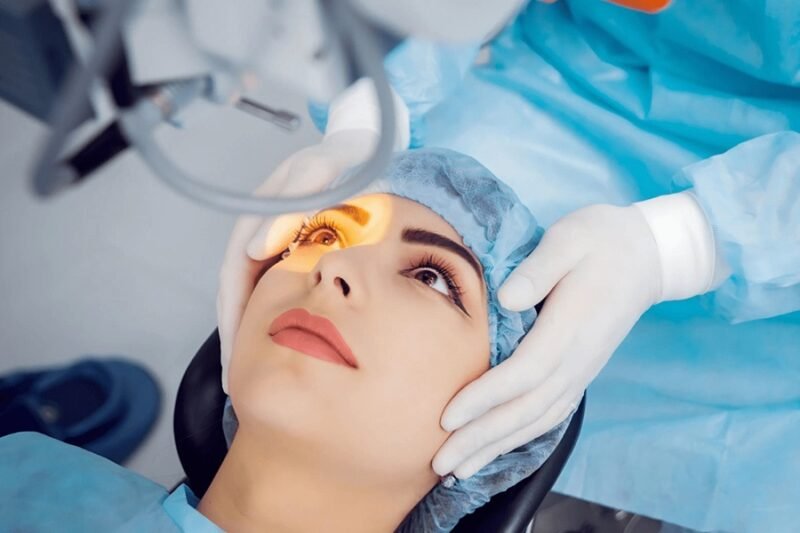
For decades, the dream of waking up with clear vision—without reaching for a pair of glasses or fumbling for contact lenses—has been a driving force in ophthalmology. Today, that dream is a reality for millions. However, deciding to undergo a medical procedure on your eyes is a significant step that requires careful consideration of the technology, the risks, and the expertise involved.
In this guide, we will explore the nuances of modern laser vision correction, the factors that determine candidacy, and how to navigate your journey toward visual freedom.
What is LASIK Surgery?
LASIK (Laser-Assisted In Situ Keratomileusis) is a refractive surgical procedure designed to correct vision problems by permanently altering the shape of the cornea—the clear, dome-shaped tissue at the front of your eye.
In a healthy eye, the cornea bends (refracts) light precisely onto the retina. When the shape of the cornea is irregular, light focuses incorrectly, leading to blurred vision. During the procedure, an ophthalmologist uses a highly specialized excimer laser to remove microscopic amounts of corneal tissue, allowing light to focus accurately for sharper sight.
Understanding the Causes of Refractive Errors
Most patients seek out laser vision correction to address one of three primary refractive errors:
Myopia (Nearsightedness): Occurs when the eyeball is too long or the cornea curves too steeply. Light focuses in front of the retina, making distant objects blurry.
Hyperopia (Farsightedness): This happens when the eyeball is shorter than average or the cornea is too flat. Light focuses behind the retina, causing near vision (and sometimes distance vision) to be blurred.
Astigmatism: Resulting from an unevenly curved cornea, astigmatism causes vision to be distorted or blurred at all distances.
While genetics play a major role in these conditions, their impact on daily life—from eye strain to the recurring costs of corrective lenses—often leads patients to explore surgical alternatives.
Are You a Candidate? Risk Factors and Candidacy
While technology has advanced significantly in 2026, LASIK is not a “one-size-fits-all” solution. A thorough pre-operative screening is essential to ensure safety and effectiveness. Generally, a good candidate:
Is 18 years or older: Your eyes must be fully developed.
Has a Stable Prescription: Your vision should not have changed significantly for at least 12 months.
Possesses Adequate Corneal Thickness: The laser requires a minimum amount of tissue to safely reshape the eye.
Has Healthy Eyes: Conditions like severe dry eye, glaucoma, or cataracts may disqualify you or require treatment before proceeding.
Risk Factors to Discuss with Your Surgeon: Certain systemic conditions, such as uncontrolled diabetes or autoimmune diseases, can affect the body’s ability to heal. It is vital to provide your surgeon with a full medical history to minimize the risk of complications like chronic dry eyes or “halos” around lights at night.
The Procedure: What to Expect
Modern LASIK is typically an outpatient procedure that takes roughly 15 to 20 minutes for both eyes.
The Flap: Your surgeon creates a thin, hinged flap on the surface of the cornea using a femtosecond laser (bladeless LASIK).
Reshaping: You will focus on a target light while the excimer laser reshapes the underlying tissue. Most lasers today feature high-speed eye-tracking technology that adjusts to involuntary movements 500 times per second.
Recovery: The flap is repositioned, where it adheres naturally without stitches. Most patients notice an improvement in vision within 24 hours.
Why Early Diagnosis and Consultation Matter
Vision stability is the cornerstone of a successful outcome. Waiting until your prescription has settled is crucial, but so is early screening for underlying corneal health. Detecting conditions like keratoconus (a thinning of the cornea) early can prevent you from undergoing a procedure that might otherwise compromise your long-term eye health. A consultation isn’t just a sales pitch—it’s a critical medical evaluation of your ocular anatomy.
Choosing the Right Eye Specialist
The success of your procedure depends as much on the technology as it does on the hands operating it. When researching providers, look for board-certified ophthalmologists with a proven track record in refractive surgery.
A reputable center will use advanced diagnostic tools like corneal topography to map your eye’s unique “fingerprint.” If you are looking for personalized care and cutting-edge technology, it is essential to consult with experts who specialize in lasik surgery to determine which specific laser platform is safest for your eyes.
Frequently Asked Questions (FAQs)
1. Is LASIK surgery painful? No. Numbing drops are applied before the procedure. While you may feel a sensation of pressure for a few seconds during the creation of the corneal flap, most patients report little to no pain.
2. How long do the results of LASIK last? The changes made to your cornea are permanent. However, LASIK cannot prevent age-related vision changes, such as presbyopia (the need for reading glasses as you get older) or the development of cataracts later in life.
3. What are the common side effects? The most common temporary side effects include dry eyes and visual disturbances like glare or halos at night. These typically resolve within three to six months as the eyes heal.
Conclusion
LASIK surgery remains one of the most successful and life-changing elective procedures available today. By understanding the technology and choosing a surgeon who prioritizes patient safety over high-volume turnover, you can significantly increase your chances of achieving the clear, crisp vision you desire.
Medical Disclaimer: The information in this article is for educational purposes only and does not constitute medical advice. Always seek the advice of a qualified eye care professional with any questions you may have regarding a medical condition or treatment.
Read Also: How to Improve Eye Vision Naturally: 6 Ways to Increase