



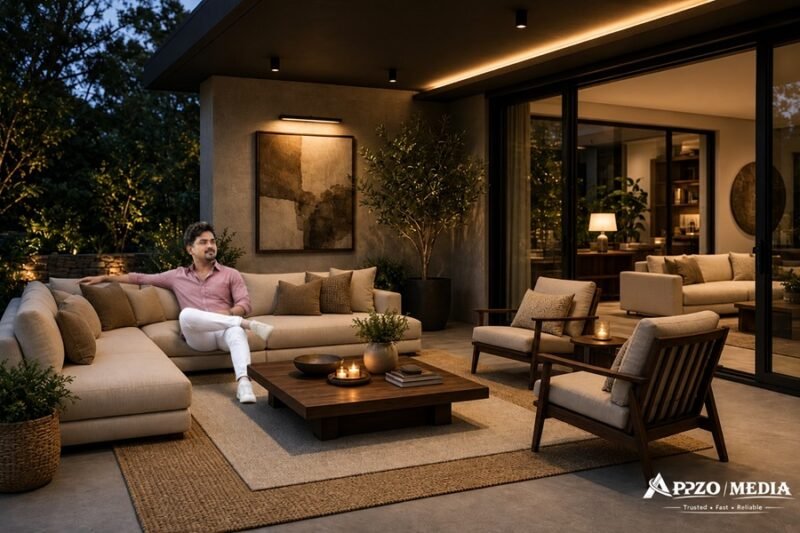
The best outdoor spaces don’t feel like an afterthought. They feel like an extension of the house — somewhere you can actually relax, entertain and spend time rather than a patio with a few random chairs pushed against the wall.
A comfortable garden sofa can do a lot of the heavy lifting because it instantly gives the area a sense of purpose. Once there’s a proper place to sit and settle in, the rest of the space becomes much easier to build around.
Start With How You Want to Use the Space
Before buying furniture, think about what you actually want to do outside.
If the main goal is entertaining, you might want generous seating arranged to encourage conversation. If you’re creating a quiet place for morning coffee or reading, a smaller setup could work better. Families may need something durable and flexible enough for kids, visitors and everyday use.
It sounds obvious, but outdoor areas often go wrong when they’re styled first and planned second.
Treat Seating Like You Would Indoors
Indoors, most people wouldn’t furnish a living room with one lonely chair and call it done. Outdoor spaces deserve the same attention.
Think about seating in groups. A sofa paired with occasional chairs or a bench can make the layout feel intentional, while leaving enough room for people to move comfortably between pieces.
The scale matters too. Oversized furniture can overwhelm a compact courtyard, while tiny pieces can look lost on a large deck.
Add Softness and Texture
Outdoor areas can easily become dominated by hard surfaces: paving, concrete, brick, timber decking and metal.
Soft furnishings help balance that out.
Outdoor cushions, throws and rugs can make the space feel warmer and more inviting, especially if the furniture itself has a clean, minimal design. Even a few carefully chosen textiles can make the difference between a space that looks furnished and one that feels genuinely comfortable.
Just make sure anything left outside is suitable for the conditions it’ll face.
Give the Area a Visual Anchor
Every room benefits from something that holds the layout together, and outdoor spaces are no different.
That might be a coffee table, an outdoor rug, a fire pit or even a large planter positioned in the centre of the seating area. Without some kind of anchor, furniture can look as though it’s floating around without a clear relationship to anything else.
A strong central element helps the entire arrangement feel more deliberate.
Lighting Changes Everything After Sunset
A great outdoor area shouldn’t become unusable the moment the sun goes down.
Harsh floodlights usually don’t create much atmosphere. Layered lighting works better — wall lights, subtle garden lighting, lanterns or overhead pendants where appropriate can all contribute to a softer evening feel.
The aim isn’t to make the space as bright as an office. It’s to create enough light for people to see comfortably while keeping the mood relaxed.
Don’t Forget Shelter and Shade
Comfort outdoors depends heavily on the weather.
Shade can make a space usable for much longer during the day, while some protection from wind or light rain can extend the season considerably. Depending on the area, that might mean an awning, umbrella, pergola or strategically placed screening.
A beautiful outdoor lounge that’s too hot, exposed or windy won’t get much use.
Build the Space in Layers
You don’t need to complete everything at once.
Start with the major pieces, then add side tables, lighting, greenery and accessories over time. That approach often leads to a more natural-looking space because you can see what’s actually missing rather than filling every gap immediately.
When an outdoor lounge has comfortable seating, useful surfaces, decent lighting and a little personality, it starts to feel less like “the backyard” and more like another room you’ll genuinely want to spend time in.